NEET Exam

NEET Exam

Overview

The NEET Exam 2026 is a national-level medical entrance test for undergraduate admissions in India, mainly for MBBS, BDS, BAMS, BHMS, etc. Recently, it's been facing significant controversy. The exam originally held on May 3, 2026, was cancelled due to severe irregularities and allegations of a paper leak, with a re-examination scheduled for 21st June 2026

The National Eligibility cum Entrance Test is conducted only once a year by the National Testing Agency (NTA) in India, offering candidates one chance annually. The exam is held in offline mode, with pen-and-paper, covering vital subjects of Physics, Chemistry, and Biology. In this blog, we will cover all the latest NEET updates, exam pattern, eligibility criteria, and exam results.

Registration

The NEET Registration 2026 will be conducted online through the National Testing Agency official website. Candidates need to fill out the application form thoroughly, upload the needed documents, and make payment online. Below are the key steps mentioned.

Registration

Eligibility Criteria

Applicants who want to appear in the National Eligibility cum Entrance Test (NEET) need to meet the specific NEET 2026 Eligibility criteria. The eligibility requirements are set by the National Medical Commission (NMC), including age, nationality, and educational qualifications (Physics, Chemistry, Biology/Biotechnology).

Key Eligibility Criteria for NEET Exam 2026:

  • Age Limit: Minimum 17 years old as of 31st Dec of the admission year. There is no upper age limit. 
  • Academic Qualification: Passed or appearing in 10+2 or equivalent with Physics, Chemistry, Biology/Biotechnology, and English.
  • Minimum Marks (PCB):
    • General/EWS: 50%
    • OBC/SC/ST: 40%
    • Persons with Disability (PH/PwD): 45%
  • Attempts: No restrictions on the number of attempts.
  • Nationality: Indian Citizens, OCIs, PIOs, NRIs and Foreign Nationals are eligible.

Additional Subject (Biology): Candidates with Biology/Biotechnology as an extra subject are permitted to apply.

Exam Pattern

The NEET Exam Pattern is expected to remain similar to previous years, conducted by the National Testing Agency (NTA). NEET Exam 2026 is a 3-hour and 20-minute-long pen-and-paper-based test comprising 200 multiple-choice questions (MCQs), out of which 180 must be answered. 
The paper covers subjects of Physics, Chemistry, and Biology (Botany + Zoology). The total marks are 720, with a marking scheme of +4 for correct answers and -1 for incorrect answers. Here is the NEET UG Latest Update on the exam pattern quoted.

Exam Name

National Eligibility cum Entrance Test (NEET)

Conducting Body

National Testing Agency

Mode of the examination

Offline

Thermodynamics

3 hours and 20 minutes

Total Questions

200 out of which 180 questions will have to be answered

Total Marks

720 Marks

Question Type

MCQs

Subjects Physics, Chemistry, Biology

Marking Scheme

+4 marks for each correct answer

-1 for each incorrect answer

Section-wise division

Physics: 50 questions
Chemistry: 50 questions
Biology: 100 questions

NEET Languages

English, Hindi, Assamese, Bengali, Gujarati, Marathi, Tamil, Telugu, Oriya, Malayalam, Kannada, Punjabi and Urdu

Exam Syllabus

Neet Exam Syllabus The NEET 2026 syllabus is totally based on the National Council of Educational Research and Training (NCERT) curriculum of Classes 11th and 12th.

BIOLOGY

  • Diversity in the Living World
  • Structural Organisation in Animals & Plants
  • Cell Structure & Function
  • Plant Physiology
  • Human Physiology
  • Reproduction
  • Genetics & Evolution
  • Biology & Human Welfare
  • Biotechnology & Its Applications
  • Ecology & Environment

CHEMISTRY

  • Some Basic Concepts in Chemistry
  • Atomic Structure
  • Chemical Bonding & Molecular Structure
  • Chemical Thermodynamics
  • Solutions
  • Equilibrium
  • Redox Reactions & Electrochemistry
  • Chemical Kinetics
  • Classification of Elements & Periodicity
  • p-Block Elements
  • d & f Block Elements
  • Coordination Compounds
  • Purification & Characterisation of Organic Compounds
  • Some Basic Principles of Organic Chemistry
  • Hydrocarbons
  • Organic Compounds Containing Halogens
  • Organic Compounds Containing Oxygen
  • Organic Compounds Containing Nitrogen
  • Biomolecules
  • Principles Related to Practical Chemistry

Physics:

  • Physics & Measurement
  • Kinematics
  • Laws of Motion
  • Work, Energy & Power
  • Rotational Motion
  • Gravitation
  • Properties of Solids & Liquids
  • Thermodynamics
  • Kinetic Theory of Gases
  • Oscillations & Waves
  • Current Electricity
  • Magnetic Effects of Current & Magnetism
  • Electromagnetic Induction & Alternating Currents
  • Electromagnetic Waves
  • Optics
  • Dual Nature of Matter & Radiation
  • Atoms & Nuclei
  • Electronic Devices
  • Experimental Skills

BIOLOGY

  • Diversity in the Living World
  • Structural Organisation in Animals & Plants
  • Cell Structure & Function
  • Plant Physiology
  • Human Physiology
  • Reproduction
  • Genetics & Evolution
  • Biology & Human Welfare
  • Biotechnology & Its Applications
  • Ecology & Environment

CHEMISTRY

  • Some Basic Concepts in Chemistry
  • Atomic Structure
  • Chemical Bonding & Molecular Structure
  • Chemical Thermodynamics
  • Solutions
  • Equilibrium
  • Redox Reactions & Electrochemistry
  • Chemical Kinetics
  • Classification of Elements & Periodicity
  • p-Block Elements
  • d & f Block Elements
  • Coordination Compounds
  • Purification & Characterisation of Organic Compounds
  • Some Basic Principles of Organic Chemistry
  • Hydrocarbons
  • Organic Compounds Containing Halogens
  • Organic Compounds Containing Oxygen
  • Organic Compounds Containing Nitrogen
  • Biomolecules
  • Principles Related to Practical Chemistry

Physics:

  • Physics & Measurement
  • Kinematics
  • Laws of Motion
  • Work, Energy & Power
  • Rotational Motion
  • Gravitation
  • Properties of Solids & Liquids
  • Thermodynamics
  • Kinetic Theory of Gases
  • Oscillations & Waves
  • Current Electricity
  • Magnetic Effects of Current & Magnetism
  • Electromagnetic Induction & Alternating Currents
  • Electromagnetic Waves
  • Optics
  • Dual Nature of Matter & Radiation
  • Atoms & Nuclei
  • Electronic Devices
  • Experimental Skills

Exam Date

The National Testing Agency (NTA) on Tuesday (May 12) cancelled the NEET (UG) 2026 exam held on May 3, 2026 and will re-conduct it on fresh dates, which are to be announced later. The move comes after paper leak allegations surfaced in Rajasthan and Uttarakhand. Students are now also eagerly waiting for updates related to the NEET cutoff 2026, expected qualifying marks, and revised counselling schedule. Here is the timeline for the NEET 2026 Exam Date quoted below.

Events

Dates

NEET Exam 2026 Application Form Release Date January 2026
NEET Exam 2026 Application Form Last Date March 2026
NEET Exam 2026 Application Correction Window Date 3rd Week of March 2026
NEET Exam 2026 City Intimation Slip Date 4th Week of April 2026
NEET Exam 2026 Admit Card Distribution Date 1st Week of May 2026
NEET 2026 Exam Date 3rd May 2026
NEET 2026 Exam Cancellation Date 12th May 2026
NEET 2026 Re-Exam Announcement May 2026
NEET 2026 Re-Exam Date 21st June 2026
NEET 2026 New Admit Card Release To Be Announced
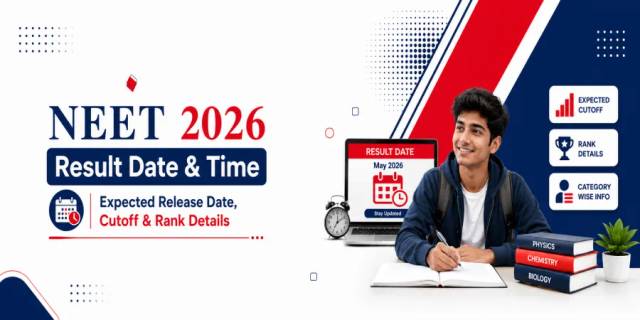
NEET Exam 2026 Result Date Expected After Re-Exam
NEET 2026 Counselling Start Date Expected After Result
NEET 2026 Final Counselling Rounds August–September 2026
Test Centers

Test Centers

The NEET UG 2026 is conducted across multiple cities in India and abroad. Over 551+ exam cities in India and 14+ International centres for foreign applicants. Candidates can choose their preferred exam city during registration; the final allotment is based on availability. 

The NEET exam centres are as follows: 

India

Agra, Amaravathi, Araria, Ariyalur, Aurangabad, Bagalkot, Banaskantha, Bareilly, Bhagalpur, Bhandara, Bhind, Bidar, Blair, Chandrapur, Chennai, Coimbatore, Daman & Diu, Darbhanga, Delhi, Gadchiroli, Gandhinagar, Ghaziabad, Gorakhpur, Gurugram, Hoshangabad, Jammu, Jamnagar, Junagarh, Kurukshetra, Mangalore, Morena, Mumbai, Nashik, New Patna, Port Prayagraj, Ramanathapuram, Ratlam, Silvassa, Srinagar, Surat, Thanjavur, Thiruvananthapuram Ujjain, Vijayawada, Vishakapatnam, etc.

International

Cities include Dubai, Kuwait City, Doha, Muscat, Riyadh, Singapore, Abu Dhabi, Kathmandu, etc.

Result Statistics

As per current reports, NEET UG 2026 recorded 22,79,743 candidates registered, and approximately 22,05,035 appeared for the exam, marking a 96.92% attendance. The exam was held in May 2026 across 551 cities in India. The reports show higher female participation (58% of applicants). Here are the key facts mentioned below. 

  • Total Registered: 22,79,743.
  • Total Appeared: 22,05,035 (approx. 96.92% turnout).
  • Female Candidates: 13,32,928.
  • Male Candidates: 9,46,815.

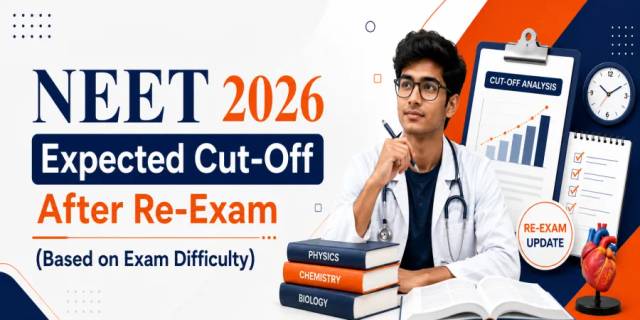
Based on early analysis of the 2026 NEET UG exam, a score between 610-650+ is likely required for General/EWS candidates to secure a government MBBS seat. You can use some tools which you can use to know your expected NEET rank such as NEET Rank Predictor

Moreover, to predict your college, you can use the NEET College Predictor. It is an AI-powered, free online tool that analyses your rank, category, gender, and state domicile to estimate your medical college admission chances.

Related Blogs

Is MBBS in Russia a Good Option After NEET 2026 Re-Exam?
02JUN

Is MBBS in Russia a Good Option After NEET 2026 Re-Exam?

NEET is one of the most competitive exams in India, and this year, the pressure increased further due to the NEET paper leak. Students are now confused about their future. Because of this stress and uncertainty, many are considering MBBS abroad as a better and more practical alternative. If you are one of them, then Russia can be one of your top choices. Many Russian universities are accredited by NMC and offer a globally recognised degree at a significantly lower cost. We have explained how MBBS in Russia for Indian students can be a wise decision for your career.

Why MBBS in Russia after NEET Re-Exam 2026 is a Good Choice?

Russian universities balance global-standard education and lower course fees. According to a Times of India report, Russian officials acknowledged that more than 25,000 students are currently studying medicine in Russia. What makes Russia the best MBBS option after NEET 2026:

  • More than fifty Russian institutions are aligned with the guidelines of the NMC (National Medical Commission).
  • Top universities are also recognised by global bodies such as WHO, ECFMG, FAIMER, and others.
  • Universities align with the NMC guidelines.
  • Students can easily appear for licensing exams like FMGE or the upcoming NExT.
  • There are no separate entrance tests.
  • As Russia receives a significant number of Indian students, many campuses have an Indian student community. They also celebrate Indian festivals like Holi, Diwali, and more.
  • Students work in simulation labs as a part of their advanced practical exposure. They get easy access to well-regarded medical journals, which helps students stay updated.

Enrolling in Private Colleges after Re-NEET vs MBBS in Russia

There is tough competition for seats in government colleges, and course fees are significantly high in private ones. On the contrary, MBBS in Russia provides global exposure within an affordable fee structure. This comparison table will help you understand why is MBBS in Russia worth it.

Detail

Private Medical Colleges in India

MBBS in Russia

Cost Details

50 Lakh to 1 cr in Private colleges

15-30 lakhs for a 6-year programme

Time Duration

Exam on 21st June and tentative result date in July.

If you apply now, classes will begin around September.

Competition

Total 22 lakh applicants for 1.2 Lakh MBBS Seats

Admission occurs based on merit

Admission Certainty

High cut-off marks. Depends on your NEET score.

If you meet the initial eligibility criteria, then certainty is high.

Risk Factors

Year loss if you don’t score enough

Accepting the new culture

Career Aspect

You can directly start practising in India

NEET qualification and FMGE or NExT test are required.

MBBS in Russia for Indian students: Eligibility Requirements

In most of the Russian medical schools, the course structure can be broken down into two parts: five years for theoretical knowledge and one year of clinical exposure. There is no unique eligibility criterion for admission. You will need only the documents typical of enrolling in any Russian medical university.

Criteria

Details

Age Requirement

Above seventeen yrs

NEET

Must qualify for NEET

Marks in Higher Secondary

50% in Physics, Chemistry, and Biology in 12th

In most of the universities, the MBBS course is primarily taught in English.

For further support, students are provided with daily Russian classes. This helps during the rotations and communication with the patients.

How To Apply in September Intake

Applying for MBBS in Russian universities is quite easy. You only need to follow the steps closely.

Step 1: Always go for an NMC-approved Institution

If you are spending on going abroad, you must want a degree that makes your post-study practice easier. So, you should choose NMC-approved colleges.

For example, Moscow State Medical University, Kazan State Medical University, or St. Petersburg State University are globally recognised institutions. Their curriculum also aligns with the NMC guidelines. All Colleges are recognised by global bodies (i.e., WHO, FAIMER).

You should also check the national and international ranking of the university before applying.

Step 2: Online Application

If you meet the eligibility criteria, then go to the respective university's official website and fill out the necessary details

  • Fill out personal information
  • Upload academic records
  • Upload passport copies
  • Choose a course and medium of instruction

Note: Some universities may conduct a short online interview before accepting your application.

It takes around 5-15 days to process the application.

Step 3: Document Submission

You should know the admission criteria of the respective schools or universities while processing your application for admission. However, these are the common documents that you should keep ready:

  • 10 and 10+2 score cards
  • Proof of birth
  • NEET passing scorecard
  • School leaving proof/certificate
  • Valid student visa
  • Medical fitness proof
  • A letter of acceptance sent by the University

Step 4: University Approval & Fees Submission

If you clear the interview round, the university will officially share an invitation or offer letter to confirm your selection. To book your seat, you need to pay an initial charge.

If you are selected, the university sends:

  • Provisional admission letter
  • Invitation letter.

Step 5: Apostille and Legalisation of Documents

You may have to notarise your birth certificate, academic certificates, and other essential documents.

Next, the Ministry of External Affairs will authenticate your documents.

Step 6: Visa Application

The visa application may feel a bit troublesome. We suggest that you apply for the visa at least 6 to 8 weeks before the course starts. The institute’s international office collaboratively issues your Student Pass with the Passport & Immigration Office.

You will need the following documents:

  • A valid passport
  • Certificate of your medical fitness
  • Copies of your academic records and previous results
  • Respective university’s acceptance letter
  • Financial Status Proof

Step 7: Flight Booking & Accommodation

If you are done with all the steps, now you have to book your flight and contact the university authorities for accommodation.

Is Qualifying NEET Mandatory to Enrol in a Russian University?

This is possibly the most asked question by students who are choosing MBBS in Russia after NEET.

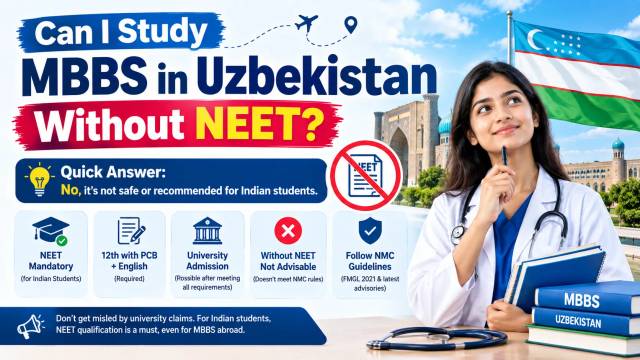
In some of the universities, admission is possible without NEET, but the students have to face consequences after returning to India.

If we look at the Foreign Medical Graduate Regulation 2021, issued by the National Medical Commission, it clearly mentions that Indian students must qualify NEET in order to legally practice medicine in India after completing MBBS abroad.

Several consultancies promote MBBS in Russia without NEET, but it will surely compromise your future.

Most of the Russian universities accept the minimum passing marks in NEET. However, the qualification is mandatory. Passing with a minimum score of 120-150 would be enough.

MBBS in Russia 2026: Cost Breakup

Russia is worth the hype. The affordable fee structure would be the answer for it.

Details

Cost in Rubles

Cost in Rupees

Tuition fees

450,000 RUB

5.5 lakh / Year

Hostel fees

20,000 RUB

24,000 / Year

Indian mess/food

90,753 RUB

1.2 lakh/ Year

Medical insurance

6,000 RUB

7,200 / Year

Visa and travel costs

2,000 RUB

50-80,000 one-time

The approx expense for the entire course can range between 15- 30 lakh. In an Indian medical college, the cost goes

What makes MBBS in Russia for Indian Students the Best Option?

  • High-quality academic structure at one-third the cost of Indian Private colleges
  • Medical colleges accredited by NMC
  • You won’t need any donations
  • English is the primary medium of Instruction
  • Focus on Research
  • Hands-on clinical training in the 6th Year
  • Recognition from global bodies like WHO, ECFMG or FAIMER

Drawbacks of MBBS in Russia for Indian students

  • Biting Winter and Extreme Climate
  • Learning Russian is essential during clinical rotation
  • Students have to appear in FMGE or NExT to get an Indian license.
  • Cultural shock and staying away from home
  • Restrictions on Banking due to geopolitical issues.

Despite the challenges, an MBBS in Russia can be one of the best investments in your career.

Who Should Consider Russia for MBBS?

Russia can be a good option for you if your profile aligns with these factors:

  • If you have a NEET score around 200
  • You have a limited budget for studies
  • You have the mindset of moving to a new country
  • You don’t want to waste an academic year.

For Whom Russia is Not an Option?

Russia is not a good option for you if you have the following profile:

  • If you have a NEET score above 600, and you can get into government colleges
  • You are not comfortable living away from your country
  • You have a budget below 15 lakhs
  • You want to practice in India, the USA, or the UK without appearing in any licensing exam.

Frequently Ask Question

What is the Total cost of MBBS in Russia?

Studying MBBS in Russia is quite affordable in comparison to other countries. The approximate cost for a six-year course can be around 15-30 Lakh, including the hostel fees and living costs.

How much should I score in NEET to study MBBS in Russia?

For general category students, the requirement is as low as 145. For SC, ST, or OBC category, a score of 120 would suffice.

Which are the top five medical colleges in Russia?

There are hundreds of great medical schools in Russia. To name a few top universities:

  • Moscow State Medical University, ranked among the top 10 medical schools in the country
  • Kazan State Medical University, known for academic excellence in medical education.
  • Pirogov Russian National Research Medical University, an academy of national importance
  • Saint Petersburg State University

Will an MBBS degree from Russia be valid in India?

NMC has declared a few parameters for students studying abroad to practice in India. Qualifying NEET and clearing the licensing exams like FMGE or NExT are essential.

When does the September intake close? Do I have time for the application?

In most of the Russian universities, the admission process is closed around August. However, try to apply as early as possible, as visa approval takes a lot of time.

Will I get an education loan for MBBS in Russia?

Yes, many Indian banks offer loans if you enrol in a recognised university in Russia.

Conclusion

MBBS in Russia for Indian students is an extremely practical alternative due to the uncertainty created by the NEET re-exam. Russia has NMC-approved universities and a global-standard education structure at affordable fees. More than twenty thousand Indian students are currently pursuing MBBS in Russia, which act as a supportive community for the new students. Note that if you wait till july to start your application process, it might compromise your chances of getting accepted. Applying early will keep you ahead of the herd. Think through and make your decision wisely.

Complete Guide to MBBS Abroad Without NEET for Indian Students
30MAY

Complete Guide to MBBS Abroad Without NEET for Indian Students

“I was very close, just a few marks more”

For hundreds of thousands of Indian medical aspirants, this one sentence breaks their dream of becoming a physician every year. According to NMC data 2026, almost 22 lakh medical students are appearing for about 1.15 L medical seats in NEET in India. Every year, NEET becomes tougher with limited seats, and the competition is growing. This does not mean a career has to end just because of a competitive exam. Hence, another opportunity is there. Students can study MBBS abroad without NEET. Many countries have their own entrance examinations for MBBS, which do not require the NEET score.

Can Indian Students Study MBBS Abroad Without NEET?

Yes, definitely. Thousands of Indian students are studying MBBS abroad without NEET. For many students, NEET feels like a do-or-die gateway for a medical career. One result, one rank, and missing the cutoff marks, makes students discouraged, heartbroken, even though there are years of hard work.

Many students get frustrated and ask Can I study MBBS abroad without NEET? Yes, you can study MBBS outside India without an NEET score. But first, you should know about the guidelines of the National Medical Commission (NMC) of India. NMC is the last gatekeeper of our country for MBBS graduates who wish to practice in India. According to NMC, you should qualify for NEET and study MBBS from an NMC-accredited university to practice in India. So, even if you have a foreign MBBS degree, you can not sit in the screening test (FMGE) for return and get a license for practice in India. So, you can study MBBS without having NEET abroad, but you should have a dream to practice in a foreign country, except India. So, you can go to another country to study MBBS, and this never demands your NEET score.

Take a smarter route. Study MBBS abroad without having a NEET score in a top country!

Which Country is Best for MBBS Without NEET?

This question is again the most searched among the Indian medical aspirants today. While searching for which country offers MBBS without NEET. Here, we will tell you about Russia, one of the most sought-after destinations for studying MBBS abroad without having a NEET score. Government universities are highly regulated with lower fees and globally recognised by FAIMER, WHO, and others.

Indian students choose Russia because most medical colleges offer an open door to MBBS without NEET abroad. In that case, universities in Russia offer MBBS admission for Indian students considering the entrance exam or academic performance of students.

MBBS in Russia Without NEET

When you are exploring your dream of MBBS abroad, Russia is the best option. With its historic friendship with India, it welcomes Indian students for higher education. Not only with an affordable admission process, but also a country that gives safety, global recognition, and a real medicine practice infrastructure. Russian government universities are highly regulated with lower fees and globally recognised by FAIMER, WHO, and others.

Indian students choose Russia because most medical colleges offer an open door to MBBS in russia without NEET. In that case, universities offer MBBS admission for Indian students considering the entrance exam or academic performance of students. On the other hand, students can practice medicine in Russia after passing the GOSS entrance examination in the country.

  • 50% marks are necessary in Physics, Chemistry, and Biology
  • Tuition fees: Average INR 3L to 5L yearly.
  • MBBS universities without NEET: Irkutsk State Medical University, North Ossetian State Medical Academy, and Tver State Medical University
  • Course duration is 6 years

MBBS in Georgia without NEET

Indian students find that Georgia is one of the top destinations for a foreign MBBS degree. More than 15000 Indian students are doing higher education in Georgia, according to the External Affairs Minister of India. To pursue MBBS without NEET in Georgia, you should have 50% marks in PCB in the 12th grade exam. Let’s find some quick facts about the medical degree program in Georgia,

  • Average tuition fees Indian Rs 3.5L to 8L yearly.
  • Universities are accredited by the WHO, NMC, and WFME
  • Universities offering the MBBS degree program without the NEET requirement: Geomedi Medical University and the University of Georgia.

MBBS in Uzbekistan without NEET

Another foremost option for Indian students is Uzbekistan for doing their MBBS abroad without NEET. Many university sin this country are widely recognised by WHO, WDOMS, and FAIMER. This indicates that Indian students will get an MBBS degree from a globally recognised university. Furthermore, students will get global clinical exposure, which increases their chances of practising in any foreign country. Find the following facts for doing MBBS without NEET in Uzbekistan. Further, you can give DYA or State Final Attestation for a license to practice in Uzbekistan in the final year of the MBBS degree.

  • Tuition fees INR 2.7 to 4.5 L per year
  • 6-year MBBS course according to NMC guidelines.
  • Universities offering MBBS without NEET: Every university in this country welcomes Indian students without any requirement of NEET score. Students have options to select the Tashkent Medical Academy, the Bukhara State Medical Institute, and so on.

MBBS in Kazakhstan without NEET

Kazakhstan is another prominent choice for MBBS and building a medical career without NEET for Indian students. The country offers a cosmopolitan environment with a large Indian community. Affordable course fees, global clinical exposure, and an English-mode learning program in Kazakhstan connecting Indian students for MBBS. Students can study in globally recognised medical universities in Kazakhstan and further practice in the country after passing the licensing examination, Sertifikatsiya.

  • Tuition fees: INR 3 to 5 L per year
  • Universities without NEET: Semey Medical University, Astana Medical University

MBBS without NEET in Kyrgyzstan

If you are willing to pursue MBBS from Kyrgyzstan, then you must consider the universities based on age and reputation. This country offers MBBS abroad without NEET in universities that follow NMC guidelines in their MBBS course design. Some of the facts to check,

  • Minimum 50% marks required in PCB in 12th standard
  • Average tuition fees are 3 L to 4.4 L INR annually
  • Universities offering MBBS without NEET: Kyrgyz State Medical Academy, Osh State Medical University.

Eligibility Criteria for MBBS without having a NEET Score

Without NEET MBBS in abroad is not a tough phase to cover. There are many universities abroad where the NEET score does not matter. These universities select candidates based on academic performance in 10+2 or through an entrance examination. Now, we will show you the eligibility criteria for admission.

  • Age: Minimum 17 years should have been completed before the application
  • Academic Performance: Indian students should have a science background in 10+2. Students should have score 50% marks in the core subjects, i.e., Physics, Biology, and Chemistry.
  • Identity Proof: Students should have a valid passport and a student visa for the country.
  • Medical Certificate: Students should produce medical test certificates, such as HIV.

Required Documents for Admission Process

If your eligibility matches the above-listed criteria, then take a look at the required documents for pursuing an MBBS abroad without NEET.

  • Academic transcripts
  • Passport
  • Visa documents

Admission Process: How it Actually Works for MBBS Abroad

Indian students can get admission in Russia for MBBS without appearing for NEET 2026. So, the question arises in mind, how? Now, gain some knowledge about the admission process for MBBS abroad without NEET.

Step 1: Research Universities: Thorough research is necessary to identify the universities that are offering MBBS degrees to Indian students without NEET requirements.

Step 2: Find the eligibility: After selecting the university, it is mandatory to assess eligibility based on the university’s requirements.

Step 3: Collect documents required for MBBS abroad: Students should collect all the documents, such as passports, academic certificates, and others.

Step 4: Fill the application form: Now, apply to the universities’ portals with all the relevant information.

Step 5: Pay the application fee: The relevant fee for the application should be paid at the portal while submitting the application.

Step 6: Wait: Now, it’s time to wait for universities’ confirmation of whether they have selected or rejected the application.

Is it Possible to pursue Medical Education without NEET for Free?

Actually, No. It is not possible to pursue your entire MBBS program abroad without a NEET score for free. On the other hand, you can avail of some scholarship facilities to reduce the tuition fees in universities. You can also apply early to the low-cost universities to reduce the processing fees.

Challenges Indian Students Should Know Before Studying MBBS Abroad

If you plan to pursue an MBBS degree from abroad, then you must know the challenges before moving forward with your plan. After completion of MBBS abroad without NEET, although you are not allowed to practice in India as per NMC guidelines on NEET score mandatory, you can practice in any country around the world. Further, to practice in a foreign country, you have to crack the national licensing exam for the selected country. Some of the countries hold licensing examinations in their native language, other than English.

Final Thought

Studying medicine in foreign universities is not a backdoor to India. Whereas, think about it differently. It is your opportunity to open a career to the rest of the world. It is not necessary to clear NEET, but you should focus on your actual dream to become a doctor. While doing your MBBS from foreign universities, you should also learn the local languages. This will help you to sit in the medical licensing exam or pursue higher studies in that country.

So, are you looking for proper guidance to secure a university seat abroad without NEET? Then, we, Education Vibes, are always ready to pave your path towards your dream!

NEET UG Re Exam 2026 LIVE: June 21 Exam Date, Revised Timing & Admit Card Latest Update
18MAY

NEET UG Re Exam 2026 LIVE: June 21 Exam Date, Revised Timing & Admit Card Latest Update

If you're one of those over 22 lakhs students who were waiting for the NEET UG 2026 re-exam date, your wait is over. Finally, after a few hectic days, the National Testing Agency (NTA) has officially announced the date on 21st June, 2026. As per the official updates, the exam timing is also revised.

Keep your eyes open on this page to get more updates on the NEET Exam 2026.

Highlights for NEET UG re-exam 2026

Take a quick look at the re-exam schedules, exam timing, and other information.

  • Re-exam date- NTA announces the date on 21st June, 2026
  • Revised Timing- The timing is 2.00 pm to 5.15 pm (15 minutes extra than before)
  • Admit cards released on- Expected time to admit card release on 14th June, 2026
  • Exam mode- The mode is offline (With pen and paper on OMR sheets)
  • City Intimation- It is also expected to be released in the 1st week of June
  • Reporting Time - Starts from 11.00 am
  • NEET Re-exam 2026 Notification

    The National Testing Agency has announced that the NEET UG re-exam will be held on 21st June, 2026, after the cancellation of the exam due to paper leak. The agency assures to maintain utmost security and transparency in the examination across 551 cities in the nation and 14 international centres.

    The admit cards will be live from 14th June, 2026, and city intimation will be updated by the 1st week of June. Students are informed that the admit cards of the 3rd May NEET-UG exam are not valid anymore.

    The exam timing will be 2.00 pm to 3.15 pm, and an additional 15 minutes have been added this time by the agency. The entry of students will start from 11.00 am.

    After all the buzz, the exam will be in offline mode on pen and paper with OMR sheets. No Computer-Based Test (CBT) will be conducted this time.

    Important Guidelines For Students

    • Students must carry required documents such as: admit card, authentic ID proof (Aadhar/passport), and passport-size photographs.
    • Don't carry prohibited items that are mentioned in the admit card, such as electronic gadgets, metallic items, wallets, and calculators.
    • To avoid unnecessary rushes at the last moment, arrive at least 2 to 3 hours before the scheduled time.

    Conclusion

    Finally, the anxiety regarding the exam date has finished. Students do not need to repay the examination fees, and they can choose their preferred city for examination centres. NTA is trying to provide all the measures to keep students’ motivation.

    Now students have to focus only on their studies. Remember, NEET UG Exam is the first step toward your dream. So, don’t waste time and give your best to revise chapters and give mocks.

    All the Best. 21st June,2026, will be your Day!

MBBS in Georgia for Indian Students Fees in 2026-27: Complete Cost, Eligibility & Admission Guide
15MAY

MBBS in Georgia for Indian Students Fees in 2026-27: Complete Cost, Eligibility & Admission Guide

MBBS in Georgia for Indian Students Fees are in the range of ₹3.5-8 lakhs per year. This makes it possible to pursue overseas medical education with a fraction of the amount that Indian students and their parents have to spend in a private institution in India. This makes pursuing an MBBS in Georgia a much more affordable option but also presents a unique opportunity to gain advanced knowledge of the field in a multicultural environment.

That being said, we are going to look at the overall parameters of the MBBS in Georgia fee, diving into its details to understand what Indian students and their parents should expect. In addition to the fees for MBBS in Georgia, we will look at further details. This includes all the major information, including eligibility, admission requirements, and top medical universities in Georgia. Without further ado, let’s dive into the subject right away and understand better…

A Quick Summary of Pursuing an MBBS in Georgia for Indian Students

The lower range of MBBS in Georgia for Indian Students Fees entices, making it one of the most favourable academic pathways. Here are quick details on the MBBS in Georgia:

  1. Total Duration of the Course: 6 years (5 years academic and clinical studies + 1 year of internship)
  2. Degree Type Awarded: Doctor of Medicine (MD); equivalent to MBBS in India
  3. Intakes for Indian Students: September/October is the primary intake; February/March is the secondary intake (offered by selected universities)
  4. Number of Indian Students: 13,000+ Indian students (approximately)
  5. Entrance Examination: Generally, no entrance exams are required, but some universities conduct in-house assessments
  6. NEET Requirements: Not required, but Indian students planning to practice medicine in India must have a valid NEET-UG qualification
  7. IELTS/TOEFL/PTE: English test score cards are not mandatory, but certain top-tier universities might require them for English proficiency
  8. Medium of Education: English is the official language used as the medium of instruction in all Georgian universities
  9. Basic Eligibility: 40% (reserved categories) or 50% (general category) in PCB and 17 years old
  10. Accreditation: World Directory of Medical Schools (WDOMS), National Centre for Educational Quality Enhancement (NCEQE), World Federation for Medical Education (WFME), World Health Organisation (WHO), National Medical Commission (NMC)
  11. Minimum MBBS Fees: $3,900 (₹3,73,382) per year
  12. Maximum MBBS Fees: $8,000 (₹7,65,911) per year
  13. Cost of Living in Georgia: ₹4,39,932 per year (on average)
  14. Total Estimated Budget (6 years): ₹21 - ₹48 lakhs approximately
  15. Top Universities in Georgia: Tbilisi State Medical University, Georgian National University SEU, Georgian American University, David Tvildiani Medical University, East European University
  16. Capital City: Tbilisi (3.8 million population estimated in 2026)
  17. Weather & Climate: Sunny summers with average temperatures of 28-32°C and moderately cold winters with average temperatures of 0-8°C

What are the Fees of MBBS in Georgia? A Snapshot of Major Costs

MBBS in Georgia for Indian students fees begin as low as $3,900 (₹3,73,382) per year and as high as $8,000 (₹7,65,911) per year. The exact amount of the tuition fee depends entirely on the particular university an applicant is enrolling in. Other than the tuition fee, managing daily expenses comes as a major hurdle for many students who have no idea of the estimated cost of living in Georgia. Here is a quick list of major expenses in estimated values, including MBBS fees in Georgia with hostel:

  • Tuition Fee (1st Year): ₹4,97,344
  • Tuition Fee (6 Years): ₹29,84,064
  • Hostel Fee (1st Year): ₹1,62,767
  • Hostel Fee (6 Years): ₹9,76,602
  • Mess Fee (1st Year): ₹1,08,511
  • Mess Fee (6 Years): ₹6,51,066
  • Food: Students’ Tiffin Services (1 Year): ₹2,17,020
  • Food: Students’ Tiffin Services (6 Years): ₹13,02,120
  • Private Accommodation With Food (1 Year): ₹5,42,556
  • Private Accommodation With Food (6 Years): ₹32,55,336
  • Total Estimated Cost of Living (1 Year): ₹9,76,608
  • Total Estimated Cost of Living (6 Years): ₹58,59,648

MBBS in Georgia Fee Structure: Cost Breakdown for Indian Students

The overall 6-year cost for an MBBS in Georgia for Indian students is nearly ₹29,84,064, according to the used exchange rate of $1 being equivalent to ₹90. To present an accurate estimate of tuition costs and other expenses, we have represented the cost breakdown for Indian students in two different categories:

Academic Cost

'Educational or academic cost' refers to the overall amount of expenses one spends to pursue their MBBS in Georgia. It includes tuition fees and hostel & mess fees, with other associated costs. Here is a representation of the academic cost, showing the MBBS in Georgia fees for Indian students with hostel:

  • Avg. Annual Tuition Fee in Georgia - $5,500 (₹4.97 lakh)
  • Avg. Annual Hostel Fee in Georgia - $1,800 (₹1.62 lakh)
  • Avg. Annual Mess Fee in Georgia - $1,200 (₹1.08 lakh)
  • One-time Medical Insurance - $100 (₹9,043)
  • Visa Extension or TRC (Temporary Residence Card) Fee - $100 (₹9,043)

Cost of Living in Georgia

Estimating the cost of living for any country should be taken into consideration from a logical perspective. The cost of living includes food, accommodation, transportation, and other miscellaneous expenses. Some of these expenses can amount to a very low accumulated amount, while others might be higher, depending on the student’s lifestyle habits and preferences. To give a breakdown on the cost of MBBS in Georgia, refer to the data below:

  • Food (tiffin services for students) Per Month - $200 (₹18,085)
  • Metro Pass (for a particular route) Per Day - $19 (₹4,612)
  • Private Accommodation (including food) Per Month - $500 (₹45,213)
  • Personal Expenses Per Month - $150 (₹8,410)
  • Total Living Expenses Per Month - $900 (₹81,384)

Top Medical Universities in Georgia: Fees Structure 2026The

MBBS in Georgia fees for Indian students will vary across medical universities. Some top-tier universities cost more than the mid-range or cheap MBBS colleges in Georgia. Here is an overview of the fee structure for the top medical universities in Georgia:

University

1st-Year Tuition Fee

6-Year Tuition Fee

Hostel Fee + Food (6 Years)

Overall Budget for 6 Years

Georgian National University SEU

₹5,31,000

₹31,86,000

₹9,45,000

₹43,20,000

Geomedi Medical University

₹4,95,000

₹29,70,000

₹9,45,000

₹41,04,000

East West University

₹3,51,000

₹21,06,000

₹9,45,000

₹32,40,000

David Tvildiani Medical University

₹5,40,000

₹32,40,000

₹9,45,000

₹43,74,000

Avicenna Batumi Medical University

₹4,41,000

₹26,46,000

₹9,45,000

₹37,80,000

University of Georgia

₹5,85,000

₹35,10,000

₹9,45,000

₹46,44,000

Caucasus International University

₹5,40,000

₹32,40,000

₹9,45,000

₹43,74,000

Georgian American University

₹5,40,000

₹32,40,000

₹9,45,000

₹43,74,000

Ken Walker International University

₹5,40,000

₹32,40,000

₹9,45,000

₹43,74,000

East European University

₹4,95,000

₹29,70,000

₹9,45,000

₹41,04,000

Scholarships for Indian Students to Pursue their MBBS in Georgia

If you are seeking an MBBS in Georgia scholarship, the following three categories comprise some major examples open to Indian medical students:

Government Scholarships

  • International Education Centre Grants
  • Ministry of Education Support Programs
  • State Study Grant (Foreign Students)
  • Bilateral State Education Exchange Schemes

University Scholarships

  • TSMU Academic Merit Scholarship
  • BSU International Excellence Award
  • DTMU Rector’s Excellence Award
  • SEU University Performance Grant

Other External Sources

  • J.N. Tata Endowment Scholarship
  • Sahu Jain Trust Medical Scholarship
  • National Overseas Scholarship Scheme
  • Erasmus+ International Mobility Program

Foreign Educational Loan to Pay for the MBBS in Georgia Fee

The overall cost of MBBS in Georgia fees for Indian students with hostel can be a heavy burden for many Indian families. The good news is that many financial institutions in India provide easy access to avail an education loan to pursue overseas higher education.

Financial Institutions

These are some of the top financial institutions in India which provide financial aid to Indian students and their families to fulfil their requirements for the MBBS in Georgia:

  • State Bank of India (Global Ed-Vantage Scheme)
  • Bank of Baroda (Baroda Scholar)
  • Punjab National Bank (PNB Udaan)
  • HDFC Credila (Specialised Student Loans)
  • ICICI Bank (iDrive Education Loan)
  • Axis Bank (Prime Education Loan)
  • Avanse Financial Services

Coverage

When considering the overall cost for an MBBS in Georgia fees in Indian rupees, certain elements can make the scales go heavier on one of the two sides. To balance the scales for overall financial sustainability, different schemes and plans offer different coverages, including:

  • Tuition Fees
  • Accommodation
  • Living Expenses
  • Economy Airfare
  • Essential Expenses (books, equipment, laptop)
  • Additional Fees (exam, library, laboratory)
  • Medical and Travel Insurance

Documentation

Each financial institution requires different documentation to provide students with financial aid for the MBBS in Georgia fee. While specific requirements may vary across different institutions, here is some of the generally accepted documentation for an education loan:

  • 10th and 12th Marksheets
  • Confirmed Admission/Offer Letter
  • University Fee Structure
  • Student's and Co-applicant PAN
  • Aadhaar Card
  • Valid Passport
  • NEET-UG Scorecard
  • Last 2-3 years' ITR, Form 16, and Salary Slips
  • Last 6 months’ Bank Account Statements
  • Property documents or Liquid Security

What is the MBBS in Georgia Eligibility for Indian Students?

MBBS in Georgia eligibility accepted by most universities are the following:

  • Student cleared senior secondary education (12th) with PCB (physics, chemistry, and biology).
  • Scored a minimum of 50% in PCB or 40% if they are from a reserved category (SC/ST/OBC).
  • The minimum age should be 17 years old on or before the 31st of December in the same admission year.
  • As per the NMC, all Indian students planning to study MBBS in Georgia must have a valid NEET-UG qualification to be eligible for the medical licensing exam in India.

What is the MBBS in Georgia Admission Process for Indian Students?

Here is a simple step-by-step guide for the MBBS in Georgia admission of Indian students:

  1. Take part in a brief consultation with an Education Vibes counsellor to discuss your academic objectives and long-term career goals
  2. Shortlist an NMC-recognised university in Georgia based on your eligibility, budget, and other relevant factors
  3. Submit all the required documents to the official admissions office of the chosen Georgian university
  4. All the documents must be submitted according to the university regulations and requirements
  5. If required by the university, clear an online interview for English language proficiency
  6. Receive the provisional admission letter. Pay the initial deposit to the university to secure your MBBS seat
  7. Receive the Rector’s Order from the Georgian Ministry of Education and Science for a visa application
  8. Visit the nearest Georgian embassy or consulate and submit your application with the required documents (financial proof, health insurance, etc.)
  9. Take part in the pre-departure briefings from Education Vibes before departing to Georgia and receive necessary resources (local SIM card, forex cards, etc.)
  10. Upon your arrival in Georgia, our representative will escort you to the university and assist in the final enrolment (university registration, 1st-year tuition fee payment, and applying for a Temporary Residence Permit).

Pursuing an MBBS in Georgia 2026 for Indian Students

Before students begin to apply for an MBBS in Georgia, they should take the following points into consideration: following the academic year 2026-2027, all international students will not be eligible to apply to a public university in Georgia, as the medical seats will be solely reserved for domestic students.

According to the Georgian Education Minister, all international students wanting to pursue an MBBS abroad must apply to a private medical university. Admission to private universities in Georgia will be done on a first-come, first-served basis. Unlike Indian private colleges, it won’t involve the requirement to pay any donation or capitation amount hidden in the Georgia MBBS fees.

NEET UG 2026 Exam Cancelled: Complete Details, Student Reactions, Re-Exam Updates & Future Impact
13MAY

NEET UG 2026 Exam Cancelled: Complete Details, Student Reactions, Re-Exam Updates & Future Impact

Another year, but the same uncertainty and fear among students due to the NEET UG 2026 exam cancelled. Every year, lakhs of medical aspirants appear with a ray of hope to secure the seats at top medical colleges in India. But every year they get devastated with multiple reasons, sometimes irregularities, paper leaks or sometimes mismanagement from the authorities.

NEET-UG is not only about the 3 hours in the exam hall, but it also carries the hard work of many years. An utter mismanagement hangs students' dreams in the middle.

We will break down every detail of the NEET-UG 2026 exam, probable paper leak issue, official updates on re-examination and further steps.

What Is NEET-UG?

The NEET-UG (National Eligibility cum Entrance Test- Undergraduate) is the nationwide entrance exam for MBBS, BDS, Veterinary course and other medical courses. It is conducted by the NTA (National Testing Agency). Every year, this exam is scheduled after the 12th board exam is completed. It is one of the toughest competitive exams in the country, where more than 25 lakh students are running behind only 1 lakh medical seats across India.

Why was the NEET UG 2026 Exam Cancelled?

On 3rd May, 2026, the NEET-UG exam was conducted by the NTA. But within 10 days, the agency cancelled the exam, showing the reasons for the paper leak. As per some newspaper reports, in Rajasthan, Uttarakhand and Maharashtra (Latur), some question sets of NEET were circulated.

If such a huge exam body can not maintain the integrity and security of the examination, then what would be the future of this exam?

Major Reasons Behind the Cancellation

It is speculated that the sanctity of the examination was totally compromised, and it creates buzz among the students. Here are the major reasons behind such a mess.

Allegations of Paper leak- It is reported that some question sets were leaked among students in Rajasthan, Uttarakhand and Maharashtra. From a private coaching centre, the questions were circulated.

Mismanagement in Exam- From different exam centres, students claimed that they faced issues in biometric verification. Some of the centres were delayed in question distribution, which created panic among students.

Growing Student Protest- Students have continued the protest against the NEET exam on social media and demanded a transparent examination. It grabs the nation’s attention.

What Did the NTA Announce?

The National Testing Agency (NTA) posted on X-handle that the officials consider all the allegations on the NEET UG 2026 exam cancelled and are investigating the same. Authorities mentioned that:

  • Transparency of the exam will be maintained.
  • Strict action will be taken against the people behind the whole scenario.
  • Notice on the re-examination will be published, and no need for re-registration

How Many Students Are Affected?

In 2026, 22.79 lakhs students were registered for the NEET-UG, and 96.92% students appeared for the exam. Exams cancelled means not only the students are affected, but also their parents, coaching centres and the entire medical study ecosystem get disrupted. The current session will be delayed, which will create a disturbing emotional situation among students.

Confused About Your Next Step After NEET 2026?

Talk to our MBBS experts and explore all possible options including MBBS in India & abroad.

The Paper Leak Controversy Explained

The controversy over the NEET-UG paper leak is again resurfacing in 2026. In different states, a racket distributed sets of question papers among students prior to the examination for a big fat amount. It is one of the most disturbing topics in the education system where aspiring doctors are involved in such illegal practice.

Different reports claim many facts and information, such as:

  • The question paper was leaked before the exam.
  • A network demands money for leaking question papers.
  • A strong and internal cheating network is involved in this act.

When the allegations come to the fore, students demand for-

  • Re-examination with full transparency
  • An unbiased investigation
  • Strong security system for the exam

What Happens Next?

After calling off the exam, NTA is restructuring the whole exam ecosystem to avoid any such issues in the future. The agency is re-evaluating the centres that faced technical issues. Also, they started the investigation to identify the racket. Students are advised to be patient and wait for further notification of re-examination and admit card issues.

How Should Students Prepare Now?

It is totally understandable that this period is completely devastating for students. But they need to overcome their emotional turmoil and buckle up again for re-examination. You never know it could be your day to shine.

  • Students are advised to resume their studies and prepare a strategy. Revise the chapters again and again.
  • Try to appear for more mock tests from different sources and analyse those.
  • Appear for full-length mock every day, along with 2 to 3 sectional mocks daily.
  • Figure out the portions where you felt difficulties on 3rd May. Clear the doubts and practice repeatedly.
  • Avoid social media, because there are chances that you could be distracted by false news or controversies.
  • Look after your mental health to avoid anxiety. Try to do meditation or go for a walk daily to concentrate more on studies.

Need a Backup Plan for Your Medical Career?

Get expert guidance on MBBS admission options, counselling, low-budget medical universities & career planning.

Will NEET UG 2026 Be Tougher in the Re-Exam?

There is no proven fact or information that the re-exam will be tougher. The syllabus will be the same, the duration will be 3 hours, and your preparation will be on point. Toughness is considered one of the bases of psychological state on the day of examination.

Student Reactions Across India

The NEET UG 2026 Exam cancelled news shook students with panic and anxiety. Some of them are venting their frustration on social media. A few students express their fear and anxiety regarding the transparency of the re-examination. It is obvious that students may feel that they may lose an academic year due to the mismanagement of the exam.

Parents are also concerned about the future, what if the exam gets extremely delayed? Social media is filled with posts on the transparency and accountability of such a prestigious examination.

Impact on Medical Admissions

A special “domino effect” disturbs the whole medical education system.

  • The academic session for the first-year batch of 2026-27 will be delayed
  • Many students feel exhausted and burned out due to the hassle and choose to study MBBS abroad.
  • Due to the delay, some students utilise it positively and perform well, which creates more competition.

Lessons From the NEET UG 2026 Crisis

From every setback, there are lessons to learn. As the NEET UG 2026 exam cancelled, both students and the agency got their lessons.

  • Students learn not to put all the eggs in a single basket. Sole dependency on a single exam can create a problem, so always be ready for plan B. It could be MBBS abroad or pursuing a different subject in a different field.
  • The agency needs to strengthen the security measures of the exam.
  • NTA should impose a strict anti-cheating policy.

When Will the NEET UG 2026 Re-Exam Happen?

As per the official posts, no particular date is mentioned. In accordance with the expert's opinion, the exam may be conducted within the 3rd week of June to the 2nd week of July.

Students must prepare themselves accordingly so that they won't miss the chance. They must check the official website for further information on revised exam dates, updated guidelines, and admit card issuance.

What Students Should Do Now

While awaiting the re-examination, students must secure their future with structured plans. It is not advised that students neglect the NEET-UG exam, but simultaneously plan another way. Here is quick advice for students:

  • Check the official websites for the latest updates on exam date and schedule.
  • Keep the documents prepared, such as old admit cards, application details and previous exam documents.
  • Consult with experts for other career prospects. Backup plans may lead to a better future. Also, it reduces extreme mental pressure from students and their families.

End Note

The NEET UG 2026 Exam cancelled has put immense mental pressure on Indian medical aspirants who put all their heart and soul into this single exam. Until the investigation is ongoing, students should avoid panicking and focus on preparation. Consistent preparation helps to break through any uncertain situation. It is also advised not to rely on a single career path.

Still Worried About NEET UG 2026?

Speak with our expert counselors and understand all available medical admission opportunities in India and abroad.

NEET 2026 Answer Key OUT: Solutions PDF for Code 11, 12, 13 & 14, Paper Analysis & Expected Cutoff
05MAY

NEET 2026 Answer Key OUT: Solutions PDF for Code 11, 12, 13 & 14, Paper Analysis & Expected Cutoff

The NEET 2026 Answer Key is now available. Check your score now before the cutoff surprises you. To maintain uniformity in the marking among the huge number of candidates who appeared for the test, the NTA adopted a four-set distribution method.

The NEET 2026 Answer Key for paper codes 11, 12, 13, and 14 is now available from Aakash, helping students assess their test performance before NTA officially releases the answer key.

NEET Answer Key Out Now: Code 11, 12, 13, and 14

The NEET 2026 Answer Key PDF is available for all sets, enabling candidates to cross-check their answers without difficulty. The NEET 2026 examination was held at various centres by the National Testing Agency (NTA), with four distinct sets of papers containing similar questions.

NEET answer key code 2026 by Aakash

PDF download

NEET 2026 Answer Key Code 11 by Aakash

Download Here

NEET 2026 Answer Key Code 12 by Aakash

Download Here

NEET 2026 Answer Key Code 13 by Aakash

Download Here

NEET 2026 Answer Key Code 14 by Aakash

Download Here

Every answer key comprises detailed solutions. This is particularly important for physics and chemistry, where conceptual understanding is key. While biology questions may be straightforward, their answers must also be cross-checked.

NEET 2026 Question Paper PDFs: Code 11, 12, 13, and 14

Here, you will find all the direct download links for the question papers in various codes. It is generally helpful for candidates to analyse different papers since the NTA shuffles the questions.

NEET 2026 question paper code

PDF download

Code 11

Download Here

Code 12

Download Here

Code 13

Download Here

Code 14

Download Here

NEET 2026 paper analysis: Subject-wise

According to the NEET paper analysis 2026, the paper had a balanced pattern but was slightly time-consuming. Initial reviews by students and experts reveal that the paper was neither too easy nor too difficult.

Physics

Physics proved to be the most challenging among all the sections in the NEET exam paper analysis 2026 due to numerical and long calculations. It will have a major impact on ranking.

Chemistry

The chemistry paper was quite balanced in the NEET exam analysis 2026, with both conceptual and direct questions being asked. Organic Chemistry questions were moderately weighted.

Biology

The biology section appeared to be based mainly on the NCERT in the NEET paper analysis 2026. Those students who prepared the NCERT well had an edge over others.

NEET exam review 2026: Based on Difficulty

Taking into consideration all the feedback that has been provided so far, a review of the NEET 2026 examination can be carried out as follows:

Subject

Difficulty level

Physics

Moderate to difficult

Chemistry

Moderate

Biology

Easy to moderate

Overall difficulty level: Moderate

NEET 2026 Expected Cut-off

The NEET 2026 Answer Key is a vital guide in determining the cutoff. From the existing trend and the difficulty level of the exam, there is a possibility that the cutoff might rise.

Estimated NEET 2026 Cutoff (General Category)

Approximate cutoff: 610 to 650 marks

OBC/SC/ST Category

Estimated cutoff: 480 to 550 marks

Given that the difficulty level was average and that biology questions were relatively easy, it is assumed that the cutoff will be higher than that of the previous year.

NEET 2026 Paper Pattern

The NTA follows a “high reward-high risk” approach. You get 200 questions, out of which you need to attempt only 180. It is indeed a safety cushion, but the negative marking will be the final “stress test” for your ranking.

Subject

Section A (Mandatory)

Section B (Choose 10/15)

Total Questions

Max Marks

Physics

35

10

45

180

Chemistry

35

10

45

180

Botany

35

10

45

180

Zoology

35

10

45

180

TOTAL

140

40

180

720

Quick Grading System

  • Correct Answer: Awarded 4 Points
  • Wrong Answer: Penalised 1 Point (Negative Grading)
  • If Question Left Unanswered: 0 Points
  • Time Allotted for Test: 200 Minutes (3 Hours and 20 Minutes)

NEET 2026 Qualifying percentile

The qualifying percentile for NEET 2026 indicates the number of applicants having a score equal to or lower than a certain percentile. The cutoff percentile remains the same each year and helps in determining whether an applicant qualifies for admission.

  • General/EWS - 50th percentile
  • SC/ST/OBC - 40th percentile
  • PwD SC/ST/OBC - 40th percentile
  • PwD General/EWS - 45th percentile

NEET 2026 Cut-off Scores

For those who have appeared for the 2026 exams, knowing about the "Expected Cutoff" would be the very first step towards formulating a strategy that can help them crack the exam. Due to an increasing number of candidates and the improvement in their preparation material, the cutoffs for 2026 will be very high.

The following figures are derived from difficulty-to-rank ratios of the past years and the level of competition inflation at present.

Category

Expected Cutoff Score

UR / EWS

700 – 141

OBC / SC / ST

150 – 126

UR / EWS - PwD

150 – 116

OBC / SC / ST - PwD

130 – 121

NEET 2025 cut-off scores

There was an extraordinary increase in competition in the year 2025, raising the qualifying standard higher than anyone had imagined. The chart below displays the qualifying percentages and standards for each category.

Category

NEET 2025 Cutoff Score

Qualifying Percentile

General / EWS

686 – 144

50th Percentile

OBC / SC / ST

143 – 113

40th Percentile

General / EWS (PwD)

143 – 127

45th Percentile

OBC / SC / ST (PwD)

126 – 113

40th Percentile

NEET 2025 cut-offs for AIIMS MBBS

When you are applying for admission into AIIMS in 2026, you are aspiring for the best among Indian medical education institutes. A good NEET rank is not sufficient; you have to study the NEET cut-off ranks IN 2025 of previous years. If your current mock rank does not match the cut-offs, then your approach requires some changes.

College Name

GN

EWS

OBC

SC

ST

PWD

AIIMS, New Delhi

48

254

207

644

1405

351,802

AIIMS, Jodhpur

392

1153

766

6920

7835

87,801

AIIMS, Bhopal

634

1582

1142

7030

11,713

116,405

AIIMS, Bhubaneswar

785

2259

1481

6034

23,884

22,426

AIIMS, Rishikesh

816

1715

1104

8240

33,497

151,827

AIIMS, Raipur

1376

2631

2016

96,012

22,885

194,869

AIIMS, Patna

4952

3028

2705

17,167

111,319

221,737

NEET 2026 Government college cut off

In order to secure a seat at any state or central government medical college without shelling out huge amounts in private colleges, one requires a score that passes the "stress test" of stiff competition.

  • The Gold Standard: The safe zone for scoring General or EWS category in the exam is 650+.
  • The Reason behind this: With the increasing standards of preparation and the number of aspirants who are getting high scores, the cut-off for securing a seat in government colleges keeps rising. While the passing score can be relatively low, the cut-off for admission in government colleges is another story altogether.

Common Errors to Avoid in the Use of NEET 2026 Answer Key

Here are some common errors students should avoid while using the answer key:

  • Choosing an incorrect paper code
  • Not paying attention to negative marking
  • Opting for guesswork rather than verification
  • Racing against time during calculations
  • Recalling questions from memory instead of real answers

Being reckless with the answer key makes your calculated score worthless.

End Note

The NEET 2026 Answer Key is much more than an after-exam ritual. It is your own litmus test. This is where the truth prevails over speculations. You will get the real picture only if you use the answer key correctly.

Students who use the answer key to their benefit come out on top, while those who ignore it tend to act late in the game.

Make good use of the NEET 2026 Answer Key and plan your strategy accordingly.

Medical Courses After 12th: A Complete Guide for Indian Students
16JAN

Medical Courses After 12th: A Complete Guide for Indian Students

"Study hard until you can say, ‘I am a doctor.’ Then everything will be alright." This motivational quote inspires thousands of students to pursue medical courses after 12th. Opting for a career in medicine to become a doctor is one of the bravest and rewarding decisions for students in India. The healthcare sector in India is growing rapidly and demands highly skilled professionals who have expertise in healthcare, biotechnology, diagnostics, and related health sciences. Students can select from a range of medical courses and study them either mbbs in India or mbbs abroad.

Explore this informational blog for a complete guide on medical courses after 12th class for Indian Students.

Highlight of Medical Courses After 12th

We understand the challenge that many students face when it comes to choosing the best course in medical field to start the medical journey. These programs provide training for students to become doctors and nurses. Also, some of them educate students for healthcare roles like therapists, pharmacists, and medical technicians. Medical education provides career stability, global employability, and chances to contribute positively to society. Students from the Science stream (PCB) can take on various roles in clinical practice, research, diagnostics, public health, and healthcare management. Mentioned below is the highlight of the best courses after 12th medical:

Particular

Stats

Course Level

Undergraduate

Duration

1 Year to 6 Years

Tuition Fees

INR 1 L to INR 1 Cr or more per year

Eligibility Criteria

Require 10+2 with Physics, Chemistry, Biology

Exam

NEET, CUET, etc.

Study Options

Medicine in India or Medicine Abroad

Average Salary After Degree

INR 5 L to INR 10 L and more per year

Top Medical Courses After 12th

Students can select from after 12th medical courses based on their interests. They must qualify for the NEET exam for most medical courses. However, some courses are available without NEET for Indian students. Check the medical courses list after 12th for Indian students below.

  • BPharm (Bachelor of Pharmacy)
  • BSc Nursing (Bachelor of Science in Nursing)
  • BOT (Bachelor of Occupational Therapy)
  • B.Optom (Bachelor of Optometry)
  • MLT (BSc Medical Laboratory Technology)
  • MBBS (Bachelor of Medicine and Bachelor of Surgery)
  • BDS (Bachelor of Dental Surgery)
  • BAMS (Bachelor of Ayurvedic Medicine and Surgery)
  • BHMS (Bachelor of Homoeopathic Medicine and Surgery)
  • BNYS (Bachelor of Naturopathy and Yogic Sciences)

Medical Courses After 12th without NEET

Explore the popular medical courses after 12th without NEET for Indian students below:

  • BPharm (Bachelor of Pharmacy)

A BPharm or Bachelor of Pharmacy is a 4-year undergraduate degree. This popular medical course focuses on drug science and covers how medicines are made, tested, and used. It will prepare graduates for advanced careers in careers in hospitals, research, and the pharmaceutical industry.

Average Annual Salary of Graduates: INR 2.5 L to INR 6 L

  • BSc Nursing (Bachelor of Science in Nursing)

A BSc Nursing is one of the perfect alternatives to MBBS abroad for Indian students. It is a 4-year undergraduate program that trains students to become registered nurses. This program will prepare graduates for diverse roles in patient care, health education, and management in a public or private healthcare environment.

Average Annual Salary of Graduates: INR 3 L to INR 7 L

  • BOT (Bachelor of Occupational Therapy)

A BOT refers to the Bachelor of Occupational Therapy is a 5-year (including internship) undergraduate health science program. This program trains students to help people who are facing physical, mental, or developmental challenges in recovery. Students have to pass the 12th class in the Science stream with a minimum of 50%.

Average Annual Salary of Graduates: INR 3 L to INR 6 L

  • B.Optom (Bachelor of Optometry)

A B.Optom is a 4-year undergraduate degree that focuses on eye and vision care. This program trains students to check eyesight, diagnose vision problems, prescribe corrective lenses, and manage eye diseases. Graduates get the opportunity to work in hospitals, research, optical retail stores, etc.

Average Annual Salary of Graduates: INR 4 L to INR 7 L

  • MLT (BSc Medical Laboratory Technology)

BSc MLT is a 3-year undergraduate degree that focuses on diagnosing diseases through lab tests. This popular medical program covers key areas like biochemistry, microbiology, haematology, and pathology. Students get training to operate labs and perform diagnostic procedures. Graduates of this program get job roles in hospitals, diagnostic centers, and research labs.

Average Annual Salary of Graduates: INR 2.6 L to INR 4 L

Check out other medical courses after 12th without NEET

Medical Courses After 12th with NEET

Mentioned below are some of the popular medical courses for Indian students after the 12th class:

  • MBBS (Bachelor of Medicine and Bachelor of Surgery)

MBBS is one of the most popular medical programs among Indians. Many students prepare to study MBBS in India or abroad to gain comprehensive knowledge of human anatomy, drugs & treatments, and more. It covers various subjects, such as Medicine, Surgery, Paediatrics, Gynaecology, etc. Graduates can pursue postgraduate studies in multiple specialisations or can practice in India. Qualifying for the NExT exam is compulsory for those who have completed an MBBS from abroad.

Average Annual Salary of Graduates: INR 4 L to INR 8 L

  • BDS (Bachelor of Dental Surgery)

BDS is a 4 to 5-year undergraduate program that provides students with a basic and foundational knowledge of Dental studies. It trains students to become licensed dentists who are experts in oral health diagnosis, prevention, and treatment. BDS focus on subjects such as anatomy, pathology, and various dental specialities.

Average Annual Salary of Graduates: INR 3 L to INR 7 L

  • BAMS (Bachelor of Ayurvedic Medicine and Surgery)

BAMS is a 5-year Indian undergraduate medical degree in the field of Ayurveda. It combines traditional Ayurveda with modern medicine to provide knowledge of natural approaches used in healing by using herbal remedies, yoga, and Panchakarma. Students get practical training that prepares them for a career as Ayurvedic practitioners, Panchakarma specialists, etc.

Average Annual Salary of Graduates: INR 3 L to INR 6 L

  • BHMS (Bachelor of Homoeopathic Medicine and Surgery)

The BHMS is an undergraduate degree that provides comprehensive knowledge and skills to practice the homoeopathic system of medicine. It is one of the most popular and recognised medical courses regulated by the National Commission for Homoeopathy under the Ministry of AYUSH, Government of India. The duration is 5.5 years, and graduates get a work opportunity in government or private hospitals as a homoeopathic doctor.

Average Annual Salary of Graduates: INR 2.5 L to INR 5 L

  • BNYS (Bachelor of Naturopathy and Yogic Sciences)

BNYS is a 5.5-year undergraduate medical degree that trains students in natural healing. It combines modern medical sciences with traditional naturopathic principles that focus on preventive care and self-healing for wellness. Key subjects students can study are Hydrotherapy, Herbal Medicine, Yoga Philosophy, Nutrition & Diet Therapy, etc. Career options available for graduates are Naturopathic Doctors, Yoga Therapists, Wellness Consultants, Health Coaches, etc.

Average Annual Salary of Graduates: INR 2.5 L to INR 6 L

Best Medical Courses After 12th with High Salary

Explore the list of the best medical courses after 12th with high salary for students:

Best Medical Courses After 12th

Average Yearly Salary in INR

MBBS

Up to 15 L

BDS

Up to 12 L

BPharm

Up to 10 L

Physiotherapists

Up to 15 L

BOT

Up to 8 L

Emerging

Up to 8 L

Eligibility Criteria for Indian Students

Mentioned below are the general criteria that students must meet for admission to any medical courses after 12th:

  • Academic Background: Indian students have to pass the 12th class with Physics, Chemistry, and Biology.
  • Score Required: Must have a minimum aggregate of 50% in 12th class.
  • Exam Required: National Eligibility-cum-Entrance Test (NEET-UG) is required for admission to undergraduate medical education.
  • Age Limit: Must be a minimum of 17 years till 31 December of the admission year.

Note: Specific eligibility criteria may vary as per the college or university.

How to Become a Doctor After 12th?

Lakhs of students have a dream to become a doctor after completing their higher secondary education. But the question is how to become a doctor after 12th. Well, the answer is quite simple for future doctors. Mentioned below are common steps, following which you can complete your dream:

Step 1: Complete your 12th class with Physics, Chemistry, and Biology

Step 2: Qualify for the NEET exam to study MBBS abroad or in India.

Step 3: Get admission to recognised medical colleges that follow the NMC guidelines.

Step 4: Complete your MBBS with an internship.

Step 5: Register with the National Medical Commission to get your medical license.

Read more: How to Become a Doctor: Complete Career Roadmap

Ending Note

Studying medical courses after 12th will prepare you for a healthcare career. Whether you are looking for courses that require NEET for becoming a doctor or medical courses without NEET. Multiple options are available for Indian students that align with their passions and skills. Graduates get multiple career opportunities to start a career as a doctor. By exploring this blog, you can understand the eligibility, popular medical courses, and career options after 12th medical programs.

You can connect with Education Vibes, a highly trusted consultancy in India, to know every detail on medical courses after completing the 12th class.

NEET Dress Code 2026: NTA Released Guidelines for Male & Female Candidates
01NOV

NEET Dress Code 2026: NTA Released Guidelines for Male & Female Candidates

Preparing well for the NEET exam does not end only at your studies; knowing and being well aware of the NEET dress code is important, too. In the coming NEET UG 2026, students will be studying from their textbooks and trying their hands at mock tests. However, the one most important but very undermined aspect of the NEET examination is the official dress code. The National Testing Agency (NTA) in India conducts the NEET exam 2026, and has certain guidelines for all candidates to follow for attire and ensuring a smooth exam conduct, which also includes items strictly prohibited in the exam hall.

To clear up the air around the confusion on the NEET dress code, we will break things down in a clear and precise manner, so that all candidates for the upcoming NEET 2026 are prepared well in nearly every way and find no unnecessary obstacle or challenge during the exam. We will first understand the need for the dress code, then we will move forward to more specific details, including dress code for both male and female candidates, guidelines for religious attire or PwD candidates, and common mistakes to avoid for your NEET examination.

Why is the NEET Dress Code Important to Follow for All Candidates?

Every year, the National Testing Agency (NTA) in India conducts the National Eligibility cum Entrance Test (NEET). The NEET dress code is part of the guidelines that NTA provides for all candidates from all over the country, with different backgrounds and cultural preferences. While dress code for the NEET might seem like an insignificant aspect of the examination process, it serves several purposes, which are as follows:

  • Uniformity - When all candidates follow a similar attire, there is a sense of fairness in the examination process, reducing the possibility of someone taking advantage of any loopholes in the conduct of the NEET 2026 examination.
  • Streamlined - Following the NEET dress code has a streamlined process, which usually includes light-coloured half-sleeved clothes with minimal pockets. It helps in ensuring that the frisking process and security check happen smoothly.
  • Focus - More than establishing protocols, wearing simple, plain clothes with no heavy embellishments does not distract students from their NEET 2026 exams.

NEET Dress Code 2026 for Different Candidates

More than 25 lakh candidates from all over India take the NEET exams for their MBBS dreams! The candidates in each state gather at their allotted examination centres and go through the same due diligence for the NEET dress code. All of these candidates come from all walks of life and different cultural backgrounds. Also, with certain gender-coded dressing trends and preferences comes the gender-coded dressing code for NEET exams in India. Here is a breakdown of the dress code for different categories of NEET candidates:

NEET Dress Code 2026 for Male Candidates

The NTA has certain guidelines for the NEET dress code 2026 for male candidates. Certain items are allowed, while some are not. Here is a gist of the acceptable and non-acceptable NEET dress code for male candidates:

Allowed

Not Allowed

Light-coloured half-sleeve shirts/t-shirts; plain, no large buttons, brooches or designer prints

Full-sleeve shirts, jackets, layered clothing, garments with large buttons, heavy patterns or embroidery

Trouser or pants; simple, no excessive zip pockets or layering

Clothing with multiple zip pockets, heavy logos or decorative elements

Slippers or sandals with low heels; open-foot style, no fully closed shoes

Shoes, boots, or footwear with thick soles

NEET Dress Code 2026 for Female Candidates

Just as there are dress codes meant for male candidates, there are explicit guidelines on the NEET dress code 2026 for female candidates, too. Here is a quick look at the NEET dress code for female candidates, inclusive of things that are allowed and prohibited:

Allowed

Not Allowed

Light-coloured half-sleeve tops/t-shirts, simple salwar/trouser combination, without heavy embroidery, large buttons or badges

Sarees, heavily embroidered kurtis, leggings or palazzos that do not follow the simple half-sleeve rule

Simple trousers or salwar pants (plain with minimal detailing)

Large buttons, brooches, badges, heavy jewellery (like earrings, nose rings, chains) or big floral prints

Slippers or low-heel sandals; open-foot style

Shoes/boots, high heels; fully closed footwear

NEET 2026 Dress Code for Religious Candidates

NEET candidates also include people who wear clothes that are part of their respective cultural background. The NEET dress code for such candidates is not too strict and allows easier conduct. Here are some guidelines on the NEET 2026 dress code for religious candidates:

  • Candidates can wear their cultural attire, but have to disclose this during the application process
  • Such candidates have to arrive much earlier than the other candidates for their reporting time
  • Any metallic item might not be allowed, even if it is part of their religious customs

Some Additional Guidelines for the NEET 2026 Exam

Other than the guidelines on the kind of clothes male and female candidates can or cannot wear as part of the NEET dress code, there are guidelines for footwear, too. While looking at footwear guidelines, we will take into consideration what items are allowed inside the NEET exam centres and which items are prohibited, or discouraged, at the end.

Footwear Guidelines for NEET 2026

Footwear may seem like a very insignificant and minor aspect of dress code, but surprisingly enough, it is one of the most important yet common reasons for entry delays or even disqualification. Ideally, you should pick something plain and comfortable (as exam duration is more than 3 hours), not too flashy and covering your entire foot. Here are some general footwear guidelines for NEET 2026:

  • Open-toed sandals or slippers with thin soles and low heels are acceptable as the NEET dress code.
  • Shoes, boots, sneakers, or any other footwear with thick soles or heavy structure covering your entire foot will not be acceptable.
  • You should not wear footwear that has hidden compartments or unconventional designs, since these are directly related to unfair practices and lead to disqualification.

Items Allowed Inside the NEET 2026 Exam Hall

Other than the items related to your outfits and attire, we strongly recommend keeping a basic idea of what other items are allowed or not allowed in the NEET exam hall. This will avoid tricky or complicated situations in the NEET dress code assurance during the examination process. Here is a quick list of items allowed inside the NEET 2026 exam hall:

  • Printed copy of your admit card with a passport-size photo on it
  • Valid photo ID (Aadhar, PAN, passport, etc.)
  • One additional passport-size photograph for attendance (if required)

Items Strictly Prohibited in the Exam Hall

Some candidates take advantage of the loopholes in the fair examination, which leads to disqualification and guidelines from the NTA to prohibit items in the exam halls. It is strongly recommended that you cross-check the latest guidelines on items strictly prohibited in the exam hall from the official website of the National Testing Agency. Here is a quick list of items not allowed, including those in your NEET dress code:

  • Text materials, pieces of paper, geometry or pencil boxes, calculators, log tables, etc.
  • Electronic devices, including mobile phones, Bluetooth devices, earphones, smartwatches, headphones, health bands, etc.
  • Handbags, wallets, caps, belts with metal buckles, jewellery, and metallic ornaments.
  • Opened or packed food items, water bottles, etc. (unless it is an exception due to a medical case, which should be priorly informed during the application process).

What Kind of Frisking Process and Security Check Happen During the NEET?

To ensure that there is smooth conduct of the NEET examination in India, there are thorough security checks and frisking processes, which are a part of maintaining the NEET dress code assigned by the NTA. Frisking is the process of checking a candidate’s outer clothing to ensure that they are not hiding anything for an unfair advantage. Religious candidates should take note of this, as they need to report at least an hour before the NEET exam. For a better understanding, here are some examples of the frisking process and security check:

  • All candidates will go through a standard metal detector screening and frisking before entering the NEET exam hall.
  • There will be additional scanning and frisking processes if you wear customary attire due to religious or any other specific reason, which does not fall under the commonly accepted NEET dress code.
  • Any kind of metallic items (earrings, rings, watches, belts, etc.) are prohibited as they raise suspicion, so it is advisable to avoid such items and accessories, even if they are part of your religious customs.

Non-Negotiables When Going to Take Your NEET 2026 Exam

Before closing off the entire subject, we will take a quick recap of a few minutes to learn some very important and non-negotiable points, such as your NEET dress code and fair practice for a smooth examination process.

NEET 2026 Dress Code – Key Points to Remember

Here is the list for NEET 2026 dress code - key points to remember for all candidates:

  • Wear light-coloured, half-sleeve clothes with no heavy prints, embroidery, or big buttons and layers.
  • Choose simple footwear, such as open-toe sandals or slippers.
  • Avoid jewellery, accessories, heavy belts, big buttons or zip pockets.
  • Declare your religious or customary NEET dress code early during the application process, and reach the exam centre at least an hour before the exam time.
  • Keep a check on what items are allowed (admit card, ID, photo) and take them with you inside the exam hall; leave all the prohibited items.
  • Since you will be seated for a long period of time (usually 3 hours), dress comfortably and ensure that you are fully focused on your NEET 2026 exam.

Tips for Choosing the Right NEET Exam Outfit

Are you on the right synchronization levels with this topic, or feeling confused regarding the NEET dress code? Fret not; here are some tips for choosing the right NEET exam outfit:

  • Go with plain coloured clothes, like light shades, instead of dark or flashy ones.
  • Choose plain, open-toed footwear that you have used before and are comfortable.
  • Double-check items like buttons, pockets, and zippers to ensure they don’t raise suspicion on you during security checks.
  • It is strongly recommended to keep a pair of spare slippers or sandals ready at your home or wherever you are nearest to the exam centre, if you need to switch immediately.
  • Arrive an hour before your scheduled exam time, which is especially important for candidates with religious or customary NEET dress code.
  • Do a dress-dry-run, meaning that you wear your planned outfit a day before the exam. Sit in your outfit for an hour and ensure that it is comfortable for you.

Common Mistakes to Avoid

There are some common mistakes to avoid by all NEET 2026 candidates, which include the following:

  • Do not assume that wearing full sleeves is fine; it can lead to entry denials and delays at the exam centre.
  • Do not be in a hurry or delusional while choosing to wear sneakers or any other kind of closed footwear; you will get turned away or asked to change to ensure that there is a fair practice of the NEET dress code.
  • Do not keep any unnecessary items that can raise red flags for you, which include a few examples like heavy embroidery, large buttons or oversized zippers.
  • Do not carry any prohibited items, even if you think that “I might have to use it just in case”; trust us, worst case scenario - you might be disqualified for the NEET exams.
  • Do not depart from your home at the very last minute, especially if you are wearing a religious or customary outfit; leave an hour prior to the official NEET exam timing.

Final Thoughts

When preparing for the NEET exams in India, textbooks and mental gymnastics are taken into consideration very carefully and with high enthusiasm (or even heavy stress). However, the NEET dress code might be the very basic yet important part of the NEET examination process that candidates can often overlook and undermine completely. We advise each and every candidate to follow the latest guidelines associated with NEET UG 2026, released by the National Testing Agency (NTA) on the official website. Keep in mind that you should keep it simple, comfortable, and compliant with the standards, so you can walk into the exam hall with confidence and be fully prepared to perform well at your NEET exam. Best of luck!
Are you looking for additional information, such as NEET dress code 2026 for PwD candidates or any other information? Or are you looking for information on pursuing an MBBS after your NEET? Talk to our experts at Education Vibes to prepare well for the future.

MBBS in Georgia Without NEET: A Complete Guide for Indian Students
23MAR

MBBS in Georgia Without NEET: A Complete Guide for Indian Students

Studying MBBS in Georgia is a dream for many Indian students who want to pursue their degree in a foreign country. However, very few are aware and familiar with the concerns related to their admission process to study MBBS at a Georgian university, like “Can I study MBBS abroad without NEET?” The wide range of information can lead them to have a sort of confusion and, hence, difficulty in making a decision.

Many students from India plan to study abroad to improve their opportunities. However, what are the factors that play a role in fulfilling this objective for students? Many students wonder and plan on pursuing an MBBS in Georgia without NEET. NEET is one of the major eligibility criteria for admission to foreign universities, but is it mandatory? We will try to answer this question together with the on-the-ground reality behind this particular matter.

The Biggest Confusion of All While Pursuing MBBS Abroad

If you are wondering whether you can pursue MBBS in Georgia without giving NEET, you are not alone. Many students find themselves in the same shoes as you, trying to find the right answer. In a general sense, NEET is a valid requirement for the admission process for your MBBS in a Georgian university. However, it is particularly important for those Indian students who are going to practice their medicine in a particular foreign location (or Georgia) only. Having a NEET score proof is also an eligibility criterion for admission, as mentioned in the National Medical Council (NMC) guidelines.

Is NEET Required for MBBS in Georgia or Not?

Yes, NEET is required for being eligible to study MBBS in Georgia for all Indian students. The examination of NEET is required in all foreign universities and colleges for Indian students. The eligible candidates to study MBBS abroad are always the ones who have appeared for NEET in the past. However, there are instances where Indian students can pursue their MBBS in Georgia without giving the NEET. But what does this entail for those students? Let’s look at this…

What Happens if You Do Not Give NEET for MBBS?

If a student graduates from a Georgian university in their MBBS program without having NEET, they won’t find a license in India. The procedure of becoming a student in Georgia for MBBS requires you to have a NEET score. Though no universities in Georgia specifically require a particular NEET score, having proof of your NEET score is one of the eligibility requirements to get admission.

If there is an Indian student who does not live in India at the present moment but has a valid passport for India, they can apply for MBBS in Georgia. However, the Indian student has to file a visa application to study in a foreign country. To get a clearance on the visa application, embassy approval should be obtained. In such a case, the Indian embassy won’t approve the application to study MBBS in Georgia without NEET.

According to the guidelines of the National Medical Council (NMC) in India, an Indian passport holder who wants to study MBBS needs to have taken the NEET examination. The only catch is that if you want to study MBBS in India, the local university usually asks for higher NEET scores. On the other hand, if a student plans to study MBBS in Georgia, for example, they might not face the issue with the score since they just need to have at least a good enough score in NEET.

Eligible NEET Marks for MBBS from Georgia

So, is NEET required for MBBS in Georgia? Yes. Since it is clear that you need to have a NEET screening score by your side if you want to study in Georgia, the concern of many students will be about the particular scores. That number changes every year for the particular NEET score. It is determined by the National Testing Agency (NTA), and it depends on certain factors:

  • The difficulty level of the NEET examination in that particular year
  • The total number of NEET examination candidates showing up
  • The availability of seats for finalisation among the candidates

Cut-off List of NEET Examination Score in India

To be sure that you do not fall on the very low end of the criteria list, we need to know what the cut-off list for NEET India was. By taking a look at the scores, you will be able to understand the chances of your MBBS in Georgia. The cut-off marks of the candidates shortlisted for the NEET clearance examination in India vary based on the categories of people. These are the cut-off marks in the past five years for NEET in India, based on the segregation of categories:

NEET Cut-Off for General Category (By Year)

2020

720-147

2021

720-138

2022

715-117

2023

720-137

2024

720-162

NEET Cut-Off for OBC & SC Categories (By Year)

2020

146-113

2021

137-108

2022

116-93

2023

136-107

2024

161-127

These figures reflect the number of cut-off scores that were in India in the past five years. The shown lists help you in determining the average score you should have to enter the admission process and find an MBBS in Georgia. Though there are no specific scores required for you to enter a Georgian university, it is advisable to have a NEET score of more than 300 for better chances of finding a spot among the top medical universities in Georgia.

Top Medical Universities in Georgia for Indian Students

Indian students can find different universities for their medical education and to attain a degree. You should be aware of what different universities you can go to with a fair enough NEET score. Many students even try to know about the University of Georgia MBBS fees, as it is the top university. Below is a list of well-known universities in Georgia that offer MBBS programs, with their ranking and fees, so you can make a better decision for your MBBS education.

Medical University

Ranking (Georgia)

Fees (In Georgian Currency)

East European University

32

30,000

Georgian American University

22

411,683

Geomedi Medical University

37

90,475

University of Georgia

1

30,000

NMC Guidelines To Practice Medicine In India

Other than NEET, there are other eligibility criteria for Indian students to study MBBS abroad. These eligibility criteria are set by the National Medical Council (NMC), and they were revised in 2021. These guidelines specify the following factors to be considered a valid MBBS graduate:

  • The applicant’s age must be above 17 years as of December 31 of the admission year
  • They should be a student from PCB (physics, chemistry, biology) to be eligible for MBBS
  • They should have scored at least 50% (for general) or 40% (for OCB/SC/ST) in PCB
  • They have appeared for the NEET examination in the past, scoring more than passing marks

Conclusion

Pursuing an MBBS from Georgia is at the top of every Indian student's list. Since the city offers them a quality education with affordable tuition and a safe environment to study, the demand for Georgia remains high. Still, many students do not understand the exact requirements to study MBBS in a Georgian university and wonder if they can skip the examination. The NEET scorecard is an important document that you need to submit to all the Georgian colleges to be admitted.

If you want to gain deeper insight into the admissions process of studying MBBS abroad, contact our experts at Education Vibes. They will help you to understand the process and even prepare for each step as you move forward.

NEET 2026 Syllabus: Exam, Eligibility, Exam Pattern & Preparation Guide
06FEB

NEET 2026 Syllabus: Exam, Eligibility, Exam Pattern & Preparation Guide

If it is your long-cherished dream to become a doctor, and applying for MBBS admission in 2026 across India top medical schools, this is the right moment for your preparation to make real sense. The NEET 2026 Syllabus has been released officially. This will give you enough clarity for which you have been waiting. So, no guesswork. This roadmap will guide every hour of your study and provide a detailed breakdown of the full neet exam syllabus.

What is NEET-UG? A Basic Introduction to the Entrance Examination for Beginning Medical Aspirants

For years, NEET has been the one and only entrance exam for UG medical courses in the country. If it is MBBS or BDS, or other allied medical courses, the National Eligibility cum Entrance Test – UG determines one’s admission based on how well a medical aspirant masters the subjects and topics from Biology, Physics, and Chemistry.

Often known as the NTA NEET, the National Eligibility Cum Entrance Test (NEET, UG for Undergraduate) is an official entrance examination conducted by the National Testing Agency (NTA) in India.

From MBBS to nursing courses, NEET is a single gateway to all medical routes. The questions in the examination derive from the NCERT textbooks, consisting of topics based on Physics, Chemistry, and Biology in classes 11 and 12.

NEET UG 2026: Important Dates, Eligibility. Exam Details and More

Before we discuss more elaborately on the NEET 2026 syllabus, it is also essential to know the eligibility requirements, pattern of exams, tentative dates, registration process and all. These details will help you plan your preparation and application sans last-minute hassle. Read on to know more!

Eligibility Requirements

To appear for NEET undergraduate 2026, you must have the following:

  • You must have passed or appeared in Class 12/or its equivalent exams with Physics, Chemistry and Biology/Biotechnology, and English as one of the subjects, and a 50% aggregate score.
  • Secure a minimum qualifying mark as suggested by NTA, i.e. the National Testing Agency. The raw scores for NEET vary significantly each year.
  • You should meet the age criteria as defined in the official NEET notification.

Note: Indian nationals, OCIs (Overseas Citizen of India Scheme), PIOs (Persons of Indian Origin) or NRIs (Non-Resident Indians) and other foreign nationals are also eligible to appear for NEET, subject to the prevailing NTA rules.

Expected NEET-UG 2026 (Tentative)

Whilst the official dates are not yet announced, it is expected on the 1st Sunday of May, which is likely 3rd May, 2026.

  • Application Starts: Early February 2026
  • Application Ends: Early March 2026
  • Admit Card Release: Late April 2026
  • Exam Date: 3rd May, 2026
  • Result Declaration: June 2026

You are advised to check the official NTA website regularly for the key dates of the exam.

Registration Process

The NEET undergraduate application process for 2026 is conducted online by way of the official NTA (National Testing Agency) portal. The registration process includes:

  • Online registration using your valid phone number and email ID
  • Filling in the application form with academic and personal details
  • Uploading your photographs, certificates, signature, etc.
  • Paying the registration or application fee
  • Final submission
  • Downloading the confirmation page

NEET Exam Pattern 2026

The pattern of the exam has not been changed. It will remain the same as previous years, unless it is changed officially by NTA.

  • Mode of exam: Pen-and-paper
  • Duration of exam: 3 hours and 20 minutes
  • Subjects of the exam: Physics, Chemistry, and Biology
  • Number of Questions: 200 and 180 to be attempted
  • Total Marks: 720
  • Marking Scheme: +4 for a correct answer, and 1 for an incorrect answer

How to download your admit card for the NEET UG 2026 exam?

To download your admit card, which will be released online on the official NTA website, you need to follow the steps given below:

  • Visit the official NEET website
  • Click on the link – DOWNLOAD ADMIT CARD
  • Enter your APPLICATION NUMBER and DATE OF BIRTH
  • Download and print the admit card

What If You Do Not Get the Admit Card On Time?

If you are not able to download the NEET admit card, don’t panic. Here is what you can do.

  • Recheck your internet connectivity first, and then your login credentials
  • Give it a try from other browsers, if you have, or clear the browser cache
  • If all the above are unsuccessful, contact the NTA helpdesk as soon as possible through the helpline or drop an email.

Note: Candidates are not permitted to appear for the NEET exam sans their valid admit cards.

What’s added in the NEET UG Syllabus for 2026?

Honestly speaking, there are NO major changes happened in the syllabus compared to the last year. The NMC has already confirmed that the syllabus for 2026 will remain the same as NEET 2025, and all topics, chapters or subjects will be the same.

Needless to say, the decision brought a huge relief, particularly for students who have already started their preparation. Many medical aspirants feared changing or adding new topics in the current syllabus, but the official release showed that the curriculum, structure or chapters in Biology, Physics and Chemistry have NO changes, additions or alterations, not even removals.

NEET Syllabus from NCERT Textbooks (Physics)

Here is the NEET syllabus as it is from the NCERT textbooks, combining the topics from classes 11 and 12 physics.

  • Physical world and measurement
  • Kinematics
  • Laws of motion
  • Work, energy and power
  • Motion of a System of Particles and a Rigid Body
  • Gravitation
  • Properties of Solids and Liquids
  • Thermodynamics
  • Kinetic Theory of Gases
  • Oscillations and Waves
  • Electrostatics
  • Current Electricity
  • Magnetic Effects of Current and Magnetism
  • Electromagnetic Induction
  • Alternating Currents
  • Electromagnetic Waves
  • Optics
  • Dual Nature of Matter and Radiation
  • Atoms and Nuclei
  • Electronic devices

NEET Syllabus from NCERT Textbooks (Chemistry)

Here is a list of the NEET 2026 syllabus for chemistry, covering all topics in the NCERT textbooks for classes 11 and 12.

  • Structure of an Atom, Classification of Elements and Periodicity in Properties
  • Chemical Bonding and Molecular Structure
  • States of matter, Chemical Thermodynamics
  • Redox Reactions, equilibrium, and hydrogen
  • The s-Block Element, hydrocarbons
  • Environmental Chemistry
  • Solid state, chemical kinetics, and Electrochemistry
  • Surface Chemistry, The p-Block Element, The d- and f-Block Elements
  • Coordination compounds, organic chemistry, Alcohols, Phenols, and Ethers
  • Polymers, biomolecules, and Principles Related to Practical Chemistry
  • Chemistry in Everyday Life

NEET Syllabus from NCERT Textbooks (Biology)

The NEET 2026 syllabus consistently places a major focus on biology, as per the exam pattern. Here are the topics in the NCERT textbooks of classes 11 and 12:

  • Diversity of Living Organisms
  • Structural Organisation in Animals and Plants
  • Cell Structure and Function, plant and human physiology
  • Reproduction, Genetics and Evolution
  • Biology and Human Welfare
  • Biotechnology and Its Applications
  • Ecology and environment

NEET Syllabus 2024

In 2024, the National Testing Agency news announced a shortening in multiple topics from all three core subjects. For example, “States of Matter” from Chemistry and “Reproduction in Organisms” from Biology were deleted from the NEET syllabus 2024.

NEET 2025 Syllabus

For 2025, there was some confusion regarding the changes in the NEET 2025 syllabus. The National Medical Commission (NMC), which oversees and regulates the medical teaching and practice in India, confirmed there are no further changes for the NEET 2025 exam.

As discussed before, for the NEET 2026 syllabus, no major changes happened in the syllabus compared to the last years. Everything will remain the same (so far) to keep everything rational for all the NEET applicants.

Why does this matter?

  • The topics or subjects listed have a high chance of appearing in the exam.
  • You do not have to adjust or plan your study time at the last minute.
  • Your core study materials will remain NCERT textbooks, so no other materials are needed.

Where to Find the Official Syllabus?

To find the official NEET 2026 syllabus, students are advised to visit the official website of the NTA. For any changes in the syllabus, use the same website link used by students in 2024 - neet.nta.nic.in 2024.

Preparation Strategies for Syllabus

To prepare well for the NEET UG syllabus, here are some of the practical tips that you can follow:

  • Understand the core topics covered in the syllabus of classes 11 and 12
  • Keep yourself updated with the syllabus by referring to neet.nta.nic.in 2024
  • Since there were reductions in the syllabus of NEET 2024, focus on the relevant topics
  • Understand the NEET exam pattern and plan your preparation accordingly
  • Practice with a full and part test that mirrors the real exam pressure

Minimum Score to Clear NEET 2026

Focusing on the NEET 2026 syllabus is important to clear your NEET exam in 2026, but remember that the final calls for the beginning of your medical journey in the medical colleges depend on your scores in the NEET exam. The minimum cutoff of any year reflects the kind of trajectory you will have:

  • Unreserved category – 144 - 160
  • SC, ST, OBC – 113 - 130
  • Unreserved EWS and PWD – 127 - 140

Category

Qualifying Percentile

Marks Range

Total Number of Candidates

UR/EWS

≥ 50th percentile

686–144

11,01,151

OBC

≥ 40th but < 50th percentile

143–113

88,692

SC

≥ 40th but < 50th percentile

143–113

31,995

ST

≥ 40th but < 50th percentile

143–113

13,940

UR/EWS & PwBD

≥ 45th but < 50th percentile

143–127

472

OBC & PwBD

≥ 40th but < 45th percentile

126–113

216

SC & PwBD

≥ 40th but < 45th percentile

126–113

48

ST & PwBD

≥ 40th but < 45th percentile

126–113

17

Total

12,36,531

How can you download the PDF for the Official NEET UG 2026 syllabus?

The full syllabus for NEET UG 2026 is a 17‑page PDF on the official NMC website. You see UNIT and CHAPTER-wise topics for Biology, Physics, and Chemistry. Don’t miss downloading it and keep it as your reference.

Beyond NEET 2026 Syllabus: Pursuing an MBBS Without NEET

NEET 2026 syllabus changes are also being made, since exams have become difficult for medical aspirants in India. Where NEET 2024 had a full 720 cutoff (total marks in the NEET exams are 720), 2025 saw a slump in these figures. The NEET 2025 was so difficult that the cutoff from a perfect 720 in 2024 dropped to 686. Among 23 lakh students appearing in the NEET 2025 exam to take admission in MBBS colleges of India, only 12.3 lakh students qualified, and battled for 1,18,148 total seats for medical students.

This reflects a stiff competition in the medical education for Indian medical aspirants with a limited number of seats available, especially for the government colleges. While students are preparing for the NEET 2026 syllabus, the private colleges in India are looking for chances to make heavy bucks from needy students with the high capitation and donations for admission. In such circumstances, students find it difficult to go through it all to find their MBBS pathway. However, about 25-30 thousand students from India fly away to other destinations to pursue their higher education, which is not only affordable but also offers international exposure and wider global opportunities to enter the medical field.

Final Words: Your NEET 2026 Journey Starts Here!

Many medical aspirants in India are waiting for any kind of further announcements on the NEET 2026 examination, or if there will be changes in the NEET 2026 syllabus. You can be assured that there has been no official notification from the NTA or the NMC regarding the changes in the syllabus, but as there were changes in the NEET 2024 syllabus, students should keep their focus on relevant topics and prepare themselves well by practising previous years’ papers. For students who want to study MBBS abroad, there are multiple affordable and quality options available.

Got any questions to ask? Talk to our experts at Education Vibes. They will clear all your queries about the MBBS degree and becoming a doctor. Register for a free consultation today! Look no further!

Frequently asked Questions

Yes, the National Testing Agency (NTA) has officially announced that the NEET UG 2026 exam conducted on May 3, 2026, has been cancelled due to paper leak allegations. A NEET 2026 re-exam will be conducted on fresh dates, which are expected to be announced soon. Candidates will not be required to complete a new registration or fee payment process for the re-exam.

For the 2026 cycle, NEET UG registration began on February 8, 2026, and closed on March 11, 2026, with an extended deadline for fee payment until 11:50 PM that day.

(Note: The NEET UG 2026 exam was originally held on May 3, 2026, but was later cancelled due to reports of paper leaks. A re-exam will be held, but applicants don’t need new registration & fee payment.)

The NEET UG 2026 exam, originally held on May 3, 2026, has been cancelled due to paper leak allegations, and a new exam date is awaited.

For the NEET exam 2026, NTA has established a vast network of exam venues across India to accommodate over 22 lakh candidates. There are a total of 551+ exam centres in India, and 14+ are international locations, featuring over 5,432 specific exam centres.

To be eligible for NEET UG 2026, candidates must be at least 17 years of age (born on or before Dec 31, 2009), have passed or be appearing in Class 12th with Physics, Chemistry, Biology/Biotechnology, and English. 

As of 2026, there is no upper limit on the number of attempts on the NEET UG exam. Candidates can appear in the exam as many times as they want after meeting the National Medical  Commission (NMC) eligibility criteria.

The NEET exam 2026 follows a strict marking scheme, with a total of 720 marks. Candidates are awarded +4 marks for correct answers and -1 for incorrect answers.

The expected NEET cutoff 2026 for General/EWS category students is likely to remain between 610–650+ marks for top government MBBS colleges, based on the exam difficulty level, competition, and number of applicants. However, the official cutoff will be released after the NEET 2026 re-exam results are announced by NTA.