Table of Contents
Is MBBS abroad worth it in 2026?
Scroll HereNMC guidelines to study medicine abroad
Scroll HereWhat Does ROI Mean for MBBS Abroad?
Scroll HereThe Investment Factors
Scroll HereThe ROI Factors
Scroll HereCost involved in MBBS abroad in 2026
Scroll HereMBBS Countries with better ROI in 2026
Scroll HereRussia
Scroll HereUzbekistan
Scroll HereKazakhstan
Scroll HereGeorgia
Scroll HereCareer & Salary Potential After MBBS Abroad
Scroll HerePractising in India
Scroll HerePractising Medicine abroad
Scroll HereNon-clinical Career pathways
Scroll Here5 Factors to Check Before Choosing an MBBS Abroad University
Scroll HerePros and Cons of Pursuing MBBS Abroad
Scroll HerePros of pursuing MBBS abroad
Scroll HereCons of pursuing MBBS abroad
Scroll HereWho should choose to study MBBS abroad?
Scroll HereFrequently Asked Questions (FAQs)
Scroll HereWhat are the job opportunities after MBBS abroad?
Scroll HereWhich is the safest country for MBBS?
Scroll HereIs it worth doing MBBS from abroad?
Scroll HereHow much money is required to do MBBS in abroad?
Scroll HereWhich country is cheaper than India for MBBS?
Scroll HereFinal Verdict
Scroll HereEvery year, thousands of Indian students go to pursue MBBS abroad due to rising competition and limited government medical seats in the country. Choosing a foreign country to pursue medicine is a viable option these days. However, many students have a common question: Is MBBS abroad worth it? The honest answer is: Yes, an MBBS abroad is worth it in 2026 because of its quality education, affordability, and modern infrastructure. Additionally, the return on investment is much higher than that of Indian private medical colleges. An overseas medical degree offers a bright career with a high return and better career prospects. However, students must plan carefully due to rising tuition fees, stricter legal requirements, and longer degree durations.
In this blog, you will learn why MBBS abroad is worth it in 2026. You will also get the honest Return on Investment breakdown.
Is MBBS abroad worth it in 2026?
Pursuing MBBS abroad is worth it if you do not secure a seat in the Indian government colleges and want an affordable alternative. Hence, choosing an overseas university with a tight budget is a better option to consider. However, based on the location and university guidelines, the tuition fee for the MBBS programme may vary slightly. In Central Asian countries such as Uzbekistan, Kyrgyzstan, and Kazakhstan, students pay lower tuition fees than in many European countries, like the UK, the USA, or Poland.
But one thing to keep in mind while choosing a medical college is that an MBBS degree must comply with NMC guidelines so you can practice medicine in India after graduation. Aside from affordability and NMC compliance, studying medicine abroad is better due to better employment opportunities, world-class education, and research opportunities.
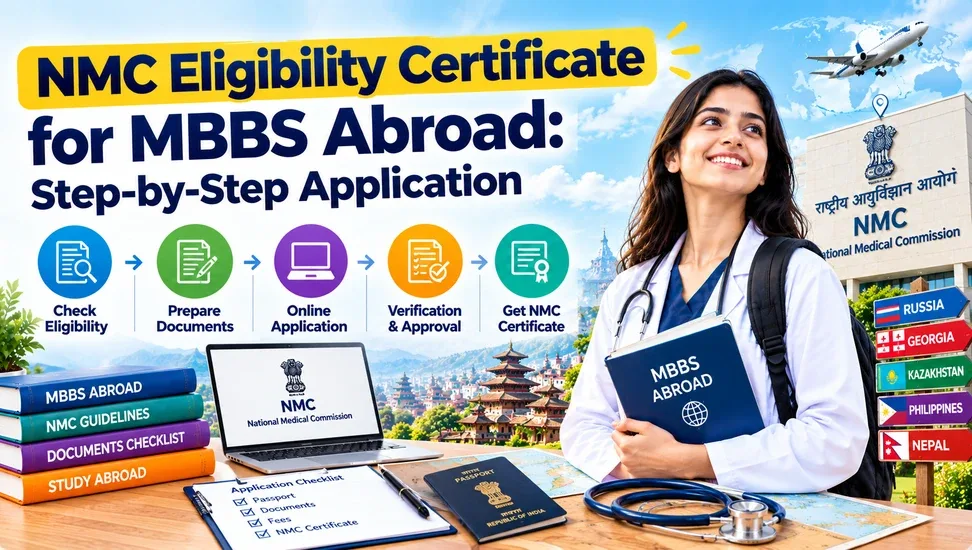
NMC guidelines to study medicine abroad
Indian students must verify if the MBBS curriculum complies with the NMC guidelines:
- The course duration: The MBBS course at the university must have at least 54 months of duration, i.e, 4.5 years. A programme with a duration of less than 54 months is not recognised by the National Medical Commission.
- Syllabus of the programme: Under Schedule 1 of the FMGL regulation of NMC, Students must study all the mandatory subjects, which include General Surgery, Psychiatry, Gynaecology, Dermatology, and so on.
- 12-month internship: The course must include a 12-month of a clincal training to provide a real-life experience to students. The internship must be done at the same institute of study.
- English-medium programme: As per the NMC guidelines, an MBBS degree must be taught in English. Any MBBS programme that has a vernacular language of teaching or does not include English will be invalid in India.
- Full course at the same institute: The entire duration of the course must be completed at the same institute without any break period. This is also applicable to teh internship period.
- Indian Licensing exam: After completion of MBBS from an institute, Indian students must clear the FMGE licensing exam to work as a doctor in India.
ROI for MBBS abroad is calculated by comparing your total investment (tuition, one-time charges, accommodation, food, insurance and the 12-month internship period) against your expected returns like post-FMGE salary, career opportunities and long-term professional mobility. A positive ROI means your earnings and career growth outweigh the total money and time you put in.
Uzbekistan and Kazakhstan offer some of the highest ROI, with full-course tuition around USD 18,000–36,000, English-medium teaching and solid clinical exposure. Russia and Georgia also deliver strong ROI through globally recognised degrees and wider employment opportunities after the licensing exam.
A good ROI means recovering your full cost (tuition, living expenses and the 12-month internship and licensing period) within the first few years of practice. Since MBBS abroad often totals around INR 15 to 40 lakh, well below many Indian private colleges, graduates who clear the FMGE and begin earning reach a positive return faster.
What Does ROI Mean for MBBS Abroad?
ROI stands for Return on Investment, which is the return students get on total financial and career earnings compared to the total cost of the medical journey, living expenses of the entire duration, and the licensing preparation period. The ROI factors are beyond tuition fees and a doctor’s salary.
The Investment Factors
Many factors are invested in the entire duration of the MBBS programme. These factors are:
- Tuition fees and other costs: The budget to study MBBS abroad is the first investment any student makes. The budget includes not only tuition fees but also hostel fees, food and groceries, and other miscellaneous expenses.
- Opportunity cost: Opportunity cost is the cost that students avoid to earn independently to study MBBS. This cost is considered a hidden cost. These opportunity costs become a major investment for further ROI.
- Clinical exposure and patient flow: The clinical exposure provided by the university is essential to calculate the rate of return on investment. It shows the ability to learn case variety and treat patients in tight time limits.
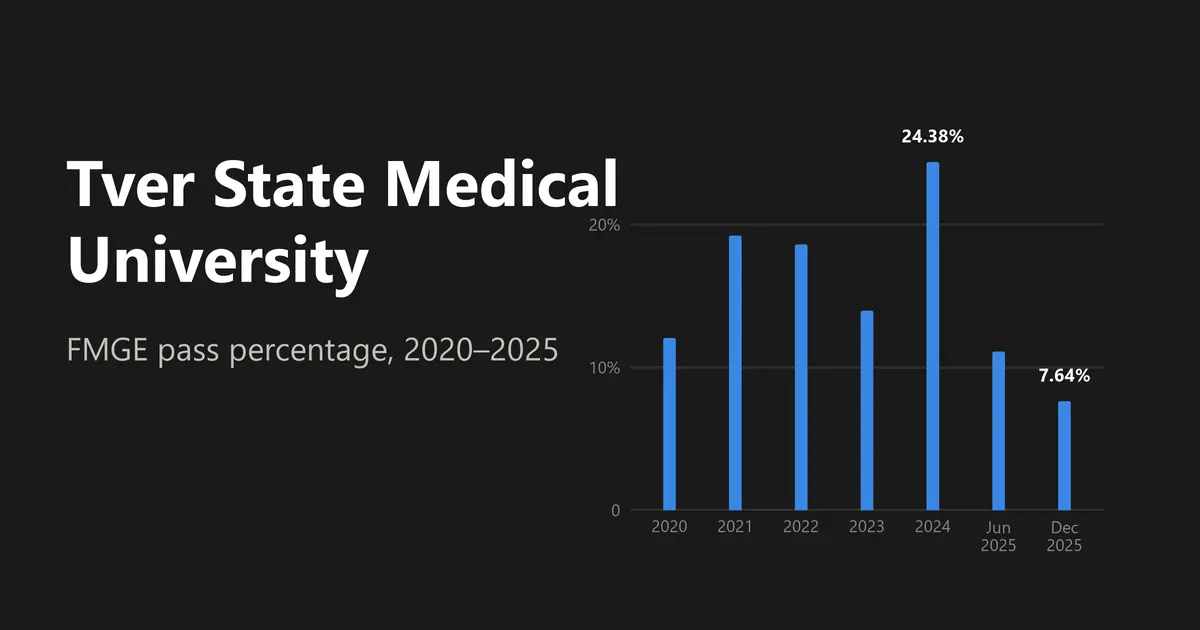
- FMGE cost: An FMGE success rate shows the quality of education abroad and the quality of education at a particular university.
- Training time: The training time is the additional period to complete the degree. This 12-month extension is an investment to get a higher ROI.
The ROI Factors
To calculate the Return on Investment, consider the following inputs:
- Career Opportunities: After graduation, bright career opportunities can show the quality of return to your earning potential, a debt recovery timeline, and the speed of your salary increment.
- Long-term professional mobility: Long-term mobility highly affects the ROI by boosting employment retention and filling the critical gaps. Having a long-term career can positively impact the ROI.
Cost involved in MBBS abroad in 2026
Cost is one of the primary factors to calculate the Return on Investment. Whenever students plan to study medicine, they rely heavily on tuition fees, ignoring other charges to stay in the destination country. However, except for MBBS tuition fees, students must consider other hidden costs. These costs are:
- One-time charges: The average one-time charges are $ 1800 to $ 3000 USD. These costs are charges before paying tuition fees and include visa application fees, test fees, application fees, and so on.
- Hostel and Accommodation: Students can choose on-campus hostel facilities or apartments in the city. The cost of accommodation depends on the city in which the university is located. It can cost between $ 300 and $ 3000.
- Food and mess charges: Food charges also depend on the country in which you live. The average food cost to study abroad can range between $ 150 and $ 350 USD per month.
- Health insurance: The health and medical insurance charges can cost $ 120 to $ 400 in most asian countries. However, in European countries, the charge could be slightly higher than this.
- Visa extension: Depending on the study destination, the average cost of visa extension can range between $ 100 and $ 300 USD.
- Personal and miscellaneous expenses: Students need to plan their finances to spend on personal expenses. Other miscellaneous charges are hidden because they are not spent directly.
MBBS Countries with better ROI in 2026
To gain a better ROI after MBBS, the following countries are considered the best:
Russia
Russia is considered one of the best destinations for MBBS studies. After completing the degree, students get the best career opportunities around the world.
- Average MBBS tuition for 6 years: 1500000 Rubles to 3600000 Rubles
- Advantages of studying in Russia: Structured Curriculum, globally-recognised degree
Uzbekistan
To study abroad, Uzbekistan is one of the most affordable destinations while offering world-class education. Hence, students can get a positive ROI after pursuing medicine from Uzbek medical universities.
- Average MBBS tuition for 6 years: $ 18000 to $ 24000 USD
- Advantages of studying in Uzbekistan: Extremely high ROI, safe environment
Kazakhstan
Known globally for affordable MBBS degrees and better employment opportunities, the country is one of the best destinations for higher ROI.
- Average MBBS tuition for 6 years: $ 18000 USD to $ 36000 USD
- Advantages of studying in Kazakhstan: High ROI, English-medium degree
Georgia
Due to a standard medicine degree and employment opportunities, Georgia is considered the best destination for MBBS studies.
- Total MBBS tuition for 6 years: $ 24000 to $ 48000
- Advantages of studying in Georgia: Best employment opportunities, world-class clinical exposure
Career & Salary Potential After MBBS Abroad
After studying MBBS abroad, the career and salary depend on your destination for practising medicine. To practice medicine in a certain country, students need to pass the licensing exam of that country.
Practising in India
After graduating from a foreign medical university, students must pass the FMGE examination. At the entry level, junior doctors or interns earn approximately INR 40,000 TO INR 90,000. After gaining experience, the fees of a specialist can go beyond INR 6 to 11 lakh.
Opportunities include:
- Government and private hospitals
- Establish own clinic
- Work as a government medical officer
Practising Medicine abroad
To practice medicine in countries like the USA, the UK, and other countries, students are required to pass their licensing exam. For practice in the USA, students must pass the USMLE exam. PLAB is the licensing exam to practice medicine in the UK.
Non-clinical Career pathways
If students do not want to work as a doctor, they can also go for
- Research in medicine
- Post-graduation in medicine
5 Factors to Check Before Choosing an MBBS Abroad University
Although the MBBS degree from a foreign university offers a higher rate of return. Before leaving for a particular country, students must check some essential factors:
- FMGE pass rate: The FMGE pass rate shows the gap between the MBBS curriculum and exam pattern. It is essential to know the rate to prepare better for the test.
- NMC compliance: The degree taught must comply with the NMC guidelines so that after graduation, students can practice medicine in India.
- Total tuition and living cost: Before going to study abroad, it is necessary to know the overall education and living cost. It is also important to note that the costs can fluctuate over time. Hence, financial preparation must be done in advance.
- Medium of instruction: MBBS should be taught in English to avoid language barriers and difficulty in learning the complex clinical terms.
- Hospital patient flow: To get a better ROI, look for universities which are affiliated to large and many hospitals. More opportunities to diagnose patients means better hands-on clinical skills and more confidence.
Pros and Cons of Pursuing MBBS Abroad
Pros and cons of MBBS abroad are listed below:
Pros of pursuing MBBS abroad
- Lower cost compared to Indian private medical colleges
- Better ROI
- Global exposure
- Globally recognised degree
- English-medium programme
- Quality education
- World-class infrastructure
- Best universities of the world
Cons of pursuing MBBS abroad
- Language barrier
- FMGE requirement
- Climate adaptation
Who should choose to study MBBS abroad?
If Indian students come in the below categories, they must go to study MBBS abroad:
- Budget-conscious: Students who are conscious about their budget and can not afford Indian private medical colleges can choose foreign universities as an alternative. Unlike India, the MBBS overseas colleges do not ask for any capitation fee.
- NEET qualified scorers: To study medicine abroad, you do not need to score 600+ marks. Students with a minimum NEET score can easily get enrolled in the top foreign universities.
- Global career seekers: Choosing a medical university outside India is better for students who have a plan to settle abroad after completing their graduation. However, they must pass the licensing test of the region.
Frequently Asked Questions (FAQs)
What are the job opportunities after MBBS abroad?
After completing an MBBS from abroad, you can either practice medicine in your home country or globally, provided that you have to pass the licensing exam of that particular country.
Which is the safest country for MBBS?
Georgia, Uzbekistan, and Russia are highly considered the safest countries to study MBBS for international students.
Is it worth doing MBBS from abroad?
Yes, it is worth doing MBBS abroad as it opens the door to practice medicine globally while offering international students a world-class education.
How much money is required to do MBBS in abroad?
Pursuing MBBS abroad requires you to spend at least INR 15 to 60 lakh, heavily depending on the country and the university. Many Asian countries, like Russia and Kazakhstan, are budget-friendly compared to most European countries.
Which country is cheaper than India for MBBS?
Countries like Kyrgyzstan, Kazakhstan, and Russia are cheaper than Indian private medical colleges. Unlike India, the countries offer transparent and no capitation MBBS fees to international students.
Final Verdict
Answering the question: is MBBS abroad worth it or not depends on multiple factors. From choosing the NMC-compliant university to passing the FMGE test, students must consider other factors too. Students also need to estimate the return on investment based on their overall budget, facilities provided, and training duration. In the end, choosing the best university for medicine does not depend only on the tuition cost but also on training quality, clinical exposure, and the long-term career return it delivers.