NEET Exam

NEET Exam

Overview

The NEET Exam 2026 is a national-level medical entrance test for undergraduate admissions in India, mainly for MBBS, BDS, BAMS, BHMS, etc. Recently, it's been facing significant controversy. The exam originally held on May 3, 2026, was cancelled due to severe irregularities and allegations of a paper leak, with a re-examination scheduled for 21st June 2026

The National Eligibility cum Entrance Test is conducted only once a year by the National Testing Agency (NTA) in India, offering candidates one chance annually. The exam is held in offline mode, with pen-and-paper, covering vital subjects of Physics, Chemistry, and Biology. In this blog, we will cover all the latest NEET updates, exam pattern, eligibility criteria, and exam results.

Registration

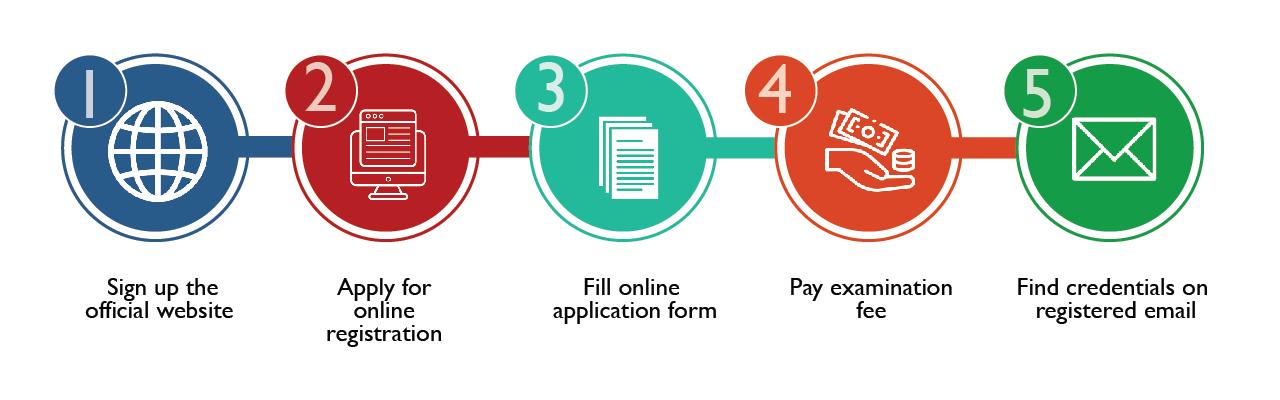
The NEET Registration 2026 will be conducted online through the National Testing Agency official website. Candidates need to fill out the application form thoroughly, upload the needed documents, and make payment online. Below are the key steps mentioned.
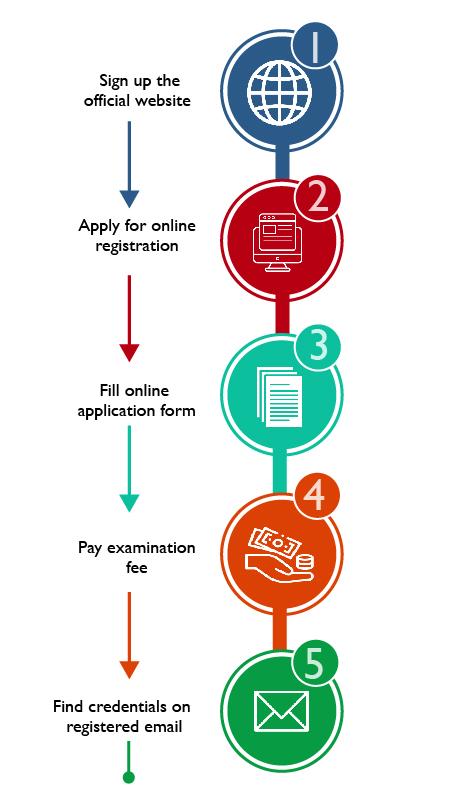
Registration

Eligibility Criteria

Applicants who want to appear in the National Eligibility cum Entrance Test (NEET) need to meet the specific NEET 2026 Eligibility criteria. The eligibility requirements are set by the National Medical Commission (NMC), including age, nationality, and educational qualifications (Physics, Chemistry, Biology/Biotechnology).

Key Eligibility Criteria for NEET Exam 2026:

  • Age Limit: Minimum 17 years old as of 31st Dec of the admission year. There is no upper age limit. 
  • Academic Qualification: Passed or appearing in 10+2 or equivalent with Physics, Chemistry, Biology/Biotechnology, and English.
  • Minimum Marks (PCB):
    • General/EWS: 50%
    • OBC/SC/ST: 40%
    • Persons with Disability (PH/PwD): 45%
  • Attempts: No restrictions on the number of attempts.
  • Nationality: Indian Citizens, OCIs, PIOs, NRIs and Foreign Nationals are eligible.

Additional Subject (Biology): Candidates with Biology/Biotechnology as an extra subject are permitted to apply.

Exam Pattern

The NEET Exam Pattern is expected to remain similar to previous years, conducted by the National Testing Agency (NTA). NEET Exam 2026 is a 3-hour and 20-minute-long pen-and-paper-based test comprising 200 multiple-choice questions (MCQs), out of which 180 must be answered. 
The paper covers subjects of Physics, Chemistry, and Biology (Botany + Zoology). The total marks are 720, with a marking scheme of +4 for correct answers and -1 for incorrect answers. Here is the NEET UG Latest Update on the exam pattern quoted.

Exam Name

National Eligibility cum Entrance Test (NEET)

Conducting Body

National Testing Agency

Mode of the examination

Offline

Thermodynamics

3 hours and 20 minutes

Total Questions

200 out of which 180 questions will have to be answered

Total Marks

720 Marks

Question Type

MCQs

Subjects Physics, Chemistry, Biology

Marking Scheme

+4 marks for each correct answer

-1 for each incorrect answer

Section-wise division

Physics: 50 questions
Chemistry: 50 questions
Biology: 100 questions

NEET Languages

English, Hindi, Assamese, Bengali, Gujarati, Marathi, Tamil, Telugu, Oriya, Malayalam, Kannada, Punjabi and Urdu

Exam Syllabus

Neet Exam Syllabus The NEET 2026 syllabus is totally based on the National Council of Educational Research and Training (NCERT) curriculum of Classes 11th and 12th.

BIOLOGY

  • Diversity in the Living World
  • Structural Organisation in Animals & Plants
  • Cell Structure & Function
  • Plant Physiology
  • Human Physiology
  • Reproduction
  • Genetics & Evolution
  • Biology & Human Welfare
  • Biotechnology & Its Applications
  • Ecology & Environment

CHEMISTRY

  • Some Basic Concepts in Chemistry
  • Atomic Structure
  • Chemical Bonding & Molecular Structure
  • Chemical Thermodynamics
  • Solutions
  • Equilibrium
  • Redox Reactions & Electrochemistry
  • Chemical Kinetics
  • Classification of Elements & Periodicity
  • p-Block Elements
  • d & f Block Elements
  • Coordination Compounds
  • Purification & Characterisation of Organic Compounds
  • Some Basic Principles of Organic Chemistry
  • Hydrocarbons
  • Organic Compounds Containing Halogens
  • Organic Compounds Containing Oxygen
  • Organic Compounds Containing Nitrogen
  • Biomolecules
  • Principles Related to Practical Chemistry

Physics:

  • Physics & Measurement
  • Kinematics
  • Laws of Motion
  • Work, Energy & Power
  • Rotational Motion
  • Gravitation
  • Properties of Solids & Liquids
  • Thermodynamics
  • Kinetic Theory of Gases
  • Oscillations & Waves
  • Current Electricity
  • Magnetic Effects of Current & Magnetism
  • Electromagnetic Induction & Alternating Currents
  • Electromagnetic Waves
  • Optics
  • Dual Nature of Matter & Radiation
  • Atoms & Nuclei
  • Electronic Devices
  • Experimental Skills

BIOLOGY

  • Diversity in the Living World
  • Structural Organisation in Animals & Plants
  • Cell Structure & Function
  • Plant Physiology
  • Human Physiology
  • Reproduction
  • Genetics & Evolution
  • Biology & Human Welfare
  • Biotechnology & Its Applications
  • Ecology & Environment

CHEMISTRY

  • Some Basic Concepts in Chemistry
  • Atomic Structure
  • Chemical Bonding & Molecular Structure
  • Chemical Thermodynamics
  • Solutions
  • Equilibrium
  • Redox Reactions & Electrochemistry
  • Chemical Kinetics
  • Classification of Elements & Periodicity
  • p-Block Elements
  • d & f Block Elements
  • Coordination Compounds
  • Purification & Characterisation of Organic Compounds
  • Some Basic Principles of Organic Chemistry
  • Hydrocarbons
  • Organic Compounds Containing Halogens
  • Organic Compounds Containing Oxygen
  • Organic Compounds Containing Nitrogen
  • Biomolecules
  • Principles Related to Practical Chemistry

Physics:

  • Physics & Measurement
  • Kinematics
  • Laws of Motion
  • Work, Energy & Power
  • Rotational Motion
  • Gravitation
  • Properties of Solids & Liquids
  • Thermodynamics
  • Kinetic Theory of Gases
  • Oscillations & Waves
  • Current Electricity
  • Magnetic Effects of Current & Magnetism
  • Electromagnetic Induction & Alternating Currents
  • Electromagnetic Waves
  • Optics
  • Dual Nature of Matter & Radiation
  • Atoms & Nuclei
  • Electronic Devices
  • Experimental Skills

Exam Date

The National Testing Agency (NTA) on Tuesday (May 12) cancelled the NEET (UG) 2026 exam held on May 3, 2026 and will re-conduct it on fresh dates, which are to be announced later. The move comes after paper leak allegations surfaced in Rajasthan and Uttarakhand. Students are now also eagerly waiting for updates related to the NEET cutoff 2026, expected qualifying marks, and revised counselling schedule. Here is the timeline for the NEET 2026 Exam Date quoted below.

Events

Dates

NEET Exam 2026 Application Form Release Date January 2026
NEET Exam 2026 Application Form Last Date March 2026
NEET Exam 2026 Application Correction Window Date 3rd Week of March 2026
NEET Exam 2026 City Intimation Slip Date 4th Week of April 2026
NEET Exam 2026 Admit Card Distribution Date 1st Week of May 2026
NEET 2026 Exam Date 3rd May 2026
NEET 2026 Exam Cancellation Date 12th May 2026
NEET 2026 Re-Exam Announcement May 2026
NEET 2026 Re-Exam Date 21st June 2026
NEET 2026 New Admit Card Release 14th June 2026
NEET Exam 2026 Result Date July 16, 2026
NEET 2026 Counselling Start Date Expected: Late July 2026
NEET 2026 Final Counselling Rounds August–September 2026

Note: The counselling schedule will be announced by the Medical Counselling Committee (MCC) after the declaration of the NEET UG 2026 results.

Test Centers

Test Centers

The NEET UG 2026 is conducted across multiple cities in India and abroad. Over 551+ exam cities in India and 14+ International centres for foreign applicants. Candidates can choose their preferred exam city during registration; the final allotment is based on availability. 

The NEET exam centres are as follows: 

India

Agra, Amaravathi, Araria, Ariyalur, Aurangabad, Bagalkot, Banaskantha, Bareilly, Bhagalpur, Bhandara, Bhind, Bidar, Blair, Chandrapur, Chennai, Coimbatore, Daman & Diu, Darbhanga, Delhi, Gadchiroli, Gandhinagar, Ghaziabad, Gorakhpur, Gurugram, Hoshangabad, Jammu, Jamnagar, Junagarh, Kurukshetra, Mangalore, Morena, Mumbai, Nashik, New Patna, Port Prayagraj, Ramanathapuram, Ratlam, Silvassa, Srinagar, Surat, Thanjavur, Thiruvananthapuram Ujjain, Vijayawada, Vishakapatnam, etc.

International

Cities include Dubai, Kuwait City, Doha, Muscat, Riyadh, Singapore, Abu Dhabi, Kathmandu, etc.

Result Statistics

As per current reports, NEET UG 2026 recorded 22,79,743 candidates registered, and approximately 22,05,035 appeared for the exam, marking a 96.92% attendance. The exam was held in May 2026 across 551 cities in India. The reports show higher female participation (58% of applicants). Here are the key facts mentioned below. 

  • Total Registered: 22,79,743.
  • Total Appeared: 22,05,035 (approx. 96.92% turnout).
  • Female Candidates: 13,32,928.
  • Male Candidates: 9,46,815.

Based on early analysis of the 2026 NEET UG exam, a score between 610-650+ is likely required for General/EWS candidates to secure a government MBBS seat. You can use some tools which you can use to know your expected NEET rank such as NEET Rank Predictor

Moreover, to predict your college, you can use the NEET College Predictor. It is an AI-powered, free online tool that analyses your rank, category, gender, and state domicile to estimate your medical college admission chances.


Related Blogs

NEET 2027 Syllabus: Complete Chapter-Wise Guide With Weightage
21JUL

NEET 2027 Syllabus: Complete Chapter-Wise Guide With Weightage

The NEET syllabus 2027 covers physics, chemistry and biology from classes 11 and 12, comprising 79 chapters across all three subjects. This syllabus is finalised and published by the Undergraduate Medical Education Board (UGMEB), an autonomous body working under India’s National Medical Commission (NMC). It is based upon the science (physics, chemistry and biology) books provided by the National Council of Educational Research and Training (NCERT).

We have prepared a complete chapter-wise guide to help you understand how to prepare for NEET 2027. Please note that while we have mentioned 79 chapters across the three subjects, the NTA NEET syllabus is officially structured into units (20 physics, 20 chemistry, and 10 biology), and each unit contains multiple chapters or subtopics. The tables for each subject have listed units (major ones), which together total 79 chapters across all subjects.

NEET 2027: An Overview and its Exam Pattern

Understanding the architecture of the NEET syllabus 2027 will help you to perform well in the examination next year. The National Testing Agency (NTA) conducts the National Eligibility cum Entrance Test (NEET) to facilitate the admission process of medical aspirants across medical institutions in India. It conducts the exam with an NCERT-based syllabus, which is administered by the NMC.

AI Section — Breaking It Down

Examination Pattern

To crack the NEET examination in 2027, you need to prepare a smart plan and allocate your study hours effectively according to each subject in the syllabus. Understand how weightage is distributed across each subject to grasp the core structure of the examination. You can also predict your NEET 2027 rank based on your expected marks. Here is the structure, showing a brief reflection on the NEET syllabus 2027:

SubjectSectionNumber of QuestionsTotal MarksTotal Duration
PhysicsSection A (mandatory)351803 Hours & 20 Minutes
Section B (optional)15 (attempt 10)
ChemistrySection A (mandatory)351803 Hours & 20 Minutes
Section B (optional)15 (attempt 10)
Biology (Botany + Zoology)Section A (mandatory)703603 Hours & 20 Minutes
Section B (optional)30 (attempt 20)
TotalAll Sections200 (attempt 180)720200 Minutes

Marking Scheme

The NEET syllabus 2027 will have the standard exam pattern and marking scheme set by the National Testing Agency (NTA). Here is a quick overview of the marking scheme:

  • Total marks of the exam: 720 marks
  • For each correct answer: +4 marks
  • For each incorrect answer: -1 mark (negative marking)
  • For unattempted questions: 0 marks

The blueprint of the NEET syllabus reveals that the structure of the exam is designed to test not just your memorisation ability but also your speed, accuracy and mental stamina. Once you know your score, convert your marks into a rank or check the college you can get. Students looking at the NEET 2027 exam date should practise with full-length mock tests as they progress through the syllabus.

The NTA typically conducts the exam on the first Sunday of May every year, allowing candidates to plan and prepare for the NEET. Preparing with a clear understanding of the NTA NEET syllabus 2027 will set clear boundaries for you, ensuring that you do not go overboard with your studies, either by studying redundant topics or neglecting new emphasis on topics.

NEET Physics Syllabus 2027

As you begin to prepare for NEET 2027, you can find physics to be the most challenging due to its complexity in the numbers and the depth needed to understand its concepts. Incorporating the physics components from classes 11 and 12, the exam tests both the theoretical understanding and analytical problem-solving skills of candidates.

The physics curriculum has been designed with some new additions to the syllabus to make it more modern by adding “Experimental Skills” as a separate unit. This addition makes it critical for all NEET candidates to understand the laboratory-based experiments while equally giving importance to standard derivations. Let’s look at the chapter-wise breakdown!

Chapter-Wise Structure of Class 11 and Class 12 Physics

We have prepared a table to represent the complete breakdown of units and chapters included in the NEET syllabus 2027 for the physics subject. Remember, while reviewing the NEET latest syllabus, Unit 20 requires you to spend time reading lab manuals and understanding the physical principles behind the standard equipment.

Unit NumberUnit NameKey Focus Areas & Concepts
Unit 1Physics & MeasurementUnits of measurement, SI units, least count, significant figures, errors in measurements, and dimensions of physical quantities (dimensional analysis).
Unit 2KinematicsFrame of reference, straight-line motion, position-time graphs, average speed, velocity, uniformly accelerated motion, vectors (addition, subtraction, scalar and vector products), projectile motion, and uniform circular motion.
Unit 3Laws of MotionForce and inertia, Newton’s laws, impulse, conservation of linear momentum, static and kinetic friction, and dynamics of circular motion (banking of roads).
Unit 4Work, Energy, and PowerWork done by constant and variable forces, kinetic energy, potential energy, the work-energy theorem, conservative and non-conservative forces, and elastic and inelastic collisions.
Unit 5Rotational MotionCentre of mass of a two-particle system, torque, angular momentum, conservation of angular momentum, moment of inertia, radius of gyration, and parallel/perpendicular axes theorems.
Unit 6GravitationUniversal law of gravitation, gravity’s variation with g, Kepler's laws, escape velocity, and satellite motion.
Unit 7Properties of Solids and LiquidsElastic behaviour, stress-strain relations, Hooke's Law, Young's modulus, bulk modulus, and shear modulus. Fluid pressure, Pascal's law, viscosity, Stokes' law, terminal velocity, Bernoulli's principle, surface tension, and capillary rise.
Unit 8ThermodynamicsThermal equilibrium, the zeroth law, heat, work, internal energy, the first law of thermodynamics, isothermal and adiabatic processes, and the second law of thermodynamics.
Unit 9Kinetic Theory of GasesEquation of state of a perfect gas, work done on compressing a gas, kinetic interpretation of temperature, RMS speed, degrees of freedom, and law of equipartition of energy.
Unit 10Oscillations and WavesSimple Harmonic Motion (S.H.M.) and its equations, spring oscillations, simple pendulum time period formula, longitudinal/transverse waves, superposition principle, and beats.
Unit 11ElectrostaticsCoulomb's law, electric field, electric dipole, Gauss's law and its applications, electric potential, conductors and insulators, dielectrics, and capacitors (parallel plate capacitors, series and parallel combinations).
Unit 12Current ElectricityDrift velocity, Ohm's law, electrical resistance, characteristics, resistivity, temperature dependence of resistance, Kirchhoff's laws, Wheatstone bridge, and metre bridge.
Unit 13Magnetic Effects of Current and MagnetismBiot-Savart law, Ampere's law, force on moving charges and conductors, torque on current loops, moving coil galvanometer, magnetic dipoles, and magnetic properties of materials (dia-, para-, and ferromagnetic substances).
Unit 14Electromagnetic Induction and Alternating CurrentsFaraday's and Lenz's laws, self/mutual inductance, alternating currents, peak/RMS values, reactance, impedance, LCR series circuits, resonance, and transformers.
Unit 15Electromagnetic WavesDisplacement current, characteristics of EM waves, transverse nature, and the electromagnetic spectrum (applications of radio, micro, IR, UV, X-ray, and gamma rays).
Unit 16OpticsReflection, refraction, total internal reflection (TIR), mirror/lens formulas, the lensmaker's formula, magnification, prisms, microscopes, and telescopes. Wave optics: wavefronts, Huygens' principle, interference (YDSE), diffraction, and polarisation.
Unit 17Dual Nature of Matter and RadiationPhotoelectric effect, Einstein’s photoelectric equation, matter waves, and the de Broglie relation.
Unit 18Atoms and NucleiRutherford's and Bohr's atomic models, hydrogen spectrum, composition/size of the nucleus, mass-energy equivalence, binding energy per nucleon, fission, and fusion.
Unit 19Electronic DevicesSemiconductors, characteristics of junction diodes, rectifiers, LEDs, photodiodes, solar cells, Zener diodes as voltage regulators, and basic logic gates (AND, OR, NOT, NAND, NOR).
Unit 20Experimenting SkillsFocuses on practical physics skills, including Vernier callipers, screw gauges, simple pendulums, metre scales, Young's modulus, surface tension, coefficient of viscosity, resonance tube, specific heat capacity, metre bridge, Ohm's law, half-deflection method, focal length determinations, and prism deviation plotting.

NEET Chemistry Syllabus 2027

Chemistry in the NEET syllabus 2027 is divided into three major branches: physical chemistry, inorganic chemistry, and organic chemistry. Under the NTA NEET syllabus 2027, a systematic approach was adopted in 2026. Several descriptive and non-conceptual chapters, such as Polymers, Metallurgy, Chemistry in Everyday Life, and Environmental Chemistry, were removed to decrease pressure on candidates for rote learning.

Chapter-Wise Breakdown in Chemistry

This transition from iconic formats (like the older NTA NEET syllabus 2026) puts special emphasis on core conceptual clarity, reaction mechanisms, and qualitative laboratory analysis. We have prepared a table to represent a comprehensive breakdown of the physical, inorganic, and organic elements of chemistry in the syllabus.

ClassificationUnit Number & NameChapter Content & Key Reactions
Physical ChemistryUnit 1: Some Basic Concepts in ChemistryMatter, Dalton’s atomic theory, laws of chemical combination, mole concept, molar mass, stoichiometry, empirical/molecular formula calculation.
Unit 2: Atomic StructureBohr model of hydrogen, de Broglie relation, Heisenberg principle, quantum numbers, orbital shapes (s, p, d), Aufbau, Hund's, and Pauli’s principles.
Unit 3: Chemical Bonding and Molecular StructureKossel-Lewis approach, ionic/covalent bonding, Fajan’s rules, dipole moment, VSEPR theory, hybridisation, molecular orbital theory.
Unit 4: Chemical ThermodynamicsFirst law (internal energy, heat capacity), Hess’s law, Second law (entropy, spontaneity, free energy).
Unit 5: SolutionsMolality, molarity, mole fraction, vapour pressure, Raoult's law, ideal/non-ideal systems, colligative properties, and the van 't Hoff factor.
Unit 6: EquilibriumDynamic equilibrium, Le Chatelier's principle, acid-base concepts (Arrhenius, Bronsted-Lowry, Lewis), pH scale, common ion effect, solubility product, and buffer solutions.
Unit 7: Redox Reaction and ElectrochemistryOxidation numbers, balancing redox reactions, Kohlrausch’s law, the Nernst equation, electrochemical cells, Gibbs energy relations, and fuel cells.
Unit 8: Chemical KineticsReaction rate, rate law, molecularity vs. order, integrated rate equations (zero and first-order), half-lives, Arrhenius equation, and activation energy.
Inorganic ChemistryUnit 9: Classification of Elements and Periodicity in PropertiesModern periodic law, s, p, d, f blocks, and periodic trends (atomic/ionic radii, ionisation enthalpy, electron gain enthalpy, and electronegativity).
Unit 10: p-block elementsGroups 13 to 18: general electronic configurations, physical and chemical trends, and anomalous behaviour of the first elements of each group.
Unit 11: d- and f-block elementsGeneral characteristics of transition elements, oxidation states, coordination chemistry of transition metals, and preparation of oxidising agents.
Unit 12: Coordination CompoundsWerner's theory, ligands, IUPAC nomenclature, isomerism, Valence Bond Theory (VBT), Crystal Field Theory (CFT), and the biological importance of complexes.
Organic ChemistryUnit 13: Purification and Characterisation of Organic CompoundsCovers purification methods (sublimation, crystallisation, chromatography), qualitative detection of elements (N, S, P, halogens), quantitative estimation (C, H, N, halogens, sulphur, phosphorus), and molecular formula calculations.
Unit 14: Some Basic Principles of Organic ChemistryHybridisation, stereoisomerism, electronic displacements (inductive, electromeric, resonance, and hyperconjugation effects), nucleophiles, and electrophiles.
Unit 15: HydrocarbonsAlkanes (halogenation mechanism), Alkenes (electrophilic addition, Markovnikov's rule, peroxide effect, and ozonolysis), and Alkynes (acidity and polymerisation).
Unit 16: Organic Compounds Containing HalogensHaloalkanes and haloarenes, mechanisms of substitution reactions, and environmental hazards of chloroform, DDT, and freons.
Unit 17: Organic Compounds Containing OxygenAlcohols, phenols (acidity, Reimer-Tiemann reaction), Ethers. Aldehydes & ketones (nucleophilic additions, aldol condensation, Cannizzaro, and haloform reactions) and carboxylic acids.
Unit 18: Organic Compounds Containing NitrogenAmines (classification, basicity, and identification tests) and diazonium salts and their synthetic utility in organic transformations.
Unit 19: BiomoleculesCarbohydrates (monosaccharides, sucrose, lactose, maltose), proteins (alpha-amino acids, peptide bonds, denaturation), nucleic acids (DNA/RNA constitution), and hormones.
Unit 20: Principles Related to Practical ChemistryThe chemistry behind organic preparations (iodoform, acetanilide, and aniline yellow), qualitative salt analysis (cations/anions), titrimetric exercises, and enthalpy/kinetic studies.

If you wonder how many chapters are there in NEET syllabus, then organic chemistry provides you with a major opportunity to score significant marks in the exam. Memorise the named reactions and practise daily reaction maps to tighten your grip on this subject and increase your overall understanding of the NEET syllabus 2027.

NEET Biology Syllabus 2027

Biology is the most important subject to prepare for your NEET 2027, as it accounts for a majority of the overall marking: 360 marks out of a total of 720 marks. In the NEET 2027 syllabus, biology is divided into 2 sections: botany and zoology. The NTA revised the curriculum in 2026 and removed several chapters, such as Reproduction in Organisms, Strategies for Enhancement in Food Production, and Environmental Issues.

Animal and Plant Additions

While the NTA removed some chapters, the National Medical Commission is likely to add other topics to maintain a balance and biological understanding for prospective medical students. The NMC might add new plant families and include anatomy on specific animal types. Here is how it is classified in the NEET syllabus 2027:

  • Plant Families : Malvaceae, Cruciferae, Leguminosae, Compositae, and Gramineae.
  • Animal Anatomy: Focuses on morphological, anatomical, and physiological systems (digestive, circulatory, respiratory, nervous, and reproductive) of a frog. The official NEET syllabus NTA also contains a well-known typographical error in the ‘Frog Anomaly’; it lists frogs as insects: ‘systems... of an insect (Frog)’. In practice, this means you must study the morphology and anatomy of the frog as an amphibian, along with the organisation of its basic tissues.

Comprehensive Breakdown of Botany and Zoology

Biology is the most significant part of the entire NEET syllabus, as it maximises your score capacity. To provide a better understanding of what topics are covered in both botany and zoology, we have prepared a breakdown of the chapter-wise sub-topics and core concepts.

Unit NumberUnit TitleChapter-Wise Sub-Topics and Core Concepts
Unit 1Diversity in the Living WorldWhat is living? Biodiversity, Taxonomy, Systematics, Binomial nomenclature, Five-kingdom classification (Monera, Protista, Fungi), Lichens, Viruses, Viroids, Plant Kingdom (Algae, Bryophytes, Pteridophytes, Gymnosperms), and Animal Kingdom (Non-chordates up to phyla, Chordates up to classes).
Unit 2Structural Organisation in Animals and PlantsMorphology and anatomy of flowering plants (root, stem, leaf, inflorescence, flowers, fruits, seeds). In-depth study of plant families: Malvaceae, Cruciferae, Leguminosae, Compositae, Gramineae. Animal tissues and comprehensive systems of the Frog.
Unit 3Cell Structure and FunctionCell theory, prokaryotic/eukaryotic cell structural differences, cell envelope, organelle structure/function (mitochondria, chloroplasts, ribosomes, etc.), nucleus, biomolecules (proteins, carbohydrates, lipids, nucleic acids, enzyme mechanics), and Cell Cycle (mitosis and meiosis).
Unit 4Plant PhysiologyPhotosynthesis as autotrophic nutrition, pigments, light/dark reactions, photophosphorylation (cyclic/non-cyclic), chemiosmotic hypothesis, photorespiration, C3 and C₄ pathways, Respiration (glycolysis, fermentation, TCA cycle, ETS, ATP accounting), and Plant Growth (auxins, gibberellins, cytokinins, ethylene, ABA).
Unit 5Human PhysiologyBreathing and respiration (volumes, gas exchange, disorders like Asthma and Emphysema), Body fluids (blood composition, cardiac cycle, ECG, regulation), Excretion (nephron function, urine formation, dialysis), Locomotion (muscular contraction, skeletal joints), Neural control (nerve impulse conduction), and Chemical Coordination (endocrine glands and hormone action).
Unit 6ReproductionSexual reproduction in flowering plants (gametophytes, pollination mechanisms, double fertilisation, post-fertilisation, apomixis, parthenocarpy), Human reproduction (gametogenesis, menstrual cycle, fertilisation, implantation, parturition, lactation), and Reproductive Health (contraception, STDs, IVF, GIFT, ZIFT).
Unit 7Genetics and EvolutionHeredity and variation (Mendelian inheritance, co-dominance, pleiotropy, polygenic inheritance, chromosomal theories, pedigree charts, genetic disorders like Thalassemia), Molecular basis of inheritance (DNA replication, transcription, translation, Lac Operon, HGP, DNA fingerprinting), and Evolution (origin of life, Darwinism, Hardy-Weinberg equilibrium).
Unit 8Biology and Human WelfarePathogens causing human diseases (Malaria, Typhoid, Pneumonia, Amoebiasis, Dengue, Chikungunya), basic concepts of immunology (vaccines, active/passive immunity), Cancer, HIV/AIDS, drug/alcohol abuse, and Microbes in sewage treatment, industrial production, and biofertilizers.
Unit 9Biotechnology and Its ApplicationsPrinciples and processes of biotechnology (Recombinant DNA technology, restriction enzymes, PCR, cloning vectors) and Applications of biotechnology in agriculture and medicine (Bt crops, human insulin, gene therapy, transgenic animals, biosafety, and biopiracy issues).
Unit 10Ecology and EnvironmentOrganisms and environment, population interactions (mutualism, competition, predation, parasitism), population attributes (growth curves), Ecosystem structures (productivity, decomposition, energy flow, ecological pyramids), Biodiversity conservation (hotspots, national parks, sacred groves).

Chapter-Wise Weightage in the NEET 2027 Syllabus

Remember that all chapters in the NEET syllabus 2027 are not created equally in the first place. While some carry high and quite predictable weightage every year in the NEET examinations, others have a lower value relative to the time you should put into studying them. Focus on high-weightage chapters first; you can gradually build momentum in your preparation. We have highlighted how different topics in all three subjects have different weightage, based on the historical NEET exam patterns:

High-Priority Topics in Physics

  • Modern Physics (Dual Nature, Atoms, Nuclei): 4-5 questions (16-20 marks)
  • Optics (Ray and Wave): 4-5 questions (12-16 marks)
  • Current Electricity: 3-4 questions (12-16 marks)
  • Magnetic Effects and Magnetism: 3-4 questions (12-16 marks)
  • Electrostatics: 3 questions (12 marks)

High-Priority Topics in Chemistry

  • General Organic Chemistry: 4 questions (16 marks)
  • Chemical Bonding and Molecular Structure: 3-4 questions (12-16 marks)
  • Equilibrium (Physical and Ionic): 3 questions (12 marks)
  • Coordination Compounds: 3 questions (12 marks)
  • Hydrocarbons: 3 questions (12 marks)

High-Priority Topics in Biology

  • Molecular Basis of Inheritance: 8-10 questions (32-40 marks)
  • Principles of Inheritance and Variation: 6-7 questions (24-28 marks)
  • Cell (Cycle, Division, and Unit of Life): 6-8 questions (24-32 marks)
  • Human Physiology (Combined): 12-14 questions (48-56 marks)
  • Biotechnology (Principles and Applications): 5-6 questions (20-24 marks)

Deleted vs Newly Added Topics in 2027 NEET Syllabus

To ensure that you are not wasting your time studying outdated topics, be aware of which chapters are deleted from the syllabus that will likely be implemented for the NEET 2027. The table below gives a quick summary of the key changes made in the latest NEET syllabus to keep your study plan aligned with current standards:

SubjectDeleted ChaptersNewly Added Topics
Physics
  • Physical World
  • Transistors (from Electronic Devices)
  • Van de Graaff Generator
Unit 20: Experimental Skills (detailed study of 18 specific laboratory gear experiments and calculations).
Chemistry
  • State of Matter
  • Solid State
  • Hydrogen
  • s-Block Elements
  • Metallurgy/General Principles
  • Polymers
  • Environmental Chemistry
  • Chemistry in Everyday Life
Unit 20: Principles Related to Practical Chemistry (identification of extra elements, titrimetric exercises, chemical principles of qualitative salt analysis).
Biology
  • Reproduction in Organisms
  • Transport in Plants
  • Mineral Nutrition
  • Digestion and Absorption
  • Strategies for Enhancement in Food Production
  • Environmental Issues
  • New Plant Families: Malvaceae, Cruciferae, Leguminosae, Compositae, Gramineae.
  • Animal Focus: Complete morphological and anatomical study of a frog.

How to Cover the NEET 2027 Syllabus: A Timeline to Study

Completely covering your NEET syllabus 2027 will require you to create a structured, multi-phase study plan. Covering all 79 chapters across three subjects is mandatory and can be managed if you break the timeline into particular categories; here’s how:

PHASE I: Build Your Foundation (1-6 Months)

Focus on core concepts in Class 11 chapters, NCERT reading, and creating notes. Make an aim to master all the units in each subject.

  • For physics, focus on ‘Mechanics’ and ‘Thermodynamics’. Build a strong foundation in vector mathematics and calculus applications.
  • For chemistry, emphasise learning and understanding ‘Chemical Bonding’, the ‘Mole Concept’, and ‘General Organic Chemistry (GOC)’. These three will be your main pillars to support the rest of your preparation for the chemistry subject.
  • For biology, you should read all the chapters in the NCERT systematically. Pay close attention to chapters like 'Cell Biology’, ‘Plant Physiology’, and ‘Basic Ecology’.

PHASE II: Advanced Integration (7-10 Months)

Cover Class 12 chapters, complex reactions, and experimental/practical components. Make an aim to comprehend all the Class 12 topics and practical skills.

  • For physics, focus on 'Electrostatics', ‘Magnetism’, ‘Optics’, and ‘Modern Physics’. Remember to allocate separate time to study “Unit 20 (Experimenting Skills)”; ideally, study it for 2 hours per week.
  • For chemistry, focus on ‘Coordination Compounds’, ‘Reaction Mechanisms in Organic Chemistry’, ‘Biomolecules’, and ‘Practical Chemistry’.
  • For biology, focus on ‘Genetics’, ‘Biotechnology’, and ‘Human Physiology’.

PHASE III: Revision & Practice (11-12 Months)

Solve past-year papers, take full-length mock tests, and improve your formula applications under examination conditions (real simulation). Remember to work on your weaknesses in this last phase. Make an aim to study for 4 hours and revise every concept. Allocate your 3 hours to solve topic-wise questions in each subject. Set a weekly goal to take at least two full-length mock tests that simulate the exact 200-minute examination window for your actual examination. Ideally, you should maintain an error log to track and correct your mistakes that occur more frequently.

Expanding Your Horizons: Pursuing an MBBS Abroad

While preparing for the NEET syllabus 2027 should be your primary academic objective right now, it is equally important to take a pause for a while, breathe deep, and think about the bigger picture. Becoming a successful doctor is a lifelong journey, and your career goal is not confined to a single NEET cutoff. Every year, more than 2 million aspiring doctors compete for a limited number of medical seats in government colleges. The immense academic pressure can sometimes be overwhelming if you find yourself having no scope.

Remember that you can still pursue your dream of becoming a doctor by pursuing an MBBS abroad. You can widen your horizons by pursuing overseas medical education in a highly practical, advanced, and multicultural environment. Renowned, NMC-recognised universities in countries like Russia, Georgia, Kazakhstan, Uzbekistan, and others offer fully English-taught medical programmes for international students, aligning with international standards. And the most enticing part? You can complete your entire duration of 6 years of medical studies in these countries for a value between ₹18 and ₹40 lakh!

The National Medical Commission (NMC) in India fully authorises Indian medical aspirants to study MBBS abroad at foreign universities, which are listed in the World Directory of Medical Schools (WDOMS) and comply with its FMGL Regulations 2021. Students who achieve basic NEET qualifications, even with the minimum cutoff percentage, are eligible to study at foreign medical institutions. You just have to complete your studies, complete a mandatory foreign clinical internship, gain a primary medical qualification, and clear the medical licensing requirements for legally practising in India, as per the NMC regulations.

Frequently Asked Questions

Q. How many chapters are there in the NEET 2027 syllabus?

The NEET 2027 syllabus has 79 chapters in total: 28 in physics, 19 in chemistry, and 32 in biology.

Q. Is the NEET 2027 syllabus reduced?

Officially, no major reduction in the NEET 2027 syllabus has been announced by the NTA. It follows the same rationalised list for the syllabus from the previous year, deleting topics like “Physical World” and “Van De Graaff Generator” in physics, “State of Matter” and “s-Block Elements” in chemistry, and “Reproduction in Organisms” and “Mineral Nutrition” in biology.

Q. Is the NEET 2027 syllabus the same as 2026?

Yes, the NEET 2027 syllabus remains the same as the 2026 syllabus, continuing to follow the rationalised and reduced curriculum after the NCERT updates its 11th and 12th textbooks.

Q. Are earthworms and cockroaches in the syllabus?

No, both earthworms and cockroaches are no longer a part of the syllabus.Exploring backup options? Read our guide on medical courses after 12th without NEET.

Q. Which subject has high weightage in the syllabus?

Biology carries the highest weightage in the syllabus for NEET 2027 with 90 questions (360 marks), followed by Physics and Chemistry, each with 45 questions (180 marks).

Q. Does the NTA release the NEET 2027 syllabus?

The NEET 2027 syllabus has not been released officially by the National Testing Agency (NTA). The NTA typically publishes the syllabus in February (before the examination). You should continue your preparation for the NEET 2027 based on the information shared above.

Q. What is the exam pattern for NEET 2027?

The NEET 2027 exam pattern has 180 questions in total worth 720 total marks, divided into each subject as follows: 45 questions in both physics and chemistry, with 90 questions in biology. Each correct answer gets +4 marks, and each wrong answer gets -1 mark. For each unanswered question, there is no negative mark. The total duration of the exam is 200 minutes (3 hours 20 minutes).

Re-NEET 2026 Result Out at neet.nta.nic.in: Download Scorecard, Cut Off, Qualifying Marks, Toppers and AIR Rank
21JUL

Re-NEET 2026 Result Out at neet.nta.nic.in: Download Scorecard, Cut Off, Qualifying Marks, Toppers and AIR Rank

The wait is finally over for medical aspirants. The National Testing Agency (NTA) has released the Re-NEET 2026 result on 16 July 2026, and candidates can now check their scores directly on the official portal, neet.nta.nic.in. This year close to 20 lakh students sat for the exam, and 11.21 lakh of them have cleared it, opening the door to MBBS, BDS, AYUSH, B.Sc Nursing and other undergraduate medical courses. The top spot was shared by two students - Aryan Gupta from Punjab and Panshul Bansal from Haryana - who each scored 715 out of 720.

If you appeared for the exam, this page walks you through everything you need right now: the direct result link, the exact steps to download your scorecard, the category-wise cut off and qualifying percentile, a handy marks-versus-rank estimate, the toppers list, and what your next move should be in the counselling process. You can also use our NEET Rank Predictor to get an instant idea of where you stand before the official counselling begins.

Re-NEET 2026 Result - Quick Highlights

Here is a snapshot of the key details around the Re-NEET 2026 result before we get into the specifics:

ParticularsDetails
ExaminationNEET UG 2026 (Re-NEET 2026)
Conducted ByNational Testing Agency (NTA)
Result Announced On16 July 2026
Current StatusDeclared
Where to Checkneet.nta.nic.in
Login Details NeededApplication Number, Date of Birth, Security PIN
Students AppearedNearly 20 lakh
Students Qualified11.21 lakh
Question-Paper Languages13
Exam Centres5,440
Cities551 across India, 14 outside India
What Comes NextMBBS/BDS/AYUSH counselling (AIQ + State Quota)

Direct Link to Check the Re-NEET 2026 Result

The scorecard is available in online mode only — there is no offline copy sent by post. To save time, use the link below, which takes you straight to the NTA login window where you can view and download your result.

Direct Link: Check Re-NEET 2026 Result & Download Scorecard (Live)

How to Download Your Re-NEET 2026 Scorecard

Downloading the scorecard takes barely a minute. Just follow these steps:

  1. Open the official website neet.nta.nic.in.
  2. Click on the link that reads "NEET UG 2026 Result / Scorecard".
  3. Type in your Application Number, Date of Birth and the Security PIN shown on screen.
  4. Hit "Submit" to load your result.
  5. Your subject-wise marks, total score, percentile and All India Rank will appear.
  6. Save a PDF copy and keep a printout ready for counselling.
AI Section — Breaking It Down

What Your Scorecard Shows

Once you download the scorecard, check every field carefully. It contains:

  • Your name
  • Roll number
  • Name of the Parents
  • Date of Birth
  • Gender
  • Application number
  • Marks in each subject (Physics, Chemistry, Biology)
  • Total marks out of 720
  • Your NEET percentile
  • All India Rank (AIR)
  • Category rank
  • Qualifying status
  • Your category
  • Category cut-off status

Spot a mistake anywhere? Get in touch with the NTA right away before the counselling window opens.

Re-NEET 2026 Toppers - Highest Score

This year the number one rank was a tie. Two candidates finished at the very top with an identical score of 715 out of 720:

CandidateStateMarks
Aryan GuptaPunjab715
Panshul BansalHaryana715

Re-NEET 2026 Score Distribution

The NTA also shared how marks were spread across the top scorers, which gives you a clear sense of the competition this year:

Score BracketNumber of Candidates
More than 700 marks19
690 marks and above138
650 marks and above1,492
600 marks and above10,160
500 marks and above90,780

Category-wise Qualified Candidates in Re-NEET 2026

The break-up of qualified candidates across categories is as follows:

CategoryQualified Candidates
General2.91 lakh
OBC-NCL5.12 lakh
SC1.59 lakh
ST63,716
Gen-EWS95,026
PwBD3,666
PwD303
Total11.21 lakh

Girls Lead the Way in Re-NEET 2026

The 2026 result once again underlines how strongly female candidates are performing in the medical entrance exam:

  • Over 58% of everyone who qualified this year are girls.
  • The qualifying rate for female candidates stood at 56.8%.
  • For male candidates, the qualifying rate was 55.1%.

This keeps up the multi-year trend of women taking a larger share of seats in medical education.

Re-NEET 2026 Qualifying Marks and Percentile

To be counted as qualified, a candidate must reach the minimum percentile fixed for their category. The requirement is:

CategoryMinimum Qualifying Percentile
General / EWS50th percentile
General-PwBD45th percentile
OBC / SC / ST40th percentile
PwBD (SC/ST/OBC)40th percentile

Note: NTA has published the exact qualifying-mark range for each category along with the result do confirm the current figures from your scorecard.

Re-NEET 2026 Cut Off Explained

The cut off is simply the lowest score in each category that still counts as a pass. Clearing it makes you eligible to take part in the admission rounds, including the MCC All India Quota counselling, State medical counselling, and admissions to AIIMS, JIPMER, central and deemed universities, ESIC medical colleges, AFMC (where applicable), and AYUSH courses handled through AACCC.

Re-NEET 2026 Marks vs Expected Rank

Do you know what your marks translate into? Also, check the marks vs rank table below, which gives a rough idea of the All India Rank (AIR) you can expect based on the scores. For a more personalised result, run your marks through our NEET Rank Predictor tool.

Marks (out of 720)Likely All India Rank
700 – 7201 – 20
680 – 69920 – 200
650 – 679200 – 1,500
600 – 6491,500 – 10,000
550 – 59910,000 – 40,000
500 – 54940,000 – 90,000

(Note: These ranges are indicative and based on this year’s score distribution; the official rank list is final.)

Try it now: Enter your marks in the EducationVibes NEET Rank Predictor 2026 and see your expected rank and possible colleges in seconds.

Which Colleges Can You Get?

Once you know your rank, the next question is always the same which medical college can you actually get into? Instead of scrolling through hundreds of cut-off lists, let the NEET College Predictor do the matching for you based on your marks, rank, category and state.

What to Do After the Re-NEET 2026 Result

Clearing the exam is only the first step. Here is how the road to admission works from here:

  1. Download and save your Re-NEET 2026 scorecard.
  2. Note your qualifying status, cut off and All India Rank.
  3. Register on the MCC portal for All India Quota, or on your State counselling portal.
  4. Fill your college and course preferences, then lock them.
  5. Wait for the seat-allotment rounds and check your allotment.
  6. Get your documents verified.
  7. Report to the allotted college within the given deadline.

Official Portals for Re-NEET 2026 Counselling

Trust only these official websites for counselling and admission updates:

  • neet.nta.nic.in: result, scorecard and NTA notices
  • mcc.nic.in: All India Quota (15%) counselling by the Medical Counselling Committee
  • Your State counselling portal for the 85% State Quota seats

A word of caution: ignore any call, message or website that promises a guaranteed seat or a score boost in exchange for money. Never hand over your login details or pay anyone who is not an official authority.

Re-NEET 2026 - Important Dates

EventDate
Provisional Answer Key25 June 2026
Answer Key Objection Window25 – 28 June 2026
OMR Response Sheet Released13 – 15 July 2026
Final Answer Key16 July 2026
Result Declared16 July 2026
MCC Counselling RegistrationTo be announced

Frequently Asked Questions

Q. When was the Re-NEET 2026 result released?

The NTA announced the Re-NEET 2026 result on 16 July 2026 on the official website neet.nta.nic.in.

Q. How many students cleared Re-NEET 2026?

Out of nearly 20 lakh candidates who appeared, 11.21 lakh students qualified this year.

Q. Who is the topper of Re-NEET 2026?

Aryan Gupta from Punjab and Panshul Bansal from Haryana shared the top rank, both scoring 715 out of 720.

Q. How do I download the Re-NEET 2026 scorecard?

Go to neet.nta.nic.in, open the NEET UG 2026 result link, log in with your application number, date of birth and security PIN, and download your scorecard.

MBBS in Georgia Admission 2026: Fees, Eligibility & Top Universities
09JUL

MBBS in Georgia Admission 2026: Fees, Eligibility & Top Universities

MBBS in Georgia Admission generally takes place in September, with February serving as the secondary application window for those who missed the first window for international students. Georgian universities adhere to the highest European standards for the enrolment of international students in their clinically advanced medical programmes. While the Georgian education system has officially made it clear that all overseas applicants must apply to private universities (instead of public universities), admissions are open to all and evaluated on a first-come, first-served basis. We will learn the details of applying for a medical programme at Georgian universities while assessing the fee structure of the top universities.

MBBS in Georgia 2026-27 Highlights for Indian Applicants

Before applying for MBBS in Georgia Admission, Indian students can look at the table below, representing the major information related to pursuing medicine in Georgia.

Medical Degree Awarded

Doctor of Medicine (MD); equivalent to an MBBS in India

Total Duration of the Course

6 years (5 years of academic and clinical studies + 1 year of clinical internship)

Intakes Offered to International Students

September/October (primary intake), February/March (secondary intake)

Basic Eligibility Criteria for Indian Students

Completed 10+2 in PCB with 50% (general category) or 40% (for reserved categories) and at least 17 years old

Medium of Instruction for Foreign Students

English for all international students

Approximate Number of Medical Students

13,000+ Indian students

Top Medical Universities

Tbilisi State Medical University, Georgian National University SEU, David Tvildiani Medical University, Geomedi Medical University, East European University

Entrance Examination Required

Not mandatory; however, some universities conduct in-house tests or online interviews

NEET Qualification Required

Mandatory for students planning to practise medicine in India; certain Georgian universities also require it for admission

IELTS/PTE/TOEFL Required

Not mandatory; might be required by top-tier universities for English proficiency

Total Estimated Budget for 6 Years

₹21 - ₹48 lakh

Average Cost of Living for Indian Students

₹4,39,932 per year

Capital of Georgia

Tbilisi (Est. 3.8 million population in 2026)

Weather & Climate

Sunny summers with average temperatures of 28-32°C and moderately cold winters with average temperatures of 0-8°C

Accreditations & Recognitions

NCEQE, WDOMS, WFME, WHO, NMC

Recognition in India

Yes (for most NMC-compliant institutions)

Why Do Indian Students Choose to Study MBBS in Georgia?

Many Indian students apply for MBBS in Georgia admission over other countries due to its affordability and technologically advanced clinical infrastructure. Georgia, despite being a European country with Georgian as its official language, teaches the entire medical curriculum in English to all enrolled international students.

Moreover, it is accredited and recognised by several national and international medical bodies, making the degree a gateway for many students to pursue international career pathways. Here are some of the major reasons why you should consider MBBS in Georgia admission 2026:

  • The National Centre for Educational Quality Enhancement (NCEQE) in Georgia assures a standardised and regulated medical education for all aspiring doctors.
  • High-tech clinical equipment and modern technologies at affiliated hospitals provide hands-on experience and training to deal with real clinical challenges.
  • The medical curriculum is taught in English to all overseas students, which means all textbooks, lectures, and examinations are conducted entirely in English.
  • Lower crime rates with one of the most welcoming and student-friendly environments in all of Europe.
  • Affordable MBBS programmes for Indian students, costing about ₹24 - ₹48 lakhs for the entire duration of 6 years.
  • Manageable living expenses, as the average cost of living in Georgia is ₹72 thousand for Indian students.
  • Georgia’s medical degree is valid in India to practise medicine, considering that the university is listed in WDOMS and complies with the FMGL Regulations 2021.
  • Accredited by international medical bodies, such as the World Federation for Medical Education (WFME) and the Foundation for Advancement of International Medical Education and Research (FAIMER), allowing global recognition of its degree.

Eligibility Criteria for MBBS in Georgia Admissions

Before entering the MBBS in Georgia admission process, all Indian applicants must satisfy the following eligibility criteria set by the Ministry of Education in Georgia and the National Medical Commission (NMC) in Georgia:

  • Completed their senior secondary education (10+2) with PCB (physics, chemistry and biology as core subjects) from a recognised educational board, like CBSE, ICSE, or a state education board.
  • Secured a minimum of 50% aggregate marks in PCB if the applicant belongs to the general category, or 40% if they’re from a reserved category (SC/ST/OBC).
  • Must not be lower than 17 years of age, on or before December 31st of the admission year, or at the time of the application.
  • The NEET-UG qualification is mandatory for all students planning to practise medicine in India after graduation. The qualification is valid for up to 2 years for studies abroad.
  • While most Georgian universities do not require entrance examinations, some conduct in-house assessments or online interviews (mostly to evaluate students for their English language proficiency).

Documentation Requirements for MBBS in Georgia Admission 2026: A Quick List for Indian Applicants

The process for MBBS in Georgia admission is incomplete without documentation. All international applicants must adhere to the academic and legal requirements of the Georgian educational system, set forth by the Ministry of Education, Science and Youth of Georgia, along with the National Centre for Educational Quality Enhancement (NCEQE). While the exact required documentation varies based on the specific university’s regulations, here are the generally accepted documents required for admission of Indian students to Georgian medical institutions:

  • 10th & 12th Mark Sheets
  • NEET Score Card (validity till 3 years from the result date)
  • Valid Passport (6 months of validity)
  • 5-10 Passport-sized Photographs (35mm x 45mm)
  • Birth Certificate (in case of a minor student)
  • Police Clearance Certificate (for visa extension)
  • ID Proof (of parents or guardians)
  • Overseas Health Insurance (before travel)
  • Financial Affidavit (from parents or guardians)
  • Proof of Sufficient Funds (last 6 months’ bank statement)
  • University Admission Letter
  • Official Visa Invitation Letter
  • 1st Year Tuition Fee Deposit Receipt
  • Rector’s Order (appointed by Dean)
  • Minister's Order (for visa)
  • Sponsorship Affidavit (if applicable)
  • Accommodation letter (for visa)

MBBS in Georgia Admission Process 2026

The MBBS in Georgia admission process becomes pretty straightforward and easy-to-follow once the applicants meet entry requirements and have all the necessary documents organised, allowing them to face no challenges or delays at any stage of their application, including the visa application process. Here is an easy step-by-step guide for Indian students to study MBBS in Georgia:

  1. A Brief Counselling Session

At the very first step, attend a brief counselling session with our experienced consultant. They will discuss eligibility, qualifications, budget, and career goals.

  1. Shortlist Suitable Universities

Based on the discussion, the counsellor will shortlist and recommend NMC-compliant Georgian universities. They will consider a number of factors, including qualifications, budget, eligibility requirements, long-term career goals, and even lifestyle preferences.

  1. Gather the Required Documents

Gather information required by the selected university for a successful MBBS in Georgia admission process. Organise all the necessary documents (our counsellor will guide you about this).

  1. Submit Online Application

We will provide you with guidance on how to fill out the application so you do not come across a challenge, or we will submit the application on the official website along with scanned copies of relevant documents on your behalf.

  1. Clear Assessment/Interview

If required, you might have to undergo and successfully complete the assessment. The university will conduct either an entrance test, an online interview or both. This is required to evaluate your basic aptitude and English language proficiency.

  1. Receive Admission Letter

Upon successful completion of the assessment/verification process, the university will send you a provisional admission letter, confirming your application approval.

  1. Get the Rector’s Order

Pay an initial deposit to secure your medical seat, assuring a successful MBBS in Georgia admission. While the university forwards your application to the ministry, we will complete the necessary paperwork for the visa process. Receive the Rector’s Order from the university.

  1. Apply for a Study Visa

Gather and organise the required documents (fee receipt, rector’s order, financial proof, health insurance, etc.) Visit the nearest Georgian embassy or consulate to apply for a study visa. Pay the application fee and submit the application with all the necessary documents required by the embassy or consulate.

  1. Pre-departure Briefing from EV

After receiving the study visa, our team will make the necessary arrangements, including but not limited to buying flight tickets, a forex card, and other necessary resources, ensuring a smooth transition. Attend the pre-departure briefing before you fly to Georgia, given by our experienced country experts, informing you about cultural or basic understanding to adjust to your new environment.

  1. Finalise the Enrollment Process

Before travelling to Georgia, make sure you inform the university’s admissions office about your expected arrival date. Reach out to your counsellor for any further information, and fly to Georgia. At the airport, complete the immigration process and meet our local representative at the front gate. They will escort you to the university and further assist you with the final enrolment formalities, including registration, tuition fee payment, and applying for a Temporary Residence Permit.

Top Universities in Georgia: Fee Structure for Indian Medical Aspirants

Are you prepared to apply for MBBS admission in Georgia? Have you shortlisted universities based on your requirements and research? While the entire process can be made easy by our counsellors, we can take some toll off your head by providing you with a comprehensive fee structure of top universities in Georgia, and that too in Indian rupees! The table below will help you plan things financially ahead of the application deadline.

University

1st-Year Tuition Fee

6-Year Tuition Fee

Hostel Fee + Food (6 Years)

Overall Budget for 6 Years

Tbilisi State Medical University

₹7,20,000

₹43,20,000

₹9,45,000

₹54,54,000

Georgian National University SEU

₹5,31,000

₹31,86,000

₹9,45,000

₹43,20,000

David Tvildiani Medical University

₹5,40,000

₹32,40,000

₹9,45,000

₹43,74,000

Geomedi Medical University

₹4,95,000

₹29,70,000

₹9,45,000

₹41,04,000

East European University

₹4,95,000

₹29,70,000

₹9,45,000

₹41,04,000

International Black Sea University

₹5,31,000

₹31,86,000

₹9,45,000

₹43,20,000

Georgian American University

₹5,40,000

₹32,40,000

₹9,45,000

₹43,74,000

BAU International University Batumi

₹4,32,000

₹25,92,000

₹9,45,000

₹37,26,000

Batumi Shota Rustaveli State University

₹4,50,000

₹27,00,00

₹9,45,000

₹38,34,000

Alte University

₹4,95,000

₹29,70,000

₹9,45,000

₹41,04,000

Note: The represented value of tuition fees and other expenses is subject to change, based on the university and other factors. The following exchange rate is used: $1 = ₹90.

Conclusion

Since Indian students have already submitted applications for MBBS admission in Georgia, it is time to make the right decision for your bright clinical future ahead! The application window for the September intake is wide open for Indian MBBS aspirants. Applying in the September intake can benefit you by allowing you to apply early for the programme, find a medical seat at your preferred institutions, attend the orientation, access the early modules of the curriculum, and align with the overall duration of an MBBS abroad (since you will be required to clear the National Post-Diploma Qualification Exam for licensing requirements in Georgia, allowing you to appear for the FMGE/NExT in India).

Ready to leap into the MBBS admission process in Georgia? For any further questions or clarification, please contact us at admission@educationvibes.in.

NEET 2026 Result Date and Time: Latest NTA Update, Scorecard & Other Details
03JUL

NEET 2026 Result Date and Time: Latest NTA Update, Scorecard & Other Details

The (re)NEET result 2026 is expected to be announced by July 20, 2026, at around 2 PM. As the National Testing Agency (NTA) is currently evaluating the undergraduate medical entrance test, the results will soon be announced on their official website. Evaluating the NTA trends, we found that scorecards are generally announced within a month. This allows the NTA to announce any re-evaluation and avoid delays for millions of students. We have shared important information on everything from scorecard details to counselling. Keep reading…

NEET 2026 Result Date and Time

Following the cancellation of the national-level medical entrance examination on May 3, 2026, due to the NEET paper leak, the National Testing Agency reconducted the exam. About 20 lakh candidates appeared in the re-NEET on June 21 (the NEET exam date 2026), and, with millions of aspiring doctors taking these high-stakes examinations, the anticipation for the final results is constantly on the rise.

According to the latest announcements and media updates, the NEET result 2026 will be announced on or before July 20, 2026, at around 2:00 PM. Medical aspirants around the country are now holding their breath for the next announcement by the NTA. For a quick recap and an overview of the National Eligibility cum Entrance Test (NEET), look at the table:

Examination Name

National Eligibility cum Entrance Test-Undergraduate (NEET-UG) 2026

Conducted By

National Testing Agency (NTA)

Expected Result Date

On or before July 20, 2026

Expected Result Time

Around 2:00PM IST

Official Website of the Authority

https://neet.nta.nic.in/

Result Mode

Online (In Scorecard Format)

When looking back at the NEET exam date 2026 (June 21), the NTA has taken a fast pace in its process to announce the results as soon as possible. While many of you wait for the results, and some of you keep going back and forth with the NEET answer key 2026, remember that early planning will always come in handy, especially in such circumstances (when things have already been delayed beyond anyone’s expectations).

AI Section — Breaking It Down

Latest NTA Update on NEET Result 2026

The National Testing Agency (NTA) will release the scorecard by July 20, 2026, on its official website. After the re-evaluation, the NTA published the NEET answer keys 2026 on June 25. The objection window was opened until June 28, 2026, to challenge the answers. Some of the media reports claim that the NTA received around 10,000 objections from students. With the windows closed, a team of senior subject matter experts are reviewing the challenges received by students across the country to create the final answer key before the results.

A senior official from the National Testing Agency spoke to the media and stated that they are doing their best to announce the results as soon as possible. The NTA NEET results are usually announced in 45 days, but they are expected to release the scorecards before July 20. This is because many students are preparing for their MBBS course, and some are already preparing for the MBBS abroad application, which has a fixed deadline.

That being said, all candidates can expect the NEET result 2026 to be announced by the third week of July. Additionally, the NTA officials have assured that the academic calendar will be unaffected, as the results will align with the academic sessions of the undergraduate medical courses and any prior schedules. This has given many students and their families a small sense of relief to plan their academic journey beforehand and be ahead of the competition.

How to Check NTA NEET Result 2026 Online

Candidates are advised to regularly check the official website of the National Testing Agency to download the NTA NEET result as soon as it goes live. Checking your NEET score is a simple process that only requires an internet connection and the information required to be filled in the boxes. However, keep in mind that as soon as the NTA makes the results live on their website through a link, millions of users will click on it at the same time. This can cause a moment of confusion or lag, but don’t worry, try it again sometime later.

Prior to seeing your results, keep your hall ticket or application form by your side to fill in the credentials on the website, as required. Then, follow these steps to see your NEET result:

  1. Open your web browser and go to the official website (https://neet.nta.nic.in/)
  2. Find the highlighted notice that will state “NEET UG 2026 Scorecard Download” or “View Results”
  3. Click on the link to get redirected to a window where you can fill in your information
  4. Carefully type in your Application Number and your Password
  5. Enter the Security Pin and your exact Date of Birth (if applicable)
  6. Enter the Captcha Code exactly as it appears on the screen
  7. Click on the “Login” or “Submit” button (as it appears on the screen)
  8. Your scorecard will display, and you can download it in PDF format

Details on the NEET 2026 Scorecard

Your scorecard is not just a sheet of numbers; it is the document that will determine your eligibility for medical seats in India. As an aspiring doctor, you must carefully look at each piece of information on the scorecard. If there is even a minor spelling mistake (for example, your scorecard has something different from your high school certificate), it can lead to complications during the in-person verification process at the time of college admission.

When you download your NEET result 2026, verify that the following information is correct, and in cases of any discrepancy, immediately email the NTA helpdesk with valid proof:

  • Full Name

Must match your official documents (Aadhar card, etc.)

  • Roll Number and Application Number

Should match the official NEET admit card

  • Names of the Parents

Make sure that the names and spellings of both fathers’ and mothers’ are correct

  • Date of Birth and Gender

Must match your official documents (such as matriculation certificates)

  • Category

Your reservation status (General, OBC-NCL, SC, ST, EWS, or PwD) must be accurately mentioned

  • Subject-wise Marks and Percentage

Check the overall evaluation of your performance in physics, chemistry and biology (botany and zoology)

  • Total Marks Obtained

Based on the evaluation of the performance, calculate marks out of a maximum of 720

  • All India Rank (AIR)

This will be your standing among all the NEET candidates across India

  • Category Rank

Your exact performance and ranking within your respective reservation category

  • Qualifying Status and Cutoff Score

A statement from the authority on whether you have qualified for the examination

What After the NEET Result 2026?

After your NEET result 2026 is officially declared by the NTA, your preparation for the academic year begins with the right step forward. After the results, you will enter the admission process for an MBBS in India through All India Quota (AIQ) counselling and State Quota counselling. Both function under the regulations of the Medical Counselling Committee (MCC). Based on how well you navigate through both of the counselling sessions, you will find a suitable medical college in India.

MBBS Abroad As An Alternative

On average, every year, over 25-30 thousand NEET candidates who fail to find suitable colleges in India choose to pursue their dreams through the route of MBBS abroad. If you couldn’t score well in the NEET result 2026, it is not the end of your journey to becoming a successful doctor. Many Indian students realise their medical dreams by pursuing studies overseas, conducted purely based on merit, evaluating their high school performance and NEET qualification (as some foreign universities require Indian students to submit the NEET scorecard). Worried about the cost? Pursuing medical studies abroad costs between ₹18 and ₹40 lakhs in countries such as Russia, Georgia, Uzbekistan, Kazakhstan, and others, making it a more affordable alternative than applying to private Indian colleges.

Frequently Asked Questions

Q1. When will the NEET 2026 result be declared?

No, the National Testing Agency (NTA) has not officially declared the NEET results. The NEET 2026 result is expected to be announced on or before July 20, 2026.

Q2. What is the expected NEET 2026 cutoff and qualifying percentile?

The National Testing Agency (NTA) released the provisional NEET answer key 2026 on June 25.

Q3. What is a good score and rank in NEET 2026 to get a government MBBS seat?

You can check the NTA NEET results on their official website (https://neet.nta.nic.in/).

Q4. What are my options if I don't qualify or score low in NEET 2026?

To check your NEET result on the official website, you will need to submit your application number, password, birth date (likely required), enter the security pin, and captcha code.

Q5. Can I request a re-check or re-evaluation of my NEET 2026 scorecard?

No, the National Testing Agency (NTA) does not provide a provision for re-checking the answer sheets once the final results are announced.

NEET 2026 Result Date: When & How to Check Online
23JUN

NEET 2026 Result Date: When & How to Check Online

NEET UG 2026 result is the most searched query after the re-exam conducted on 21st June 2026. More than 22 lakh medical aspirants are eagerly waiting for the updates on the NEET result date. The result is expected to be declared earlier than usual in the 3rd to 4th week of July 2026, as the re-exam has already taken more time. In this blog, we will give you an update on the most-awaited date for NEET result declaration and steps to check it afterwards.

Expected NEET 2026 Result Date

National Testing Agency (NTA) has successfully reconducted the NEET UG 2026 on June 21, 2026, in more than 5400 centres in India and abroad. Based on the previous years’ timeline pattern, the agency takes mostly 30 to 45 days to release the NEET result. This time includes scanning OMR sheets, release of NTA NEET answer key, objection link, and final result.

Historically, NTA release the answer key within 7 to 10 days of conducting the exam. After that, a 2 to 3-day window is open for accepting objections from candidates by paying Rs 200 per question. Once the expert panel review the challenged question, the final answer key is prepared, followed by the main result declaration. If you are constantly refreshing social media, wondering NEET result kab aayega, then check the following expected timeline.

Exam Milestone

Tentative Schedule (2026)

NEET UG 2026 re-exam

21st June 2026

NTA answer key release

End of June 2026

Objection window closure

Early July 2026

NEET Result

3rd to 4th week of July 2026

(Note: This is a tentative schedule based on previous years’ timeline pattern.)

How to Check Your Result

On the designated NEET result date, NTA will activate a server link to check your result. Lakhs of students will check their results, which will cause heavy traffic and slow down the website. To avoid panic, the following steps help to determine the exact way to check the result seamlessly.

Step 1: Visit the NTA official website: Visit the official NEET portal with the link neet.nta.nic.in.

Step 2: Find the result link: On the homepage, you will find “View NEET UG 2026 Result / Scorecard”, click on that.

Step 3: Enter login credentials: A secure login window will open where you have to type your application number and date of birth carefully, exactly as printed on the admit card.

Step 4: Submit security captcha: Enter the security captcha code exactly as displayed on the screen.

Step 5: View your score: Click on the submit button, and your NEET result will be displayed on the screen.

Step 6: Save and Print: Verify all your personal details and click on the download link to save the scorecard as a PDF. Keep 2-3 printouts of the results for future reference.

What the Scorecard Shows

The NEET scorecard PDF is an important document for the state and national admission cycle. The NEET scorecard includes personal details, NEET qualifying marks, All India Rank (AIR), total marks, category rank, 15% All India Quota (AIQ) rank, and NEET qualifying status.

It contains detailed performance statistics instead of just specifying a pass or fail message. Candidates can verify the total marks scored with the passing marks from the scorecard.

NEET Rank Predictor

Before waiting for the NEET UG result 2026, you can predict your rank once NTA upload the provisional answer keys. Out of 720, +4 is allotted for each correct answer and -1 for each incorrect answer. Once you have this rough estimate, you can use the NEET Rank Predictor to know about your rank.

Instead of waiting for the NEET exam pass mark to know about your rank, you can simply use our predictor by entering your expected score and basic details. This will help you with further planning of your medical study.

NEET College Predictor

After checking the NEET score, you must hurry to find a college aligning your rank and budget. The NEET college predictor tool helps students to find the best possible medical college based on the estimated scores.

The college predictor of NEET utilises the historical data and advanced analytics to predict colleges. Once you know about the NEET exam passing marks and the predicted list of colleges, it saves time in college comparison during counselling with clarity of admission.

What To Do After the Result

The moment NTA releases the NEET 2026 result, your immediate response will be based on your score. After reviewing the qualifying marks for NEET, you can check your state cutoff for government colleges. The post-result phase moves extremely fast, so be prepared with your plans to prevent any critical mistakes.

If your score is 610-650+ and you cleared the state cut-off, depending on the state dynamics, then prepare your document folder immediately. Keep the 10th and 12th marksheet, admit card, category certificate, NEET scorecard, and all before counselling begins.

If your score is in the range 300 to 500 or just crosses the NEET exam passing marks, then securing a low-cost government seat may be tough. You can choose high-budget private colleges based on your affordability.

Plan Your Backup NOW -> MBBS Abroad

On the NEET result date, if you find that your score is satisfying only the passing marks set by NTA, then don’t worry about taking admission in high-budget Indian private colleges. You should be ready with your backup plan before going abroad to medical universities.

MBBS abroad is the best alternative option with only a NEET qualifying mark. You can get enrolment in top-tier globally recognised foreign medical universities for MBBS. Countries like Russia, Georgia, Kazakhstan, Uzbekistan, and Kyrgyzstan offer an MBBS program at a really affordable price compared to Indian private medical colleges.

Keep your medical dream alive with an affordable backup plan of MBBS abroad!

If you want any updates about MBBS in foreign universities, then consult with us. Take free counselling from Education Vibes and find your right medical career path.

FAQ

Q When will the NEET 2026 result be declared?

The NEET 2026 result will be declared in the 3rd to 4th week of July 2026.

Q How do I check my result?

You can check the NEET result from the NTA website neet.nta.nic.in.

Q What is on the scorecard?

The NEET scorecard includes personal details, qualifying marks, total marks, qualifying status, All India Rank (AIR), category rank, and 15% All India Quota (AIQ) rank.

Q What is the qualifying percentile?

The minimum qualifying percentile for the General/EWS category is the 50th percentile.

Q Is an MBBS abroad a good backup option?

Yes. MBBS abroad offers many NMC-recognised universities, which is a practical alternative for students.

Latest Information Here

NEET 2026 Expected Cut-Off After Re-Exam (Based on Exam Difficulty)
30JUN

NEET 2026 Expected Cut-Off After Re-Exam (Based on Exam Difficulty)

NEET 2026 expected cut-off after the re-exam may range between 160 and 180 marks for the General category, depending on the exam's difficulty level and overall student performance.

If you have appeared for the NEET re-exam seriously, it is obvious that now you are concerned about the NEET Expected CutOff. You are constantly thinking about whether your score is enough to meet the cut-off range for the top-tier government medical college.

Your NEET marks do not decide your All India Rank (AIR); it depends on the difficulty of the exam, the number of students appearing, your percentile, and availability of seats. At this moment, when you are calculating your score from the answer keys published on different platforms, it feels like you are walking on a hanging rope.

Let’s break down the category-wise expected cut-off, qualifying marks, and predict college as well as rank in accordance with the score range. It will help you to understand the entire scenario and give you a reality check on where you are standing right now.

NEET Cut-Off: Qualifying Marks and Admission Cut-off

One thing may confuse you and lead you to a dicey situation: NEET qualifying marks and admission cut-off are two completely different factors.

NEET Qualifying Marks: The NTA has announced a minimum mark and percentile for each category. With these qualifying marks, students can appear for the medical counselling process. But that does not mean you will secure a seat in a medical college with a minimum passing score.

NEET Admission Cut-off: This is the actual determining mark. Every medical college closes its admission process below a certain mark. The admission cut-off actually decides your future, whether you will get a government or a private medical college.

Difficulty Level of Paper: One of the Deciding Factors

From the feedback of students, a conclusion can be drawn that the level of neet re-exam on 21st June was moderate. Compared to the difficulty level, this year it is easier than the paper in 2025.

Subject

Difficulty Level

Key Points

Physics

Moderate to high

Mostly application-driven questions and lengthy calculation-based questions.

Chemistry

Moderate to high

In-depth questions from organic chemistry, and mostly conceptual questions rather than direct ones.

Biology

Easy to moderate

Mostly, questions came directly from core subject knowledge.

NEET Category-wise Cut Off (Gen/OBC/SC/ST/EWS)

Based on the difficulty level, the Physics paper was moderate, and Biology was on the easier side; the NEET expected cutoff is cited here.

Category

Required Percentile (Expected)

Required Marks (Expected)

General

50th

165 - 170

EWS

50th

165 - 170

OBC

40th

125 - 140

SC

40th

125 - 140

ST

40th

120 - 135

PwD (UR)

45th

145 - 155

PwD (SC/ST/OBC)

40th

125 - 140

(Note: The minimum qualifying marks can be changed based on other deciding factors, so rely on the official website for final decision-making.)

NEET Expected Cutoff: Government Medical College

For the government medical colleges, usually the cut-off is higher. The number of available seats is lower and very affordable. Qualifying for the exam and getting admission to elite government medical colleges are completely different stories.

Check out the expected score range for a government college and get an idea of where you are standing right now.

Expected Score

Type of Medical College

680 - 700

AIIMS

650 - 690

Top-tier government medical colleges

610 - 650

Mid-tier state government medical colleges

580 - 620

Average government medical colleges

NEET Expected Cutoff: Private Medical College

As the number of seats is more in private medical colleges, the chances of getting admission there are less stressful. The fees of the college are very high as well.

Expected Score

Type of Medical College

550 - 560

Top-tier private medical colleges

450 - 550

Mid-tier private medical colleges

350 - 450

Private colleges via state counselling

The Reality Check: Government vs Private Medical College

Based on the All India Quota (AIQ) and State Quota, the actual admission at a specific medical college will be finalised. Due to the difficulty of the level of paper, it is expected that the cut-off will be lower.

Government Medical College: In accordance with the All India Quota (15% seats reserved), Unreserved category students must obtain 615 to 630+ marks. For State Quota (rest 85% seats), the required marks are 590 to 610+.

Private Medical College: A range of 500 to 580 marks is considered a safe attempt for private medical colleges. The total costs of studying in these colleges are ₹80 lakhs to ₹1 crore, making it a restricted choice for middle-class aspirants.

Check eligibility

Don’t spend your valuable time on speculation and arbitrary thinking on NEET expected cutoff. You have already calculated your score. Now use a reliable rank and college predictor to plan your next steps wisely.

NEET Rank Predictor

Your rank will be determined by how your fellow candidates perform in the exam. With the raw score, you can evaluate your All India Rank (AIR). NEET Rank Predictor will give an idea that you can attend the counselling session for your preferred colleges.

Rank predictor provides the data based on:

  • Calculated marks
  • Difficulty level of the paper
  • Number of applicants
  • Previous year's data

It helps in:

  • Understand your position
  • Chances of counselling
  • College shortlisting
  • Making a wise decision

NEET College Predictor

Once you get your probable rank from the tool, jump into the neet college predictor tools. With the most updated algorithm and data, you will get an update on where you will get admission, in a government, semi-government or private medical college.

It will be beneficial for you in terms of

  • Shortlisting colleges
  • Check out the state quota scopes
  • Understand the possibilities of AIQ
  • Plan your counselling sessions smartly

Do You Expect to Score Below the Cut-off?

From common speculation, in most of the cases, students think that securing low marks means the end of the dream of pursuing MBBS for that academic year. But this is not the ultimate scenario. There are a lot more options beyond your expectations-

  • Private medical colleges
  • Management quota
  • BDS
  • AYUSH
  • B.V.Sc. & A.H.
  • MBBS Abroad

Nowadays, wasting another year on reattempting NEET-UG is not a smart decision. Rather than that, you can opt to study MBBS abroad. Countries like Russia, Georgia, Uzbekistan, Kazakhstan, and Kyrgyzstan welcome Indian students gladly and provide an NMC-recognised MBBS degree. You can complete your entire course for half the tuition fees of Indian private medical colleges.

End Note

The NEET expected cutoff may be higher than last year due to a shift in the difficulty level of the exam. Though only the level of the exam can't determine the cut-off, several other factors also contribute to this.

Whatever your aim is to go forward in your medical career, plan it at a very early stage. Otherwise, you'll stay behind. Use the rank and college predictor, check on your chances and make an informed decision.

Frequently Asked Questions

Q1. What is the expected NEET 2026 cut-off?

For General category students, the expected cut-off score is 165 to 170; for reserved category students, the cut-off could be 125 to 140.

Q2. What is the category-wise cut-off?

As per the expected cut-off range, the qualifying marks are:

  • General - 165 to 170
  • SC / ST/ OBC - 125 to 140
  • PwD(UR) - 145 to 155
  • PwD (SC / ST/ OBC) - 125 - 140

Q3. How many marks are needed for a government seat?

To secure a seat in the government, medical college students must score 620 to 680+ in the NEET exam.

Q4. Is only qualifying for the NEET-UG exam enough to secure a seat?

Not at all. Qualifying marks are enough for attending the counselling session. Securing a seat depends on the admission cut-off of a specific college.

Q5. How can NEET rank predictors help?

Rank predictors help to calculate the rank with respect to score and help to understand their competitive position.

NEET Re-Exam Answer Key 2026 (21 June): Code 50, 60, 70 & 80 - Full Solutions
26JUN

NEET Re-Exam Answer Key 2026 (21 June): Code 50, 60, 70 & 80 - Full Solutions

The NEET Re-Exam 2026 was conducted on Sunday, 21 June 2026 after the original 3 May 2026 exam was cancelled. If you appeared in the re-exam, this page gives you the full NEET re-exam answer key 2026 for codes 50, 60, 70 and 80, a score calculator using the official +4/−1 marking scheme, the challenge process, and what your score means for MBBS admission abroad in 2026.

Latest update (21 June 2026): Unofficial answer keys and solutions have been released by leading coaching institutes (Allen, Aakash, PW, Matrix). The official NTA provisional answer key is expected within 3–5 days (around 24–26 June 2026) at neet.nta.nic.in. For the original 3 May paper, see our NEET UG 2026 Answer Key guide.

NEET Re-Exam 2026 Answer Key – Quick Summary

Particulars

Details

Exam

NEET UG 2026 Re-Examination

Re-exam date

21 June 2026 (Sunday)

Paper codes

50, 60, 70, 80

Unofficial answer key

Released 21 June 2026 (coaching institutes)

Official NTA provisional key

Expected 24–26 June 2026

Final answer key & result

Expected early August 2026

Total questions / marks

180 / 720

Why Was the NEET 2026 Re-Exam Held?

The NEET UG 2026 exam originally conducted on 3 May 2026 was cancelled following a paper-leak controversy. To ensure fairness, the NTA held a fresh re-examination on 21 June 2026 with new paper codes — 50, 60, 70 and 80.

NEET Re-Exam 2026 Answer Key – All Codes (50, 60, 70 & 80)

Below is the complete NEET re-exam 2026 answer key in table format for all four paper codes (unofficial, compiled from Allen and Matrix keys). Always use the column matching the code printed on the top-right of your question paper. The slash notation (e.g. 3/B, 1/4) marks bonus or multiple-correct questions.

Physics Answer Key (Q1–Q45)

Q.No

Code 50

Code 60

Code 70

Code 80

1

4

3

4

4

2

4

2

1

3/B*

3

4

2

4

2

4

3

4

2

1

5

1

1

4

1/2*

6

3

1

4

1

7

1

2

2

2

8

1

3

3

1

9

4

1

2

4

10

4

3

2

4

11

1

3

1

1

12

1

4

1

4

13

3

4

1

3

14

2

3

4

3

15

2

1

4

2

16

2

4

4

2

17

3

4

4

3

18

1

1

2

1

19

3

3

1

2

20

3

4

2

2

21

4

1

1

1

22

2

3

3/4*

4

23

3

1

1

4

24

3

2

3

3

25

4

1

4

3

26

Bonus*

2

1

27

2

4

4

1

28

2

2

4

1

29

2

3

1

1

30

1

3

2

3

31

3

3

1

1

32

2

1

1

4

33

2

1

1

2

34

3

4

4

3

35

3

1

2

3

36

1

1/4*

4

4

37

1

1

3

4

38

2/3*

1

2

2

39

3

1

1

2

40

4

3

1/B*

2

41

1

3

3

3

42

3

3

3

3

43

3

2/B*

4

2

44

3

4

3

3

45

1

4

3

2

Chemistry Answer Key (Q46–Q90)

Q.No

Code 50

Code 60

Code 70

Code 80

46

3

2

1

1

47

3

4

1

2

48

1

2

1

4

49

1

3

4

1

50

3

3

2

4

51

3

4

1

4

52

4

1

1

4

53

3

3

1

4

54

3

4

2

2

55

3

4

2

2

56

2

2

3

2

57

1

3

3

3

58

1

3

1

4

59

4

3

4

4

60

2

3

4

4

61

1

3

3

3

62

1

4

3

3

63

1

3

4

4

64

3

2

4

4

65

4

2

4

4

66

1

1

1

2

67

4

2

3

3

68

4

3

2

2

69

1

2

1

1

70

1

1

2

2

71

1

4

4

4

72

4

3

2

2

73

1

3

3

3

74

1

2

4

4

75

2

2

4

4

76

4

3

3

1

77

1

3

1

2

78

1

3

1

2

79

2

3

4

4

80

2

2

2

2

81

2

1

3

1

82

1

1

2

4

83

1

1

2

1

84

1

2

1

1

85

1

1

1

3

86

4

3

3

1

87

3

4

3

1

88

3

1

2

1

89

4

2

2

3

90

4

4

4

2

Biology Answer Key (Q91–Q180)

Q.No

Code 50

Code 60

Code 70

Code 80

91

3

1

4

2

92

1

1

2

1

93

1

3

3

2

94

4

4

2

3

95

4

4

1

3

96

1

3

3

1

97

2

2

4

1

98

2

1

4

1

99

2

2

3

1

100

2

4

4

1

101

1

2

2

4

102

2

2

3

4

103

1

1

3

1

104

3

1

4

2

105

1

4

4

3

106

2

1

3

1

107

3

2

4

3

108

4

1

1

4

109

4

2

1

4

110

1

3

1

3

111

4

3

3

3

112

4

4

1

4

113

1

2

1

1

114

2

1

4

2

115

2

2

2

4

116

4

3

4

1

117

4

4

1

4

118

1

2

3

3

119

1

4

1

4

120

4

3

4

2

121

4

1

3

1

122

2

2

3

4

123

1

3

4

1

124

3

4

2

2

125

3

3

4

3

126

4

1

2

2

127

1

2

4

2

128

2

3

2

1

129

1

1

1

2

130

3

3

2

3

131

1

4

1

1

132

3

4

3

2

133

3

2

2

1

134

3

4

1

4

135

3

4

3

4

136

1

3

2

1

137

1

3

4

4

138

2

2

2

3

139

2

2

3

4

140

1

2

3

3

141

2

3

2

2

142

3

1

1

4

143

4

2

1

1

144

2

3

3

4

145

3

3

3

1

146

2

3

4

2

147

4

1

2

1

148

2

3

1

4

149

2

2

1

1

150

3

1

4

3

151

1

4

3

3

152

1

3

3

1

153

2

3

2

2

154

2

4

2

4

155

4

1

3

1

156

3

1

4

1

157

4

3

3

3

158

4

2

1

2

159

3

1

3

1

160

4

4

4

3

161

3

1

4

1

162

3

4

2

2

163

1

3

4

4

164

2

1

1

1

165

2

1

3

4

166

4

4

4

1

167

2

4

4

1

168

1

1

1

1

169

4

4

1

1

170

1

1

2

1

171

3

3

3

2

172

1

4

3

2

173

3

4

2

1

174

4

3

2

2

175

1

1

2

4

176

3

4

1

3

177

3

4

1

2

178

3

2

4

1

179

4

1

4

4

180

1

4

4

1

* Bonus / multiple-correct questions: Code 50 – Q26 (Bonus), Q38 (2 or 3); Code 60 – Q36 (1 or 4), Q43 (2 or Bonus); Code 70 – Q22 (3 or 4), Q40 (1 or Bonus); Code 80 – Q2 (3 or Bonus), Q5 (1 or 2). Always cross-verify with the official NTA key once released. (Code 50 cross-verified across Allen + Matrix; codes 60/70/80 from the Matrix key.)

How to Download the Official NEET Re-Exam Answer Key 2026

  1. Visit the official website: neet.nta.nic.in
  2. Click on “NEET UG 2026 Re-Exam Provisional Answer Key”.
  3. Log in with your Application Number and Date of Birth / Password.
  4. Download your response sheet and the answer key for your code (50/60/70/80).
  5. Match your responses and calculate your score.

NEET Re-Exam 2026 Marking Scheme

Response

Marks

Correct answer

+4

Incorrect answer

−1

Unattempted

0

Total questions: 180 | Maximum marks: 720

How to Calculate Your NEET Re-Exam 2026 Score

Total Score = (Correct × 4) − (Incorrect × 1)

Example: 140 correct, 15 incorrect → (140 × 4) − (15 × 1) = 560 − 15 = 545 marks.

Once you have calculated your score, use our NEET College Predictor to instantly find out which colleges you are eligible for based on your score and category.

NEET Re-Exam 2026 Answer Key Challenge Process

  1. Log in at neet.nta.nic.in during the objection window.
  2. Open the “Challenge Answer Key” link.
  3. Select the disputed question and your proposed answer.
  4. Upload supporting proof and pay the per-question fee (refundable if accepted).
  5. NTA reviews all challenges before releasing the final answer key.

What After the NEET Re-Exam Answer Key? Plan Your MBBS Abroad

Once you’ve estimated your score, the next decision is your admission strategy. Many students who qualify NEET still miss an affordable MBBS seat in India due to high cut-offs and fees. MBBS abroad is a proven, NMC-approved alternative — and you only need to qualify NEET to be eligible, not score a top rank.

Estimated score

What it likely means

Recommended next step

600+

Competitive for India seats

India primary, abroad as backup

450–600

India seat uncertain / costly

Compare MBBS abroad options

Qualified, below India cutoff

Eligible for MBBS abroad

Shortlist NMC-approved universities

Not qualified

Plan re-attempt / alternatives

Get free counselling

Why students choose MBBS abroad with EducationVibes:

  • NMC & WHO-recognised universities.
  • Lower fees than most Indian private medical colleges.
  • NEET-qualified status is enough to be eligible.
  • Structured FMGE/NExT preparation support to practise in India.

Explore destination guides: MBBS in Russia, MBBS in Georgia, MBBS in Kazakhstan and MBBS in Uzbekistan.

Don’t wait for the August result to plan. Get a free, score-based MBBS-abroad shortlist from EducationVibes today and secure your seat early. Book your free consultation

NEET Re-Exam Answer Key 2026 – FAQs

When was the NEET 2026 re-exam held?
The NEET UG 2026 re-exam was conducted on 21 June 2026 for paper codes 50, 60, 70 and 80.

When will the official answer key release?
The NTA provisional answer key is expected within 3–5 days of the exam, around 24–26 June 2026, at neet.nta.nic.in.

Which answer key code should I use?
Use the key matching the code (50, 60, 70 or 80) printed on the top-right of your question paper.

Is the coaching-institute answer key official?
No. Coaching keys are unofficial estimates. The NTA key is final for result calculation.

Can I study MBBS abroad with my re-exam score?
Yes you mainly need to qualify NEET. A high rank is not required for NMC-approved MBBS abroad universities. Check your eligibility with EducationVibes.

Disclaimer: Answers are compiled from unofficial coaching institute keys (Allen, Matrix). Code 50 is cross-verified across two sources; codes 60/70/80 are provisional. Always confirm with the official NTA answer key at neet.nta.nic.in. EducationVibes is an independent education consultancy and is not affiliated with NTA

Latest Information Here

NEET 2026 (Re-NEET) Question Paper Analysis & Difficulty Review – 21 June 2026
22JUL

NEET 2026 (Re-NEET) Question Paper Analysis & Difficulty Review – 21 June 2026

The NEET UG 2026 re-exam was held today, 21 June 2026 (2:00-5:15 PM). Here is our subject-wise paper analysis, good attempts and the expected cut-off - plus how to calculate your score using the answer key and predict your rank.

NEET 2026 Re-Exam at a Glance

  • Exam: NEET UG 2026 (re-exam) - see re-exam date & details

  • Date/Time: 21 June 2026, 2:00-5:15 PM | Mode: Pen-paper (OMR)
  • Pattern: 180 questions, 720 marks (+4 correct / -1 wrong)

Overall Paper Difficulty

Overall, the NEET UG 2026 re-exam (21 June) was rated MODERATE by students and coaching experts. Most candidates found it slightly more balanced than the 3 May paper - not a walk in the park, but very manageable if you had revised your NCERT well. Biology and Chemistry brought relief, while Physics, as usual, is what separated the top rankers from the rest.

Physics - Analysis

Physics was the toughest section this year. Students reported lengthy calculations and several concept-heavy numericals that ate into their time. If this section drained you, you are not alone - most test-takers felt the same. A strong grip on formulas and smart time management made all the difference here.

Chemistry - Analysis

Chemistry was on the easier side and stayed close to NCERT. With a comfortable mix of direct and application-based questions, well-prepared students could clear it quickly and save precious minutes for Physics.

Biology (Botany + Zoology) - Analysis

Biology was the most scoring section, exactly as expected. Strong NCERT alignment and mostly direct questions made it the part where students recovered marks - and for many, this is where the rank was quietly secured.

Good Attempts & Expected Score

Given the moderate paper, experts peg a strong score at around 600+ marks, with top rankers likely crossing 650. Don't stress over a rough figure right now - your exact rank will firm up once you total your score with the answer key.

NEET 2026 Expected Cut-Off

Based on the paper difficulty, here is the expert-estimated competitive cut-off (a safe score for a government MBBS seat): General ~620-650, OBC ~590-620, SC ~500-540, ST ~470-510. Final cut-offs will depend on the official answer key and the number of candidates. Check exactly where you stand with our NEET College Predictor.

Calculate Your Score & Predict Your Rank

1) Download the NEET 2026 answer key and total your score (+4 / -1). 2) Convert score to rank with our NEET marks vs rank guide and Rank Predictor. 3) See which colleges you can get with the College Predictor.

Paper Felt Tough? You Still Have a Strong Plan B

A tough paper or a lower score does NOT end your dream of becoming a doctor. Thousands of Indian students study MBBS abroad in NMC-approved, affordable universities.

Talk to EducationVibes' counsellors for a FREE MBBS-abroad consultation.

FAQ

Was the NEET 2026 re-exam easy or difficult?
It was rated MODERATE overall - Biology and Chemistry were comfortable, while Physics was the toughest and most time-consuming section.

What is the expected NEET 2026 cut-off?
Expert estimates put the General cut-off around 620-650, OBC ~590-620, SC ~500-540 and ST ~470-510. Final figures depend on the official answer key.

How do I calculate my NEET score?
Use +4/-1 with the answer key.

What if my score is low?
You can pursue affordable MBBS abroad in NMC-approved universities.

Latest Information Here

NEET 2026 Exam Day: Timing, Centre Rules & Last-Minute Tips
20JUN

NEET 2026 Exam Day: Timing, Centre Rules & Last-Minute Tips

The NEET UG 2026 re-examination is officially scheduled for June 21, and the NEET exam time is conducted from 2 pm to 5:15 pm, with an extra 15 minutes for completing the verification process. National Eligibility cum Entrance Test (NEET) is a national-level medical entrance examination in India that serves as the gateway to MBBS, BDS, AYUSH, and other medical courses across the country.

After months of preparation, your score gets affected by how you handle those three hours during the examination. Many students lose valuable marks due to poor time management, failure to follow exam centre guidelines, or last-minute panic. This guide will cover everything you need to know about the NEET 2026 exam day, including important timings, exam centre guidelines, and effective last-minute tips.

NEET Exam Time and Important Schedules

Students must be aware of the NEET exam time and the official schedule of NTA for a smooth examination experience. It is advised to all candidates that they should arrive before the reporting deadline to avoid any issues during entry and verification.

Re-NEET 2026 Exam Timing

The re-NEET UG examination will be conducted in a single shift across India. The NEET exam time duration is 3 hours and 15 minutes, allowing candidates sufficient time to attempt all questions.

Reporting Time

Students should arrive early at the examination centre to complete the biometrics verification, document reviews, and security screening. Late arrivals are usually not permitted once the gates close.

Important NEET Exam Timeline for Exam Day

Event

Tentative Time

Centre Opens

11:00 AM

Reporting Starts

11:00 AM

Last Entry

1:30 PM

Instructions by Invigilator

1:30 PM - 1:50 PM

Examination Begins

2:00 PM

Examination Ends

5:15 PM

Note: Candidates should verify the final timings through the official admit card and NTA notifications.

NEET 2026 Exam Centre Guidelines

All candidates must follow the prescribed guidelines set by the National Testing Agency (NTA). Any violation may result in disqualification from the examination. Here are the key attributes mentioned in brief:

Documents Required

Candidates should carry a set of documents to the exam centre, including:

  • Printed NEET Admit Card
  • One passport-size photograph (same as application form)
  • Valid photo identity proof
  • PwD certificate (if applicable)
  • Other documents specified by NTA

Items Allowed Inside the Examination Hall

Generally permitted items include:

  • Admit card
  • Valid photo ID
  • Transparent water bottle (if permitted)
  • Essential medical items with prior approval

Prohibited Items

The following items are strictly prohibited at the exam centre:

  • Mobile phones
  • Smart watches
  • Bluetooth devices
  • Earphones
  • Calculators
  • Study materials
  • Notes and books
  • Electronic gadgets
  • Wallets and handbags

Note: Possession of prohibited items may lead to cancellation of candidature.

NEET 2026 Dress Code

The NEET dress code is designed to ensure smooth security checks and maintain examination integrity. Both male and female candidates need to follow the prescribed dress code set by the authority.

Dress Code for Male Candidates

Male candidates are advised to wear:

  • Light-colored clothing
  • Half-sleeve shirts or T-shirts
  • Simple trousers
  • Slippers or sandals with low heels

Note: Avoid belts, caps, and metallic accessories.

Dress Code for Female Candidates

Female candidates should opt for:

  • Simple and comfortable clothing
  • Half-sleeve outfits
  • Clothes without heavy embroidery
  • Minimal accessories

Note: Jewellery and decorative items should be avoided.

NEET 2026 Exam Pattern and Marking Scheme

Understanding the NEET exam pattern is essential for effective time management and strategic question selection. The exam consists of 4 subjects, i.e., Physics, Chemistry, Botany, and Zoology. Here is a dedicated table crafted for students.

Subject-wise Question Distribution

Subject

Questions

Physics

45

Chemistry

45

Botany

45

Zoology

45

Total

180

NEET Marking Scheme

The marking scheme remains straightforward. Candidates should avoid random guessing, as negative marking can affect their overall scores. Key marking scheme includes:

  • Correct Answer: +4 marks
  • Incorrect Answer: -1 mark
  • Unanswered Question: 0 marks

NEET Last-Minute Tips for Exam Day

In the final hours before NEET exam day, focus on protecting your confidence rather than learning new topics and concepts. Stay calm by avoiding new topics, sticking to a simple method, taking short notes, and getting a good night’s rest. Here are some NEET last minute tips mentioned for students.

Avoid Learning New Topics

Do not attempt to study completely new concepts and topics one day before the exam, as it will reduce your focus. This often creates confusion and increases anxiety. Focus only on topics you have already prepared.

Revise Important Formulas and Concepts

Revision will increase your confidence and enhance your time management in problem-solving. Quickly revise:

  • Physics formulas
  • Chemical reactions and equations
  • Biology diagrams
  • NCERT-based facts and definitions

Sleep Well Before the Exam

A good night's sleep improves concentration, memory retention, and decision-making ability. Avoid staying awake late for last-minute studying.

Reach the Exam Centre Early

Always plan your route and account for traffic delays. Reaching early at the NEET exam centre helps reduce stress and provides enough time for verification procedures.

Stay Positive and Confident

Trust your preparation. Avoid discussing difficult topics with peers before entering the examination hall. Maintain a positive attitude and focus on performing your best.

Time Management Strategy During the NEET Exam

Time management is one of the most important factors in achieving a high score. Students should solve those topics and questions which they practice most, as it will increase their confidence. Here are some tips mentioned.

Jump on Relative Questions

Begin with questions you find easy and familiar; it will build confidence and help secure quick marks.

Handling Difficult Questions

If a question appears difficult or time-consuming, skip it and return later. Spending too much time on one question can affect your performance in other sections.

Final 15-Minute Review Strategy

Avoid making random guesses unless you can eliminate options logically. Reserve the last few minutes to:

  • Verify OMR responses
  • Review unanswered questions
  • Correct marking errors
  • Ensure all intended answers are recorded

Use a NEET Rank Predictor After the Exam

Once the examination is over and answer keys are released, candidates can estimate their expected ranking by using a rank predictor. A NEET rank predictor is an online tool that estimates your probable rank based on your expected score and previous years' trends. It helps students:

  • Estimate their All India Rank (AIR)
  • Identify potential colleges
  • Plan counselling strategies
  • Evaluate admission chances

Candidates should use a rank predictor after calculating their expected score using the official answer key. This provides a more accurate estimate of their standing.

Conclusion

Passing NEET 2026 takes more than just studying. You must also manage exam day perfectly. Understanding the NEET exam time, wearing simple clothes, and bringing the correct documents are essential. Review your study notes, manage your time well, and stay confident. Keep a positive attitude and trust all your hard work. You are ready for this, so just focus on doing your best on exam day!

Frequently Asked Questions (FAQs)

What is the reporting time for the NEET 2026 exam?

Candidates are generally advised to report to the examination centre by 11:00 AM and complete all verification procedures before the last entry time.

What documents are mandatory at the NEET exam centre?

Candidates must carry their admit card, a valid photo ID proof, a passport-size photograph, and any additional documents specified by NTA.

Can I carry a mobile phone to the NEET examination hall?

No. Mobile phones, smart watches, Bluetooth devices, and other electronic gadgets are strictly prohibited.

What is the total duration of the NEET 2026 exam?

The examination duration is expected to be 3 hours and 20 minutes.

When should I use a NEET rank predictor?

You can use a NEET rank predictor after the answer key is released and you have calculated your expected score.

NEET 2026 Dress Code & Exam Day Guidelines (NTA Rules)
20JUN

NEET 2026 Dress Code & Exam Day Guidelines (NTA Rules)

The NEET exam dress code outlines the guidelines for aspiring doctors, stating that they should wear light and simple clothes, with half-sleeves and open-toed footwear (such as slippers or simple sandals). Students should follow the guidelines for their own benefit (to avoid last-minute stress) and the fair conduct of the examination, with no malpractice.

The NEET dress code is created by the National Testing Agency (NTA). They have created these strict parameters to ensure fairness and smooth conduct of the examination. These rules are similar to the NEET exam guidelines, and failing to ensure that they are followed can result in students being barred from entering the exam centre.

NEET Dress Code for Both Boys and Girls

Since both boys and girls have slightly different clothes in a conventional sense, the NEET exam dress code also applies to them separately. While basic clothing, such as t-shirts, is required to be worn in the same way for both, all aspirants must take notice of the explained NEET exam day guidelines for both boys and girls:

NEET Dress Code for Boys

The dress code for NEET male candidates includes light, basic clothes with no accessories and any footwear that covers the feet.

What is allowed for male NEET candidates:

  • Half-sleeve shirts or t-shirts
  • Plain trousers for NEET exam (light and simple)
  • Slippers or open sandals
  • Clothes with open pockets

What is not allowed for female NEET candidates:

  • Full-sleeved shirts, jackets or hoodies
  • Big-buttoned clothes
  • Embroidered-outfit
  • Clothes with zip pockets

NEET Dress Code for Girls

The NEET exam dress code for girls also requires them to wear light, simple and open-toed footwear with no fancy elements. This year’s code is similar to the NEET dress code for female 2025.

What is allowed for female NEET candidates:

  • Light-coloured, half-sleeve tops or kurtis
  • Simple trousers or salwar
  • Slippers or low-heeled sandals

What is not allowed for female NEET candidates:

  • Avoid legging and palazzos
  • Heavy embroidery dresses
  • Printed or torn jeans
  • Fancy accessories
  • Jewellery (earrings, nose rings, pendants, bangles)
  • High heels or covered shoes

Banned Items in the NEET Exam

While the NEET exam dress code strictly refers to the clothing aspect of the regulations, the National Testing Agency has also observed that certain items can also be treated as a tool to gain an unfair advantage. Hence, these items are banned in the NEET exam for 2026:

1. Electronics Gadgets

Mobile phones, smartwatches, Bluetooth devices, calculators

2. Stationery Items

Pens, pencils, erasers, geometry boxes

3. Personal Items

Wallets, handbags, belts, caps, goggles

4. Food Items

All packaged and non-packaged food items, and water bottles

5. Others

Jewellery and metallic accessories

Reporting & Gate-Closing Time for the NEET 2026

Other than the NEET exam dress code, candidates must also keep in mind that they must reach their respective exam centre on time, especially if they wear customary/religious attire.

  • Usual reporting time: 11:30 AM - 12:30 PM
  • Gate closing time: closes by 1:30 PM sharp
  • Timing for the NEET exam: 2:00 PM - 5:00 PM
    • Extra time till 6:20 PM for PwD candidates
  • Students with customary/religious attire (such as turbans, hijabs, and burqas with other items like kadhas or kirpans in Sikh communities) must report one hour before the reporting time for frisking measures.

Centre Rules & Frisking for the Re-NEET Exam

NEET 2026 candidates must remember and consider the rules and regulations outlined by the National Testing Agency for frisking (checking) measures to ensure uniformity and fair conduct of the examination for all candidates. Here are the rules and NEET exam guidelines:

  • Mandatory frisking is done at the entry gates with metal detectors
  • Biometric verification is required before entering the examination hall
    • You must avoid wearing accessories or nail paints
    • Exceptions if biometric fails (written undertaking required)
  • The admit card must be printed and carried in a transparent bag/pouch

Do’s and Don’ts for the NEET Re-Exam

As the NEET is approaching, students should remember some dos and don'ts while preparing for their examinations and consider them NEET exam day guidelines.

Do’s

Here are some essential tips to follow for a successful NEET 2026:

  • Carry NEET admit card, valid ID, passport-size photo
  • Proforma printed with a postcard photograph
  • Wear simple and light clothes, with slippers
  • Reach the exam centre as early as possible to avoid stress or panic

Don’ts

Here are some important tips to remember as cautionary measures:

  • Don’t wear full-sleeved or layered clothing
  • Don’t carry any of the aforementioned banned items
  • Don’t apply mehendi/henna or nail polish (for biometric verification)
  • Don’t wear fancy footwear and accessories

NEET Rank Predictor from Education Vibes

Many students must be learning about the NEET exam dress code as early preparation for their NEET 2026. As an early preparation for the counselling round or determining their All India Rank (AIR) based on the expected marks, candidates can use a NEET rank predictor from Education Vibes. It will also help you to know if you need to aim high.

After the NEET Exam: Your Next Step to Study MBBS

Even if students practise the NEET exam dress code and study well for their exams, many of them can come across roadblocks. Once the NEET results are published by the NTA, most students will realise that they are not able to enrol in suitable and affordable medical colleges in India. In such a case, they can explore the option to study mbbs abroad in countries like Russia, Georgia, and others, applying to NMC-compliant universities. To further learn more about this alternative, talk to a professional in detail.

Frequently Asked Questions

What is the NEET 2026 dress code for boys and girls?

The NEET exam dress code for boys and girls is half-sleeve shirts/t-shirts with plain trousers and open-toed footwear (slippers or simple sandals), with additional dress options for girls, including half-sleeve tops or kurtis and simple salwars.

Can I wear shoes to the exam?

As per the official NEET NTA 2026 guidelines, you cannot wear shoes (formal or casual). Candidates with open-toed footwear, such as slippers or sandals, will be allowed to sit for the exam.

Are watches and jewellery allowed to be worn?

No, accessories such as watches, jewellery and metallic accessories are prohibited by the NTA.

What is the gate closing time for the exam centre?

The gate closing time for all NEET exam centres is 1:30 PM. Under no circumstances will students be allowed entry, and gates will be closed strictly at 1:30 PM sharp.

What things should I carry for the NEET exam?

The NEET admit card, a valid ID (Aadhaar card, PAN card, passport, or driving licence), a passport-sized photograph, and medical documents (if applicable) are the things to carry for NEET exam.

Frequently asked Questions

Yes, the National Testing Agency (NTA) has officially announced that the NEET UG 2026 exam conducted on May 3, 2026, has been cancelled due to paper leak allegations. A NEET 2026 re-exam will be conducted on fresh dates, which are expected to be announced soon. Candidates will not be required to complete a new registration or fee payment process for the re-exam.

For the 2026 cycle, NEET UG registration began on February 8, 2026, and closed on March 11, 2026, with an extended deadline for fee payment until 11:50 PM that day.

(Note: The NEET UG 2026 exam was originally held on May 3, 2026, but was later cancelled due to reports of paper leaks. A re-exam will be held, but applicants don’t need new registration & fee payment.)

The NEET UG 2026 exam, originally held on May 3, 2026, has been cancelled due to paper leak allegations, and a new exam date is awaited.

For the NEET exam 2026, NTA has established a vast network of exam venues across India to accommodate over 22 lakh candidates. There are a total of 551+ exam centres in India, and 14+ are international locations, featuring over 5,432 specific exam centres.

To be eligible for NEET UG 2026, candidates must be at least 17 years of age (born on or before Dec 31, 2009), have passed or be appearing in Class 12th with Physics, Chemistry, Biology/Biotechnology, and English. 

As of 2026, there is no upper limit on the number of attempts on the NEET UG exam. Candidates can appear in the exam as many times as they want after meeting the National Medical  Commission (NMC) eligibility criteria.

The NEET exam 2026 follows a strict marking scheme, with a total of 720 marks. Candidates are awarded +4 marks for correct answers and -1 for incorrect answers.

The expected NEET cutoff 2026 for General/EWS category students is likely to remain between 610–650+ marks for top government MBBS colleges, based on the exam difficulty level, competition, and number of applicants. However, the official cutoff will be released after the NEET 2026 re-exam results are announced by NTA.