Table of Contents
General Overview of Pursuing an MBBS Abroad for Indian Students
Scroll HereComplete Breakdown of the Expenses Involved in MBBS Abroad
Scroll HereTuition Fees and Other Academic Charges
Scroll HereAccommodation, Mess, and Basic Living Expenses
Scroll HereVisa Processing, Documentation, and Overseas Health Insurance
Scroll HereFlights, Travel, and Local Transportation
Scroll HereExamination, Licensing, and Internship Costs
Scroll HereUnderstanding the Hidden Costs of MBBS Abroad
Scroll HereCountry-Wise Total Cost of MBBS Abroad for Indian Students
Scroll HereTips for Efficient Financial Planning for Medical Aspirants
Scroll HereFinal Thoughts
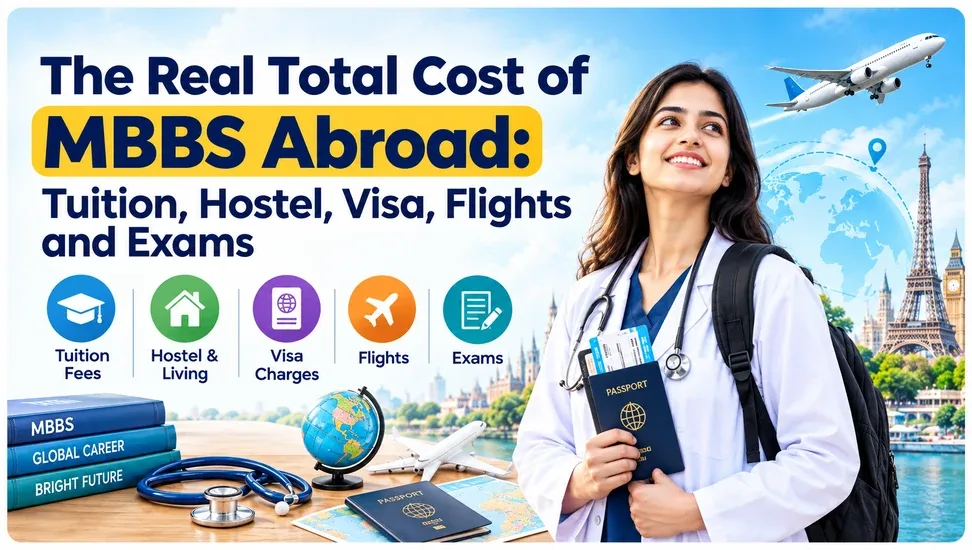
Scroll HereThe total cost of MBBS abroad for Indian students usually ranges from about ₹28 lakh to ₹50 lakh for the complete 6-year programme in popular budget destinations such as Russia, Kyrgyzstan, Kazakhstan and Uzbekistan, and can go up to about ₹65-70 lakh in Georgia. This includes tuition fees, hostel charges, food costs, and other miscellaneous expenses. The exact cost varies according to the foreign destination and medical institution chosen by a medical aspirant. In contrast to an overall cost of ₹60 lakh to well over ₹1 crore to pursue medicine at private medical colleges in India, overseas education offers students a more affordable and truly enriching experience.
MBBS abroad has become a preferred option for many Indian students because of the intense competition for limited seats in government medical institutions and the high prices of private medical colleges. Still, calculating the total cost gives a realistic picture of how much different expense categories can account for in your overall budget. We are going to look at the actual, real cost of pursuing medicine overseas, accounting for accommodation, dining, renewals of the study visa, travel, documentation, and mandatory fees of licensing examinations after graduation.
General Overview of Pursuing an MBBS Abroad for Indian Students
The opportunity to pursue overseas education is filled with an array of academic and extracurricular experiences, opening up a different environment and enabling you to think from a wider perspective. Indian students and parents should get familiar with the key details of this opportunity before working out the total cost. The table below highlights the essential information:
| Course Name | MBBS (called MD or MBBCh in some countries) |
| Course Level | Undergraduate/Bachelor’s |
| Total Duration | About 6 years (5 years of study + 1-year internship), in line with NMC’s Foreign Medical Graduate Licentiate (FMGL) Regulations, 2021 |
| Total Cost | Around ₹28 lakh to ₹50 lakh in most budget destinations (tuition, hostel, food and other expenses) |
| Eligibility Criteria | 10+2 with Physics, Chemistry, Biology and English; minimum 50% in PCB (40% for SC/ST/OBC); at least 17 years old by 31 December of the admission year |
| Entrance Examination | NEET-UG qualification is mandatory to practise medicine in India; some universities also hold their own entrance test or interview |
| Medium of Instruction | English for the entire coursework |
| Accreditations & Recognition | Listed in the World Directory of Medical Schools (WDOMS) and compliant with NMC FMGL Regulations, 2021; WFME-recognised accreditation is an added advantage. Check the NMC-compliant medical colleges abroad before applying. |
Complete Breakdown of the Expenses Involved in MBBS Abroad
Understanding the complete financial picture ensures that families plan effectively for their children’s 6-year medical education. This allows students to pursue their studies in a foreign destination without facing any unexpected challenges in the middle of their semesters. Let’s evaluate the total cost in a realistic manner, taking into account each expense across the entire programme.
Tuition Fees and Other Academic Charges
Tuition fees account for the largest portion of the overall educational investment. Depending on the specific destination (Russia, Georgia, Kazakhstan, Kyrgyzstan, or Uzbekistan), tuition fees can vary significantly based on the university, its accreditations, location, and the local economic situation. Here are the factors that influence the tuition part of the total cost of MBBS abroad for Indian students:
- Public and Private Universities: Government/state-funded foreign universities generally have lower tuition fees compared to private, self-funded universities.
- Payment Cycles for the Fees: Most foreign institutions collect tuition fees annually or semester-wise. Currency fluctuations between the Indian Rupee (INR) and the US Dollar (USD), or the local currency of the chosen country, can greatly influence the final cost in rupees.
- Duration Differences: The typical duration of an MBBS abroad programme is 6 years (5 years of study with a 1-year mandatory clinical internship). As per NMC rules, the course must be at least 54 months long, followed by a 12-month internship at the same foreign university, so always confirm the exact duration because every extra year adds tuition and living costs.
Accommodation, Mess, and Basic Living Expenses
Living expenses are a recurring cost for all foreign students and require careful budgeting. Depending on the lifestyle habits and preferences of the students, the cost of living varies significantly. University dormitories are generally more economical than private housing, especially during the first year when students are adjusting to a new study environment.
The combined MBBS abroad hostel and food cost (including rent, food, heating, electricity and local transportation) is approximately ₹1.2 lakh to ₹3.5 lakh per year. Understanding these costs helps students and parents estimate the overall budget and decide between university accommodation and independent accommodation. Many foreign universities popular with Indian students also offer Indian mess facilities along with hostels, providing food and accommodation at affordable rates.
| Expense Category | Est. Monthly Cost | Primary Facilities |
|---|---|---|
| University Dormitory/Hostel (Shared) | ₹5,000 - ₹12,000 | Central Heating, Electricity, Security, Water, Shared Bathrooms |
| Private Rented Apartment (Shared) | ₹10,000 - ₹22,000 | Furnished Rooms, Kitchen Access, Wi-Fi, Utilities |
| Indian Mess Facilities (depending on availability) | ₹8,000 - ₹14,000 | North & South Indian Vegetarian/Non-Vegetarian Meals (3 Times Per Day) |
| Self-Cooking & Groceries | ₹5,000 - ₹9,000 | Basic Supermarket Supplies, Fresh Vegetables, Rice, Spices |
Note: These values are indicative estimates of what Indian students generally pay, based on university fee circulars and costs reported by students currently studying in these countries. Actual costs depend on the city, lifestyle and exchange rates, and can change every year.
Visa Processing, Documentation, and Overseas Health Insurance
Various non-academic expenses add to the total cost of MBBS abroad and are not included in the university fees. Most of these are paid before departure or immediately after landing in the study destination, so include at least the first-year amount in your budget. Here is what each expense involves:
- Documentation (Apostille & Legalisation): Transcripts, birth certificate, passport and NEET scorecard, along with other documents required for MBBS abroad, must be attested by the Ministry of External Affairs (MEA). Countries that are part of the Hague Apostille Convention, such as Russia, Georgia, Kazakhstan, Kyrgyzstan and Uzbekistan, accept an MEA apostille, while others need embassy attestation. Translation and notarisation charges are extra. If you use an education consultant, ask for their one-time service fee in writing.
- Student Visa Fees: The visa application fee is paid to the embassy or consulate of the destination country. For popular MBBS destinations, the visa fee along with the invitation letter and processing charges usually starts from around ₹8,000 and can be higher depending on the country and visa type. Read the full visa requirements for MBBS abroad before applying.
- Annual Visa Extensions: Obtaining a student visa is one part of the process, but keeping it valid is another. In countries like Russia, the student visa must be extended every year through the local migration office, which involves small processing and registration fees. Some countries issue a long-term study visa or residence permit instead, so check the rules for your destination.
- Mandatory Overseas Health Insurance: All foreign students must have medical insurance that covers emergency care and hospitalisation. It is a requirement for enrolment and also protects you from large emergency medical bills. Health insurance for MBBS students abroad costs approximately ₹10,000 to ₹40,000 per year, depending on the provider and coverage limit. Some universities do not accept Indian policies and require students to buy the university’s own local insurance, which can cost more.
Flights, Travel, and Local Transportation
Travelling to the chosen destination, taking trips back to India, and using local transport can add a noticeable amount to the total cost, which often goes unnoticed until you look back at the full 6 years. International airfares fluctuate based on the route, season, and booking time. Central Asian countries such as Kazakhstan, Uzbekistan and Kyrgyzstan have shorter flight durations and lower fares from India, while destinations farther away usually cost more.
Since most Indian students travel home once a year during the summer or winter vacations, overall air travel adds up to about ₹1.5 lakh to ₹2.5 lakh over the complete course. Actual fares depend on when you book:
- The First Flight: The first flight is often booked with an extra baggage allowance and can cost ₹25,000 to ₹50,000, depending on the route and airline.
- Trips Back Home: A round trip to India during summer or winter breaks usually costs ₹35,000 to ₹70,000, depending on the route, airline and season.
- Local Transport: Monthly student passes for buses, metro or trams are available in most cities and generally cost ₹1,000 to ₹3,000 per month.
Examination, Licensing, and Internship Costs
Earning an MBBS degree abroad is a big achievement, but to actually practise, you need to register as a licensed doctor in India or in another country, as per its licensing rules. Whether you receive a stipend during your internship abroad depends on the country and university. If you don’t get a stipend, add another year of living expenses to your budget. Here are the exam and licensing costs to plan for:
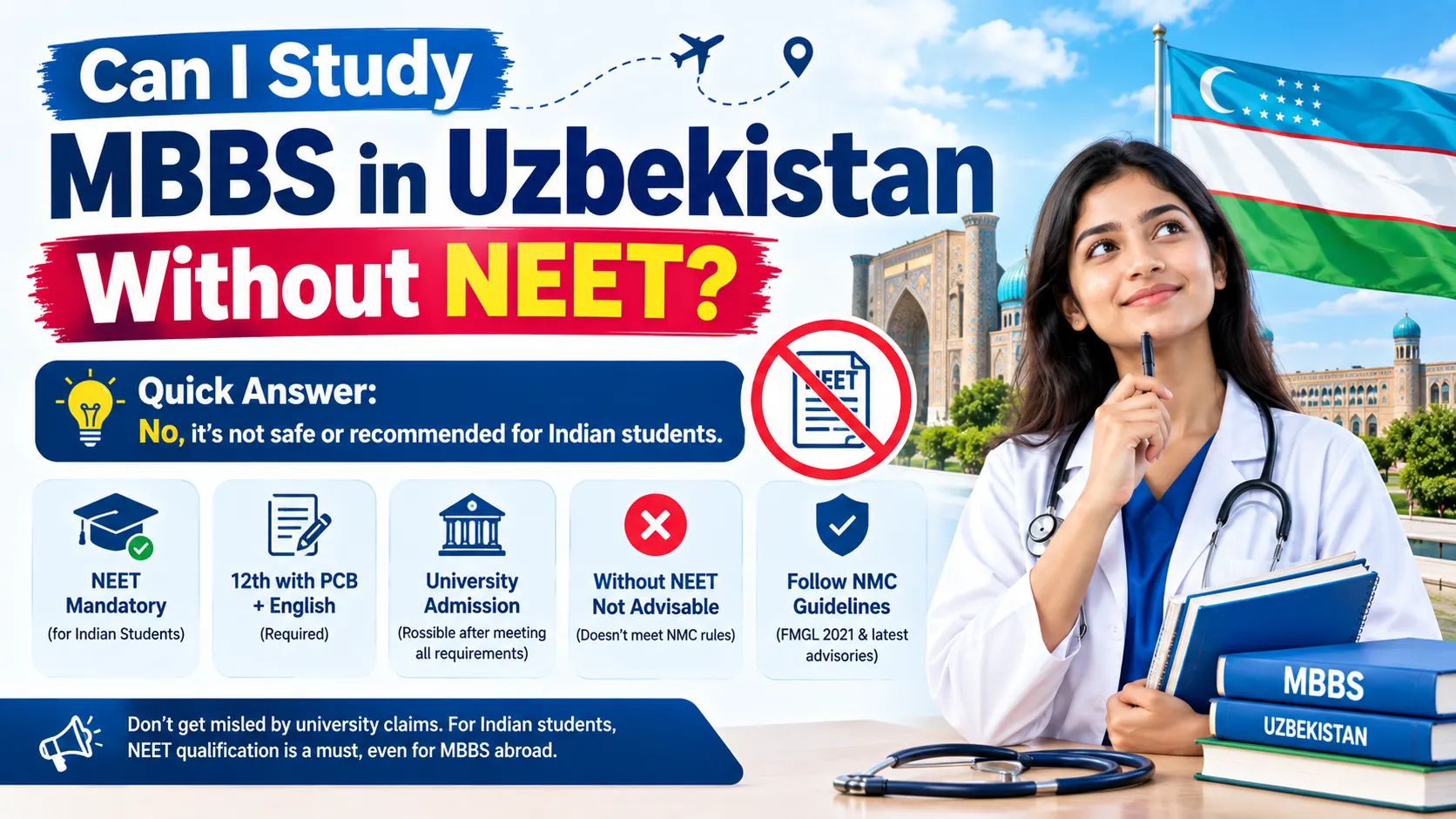
- NEET-UG Examination Fee: Qualifying NEET-UG has been mandatory for Indian students going abroad for MBBS since 2018, and it is required under the NMC FMGL Regulations, 2021, if you want to practise in India. For NEET-UG 2026, the application fee was ₹1,700 (General), ₹1,600 (General-EWS/OBC-NCL), ₹1,000 (SC/ST/PwBD/Third Gender) and ₹9,500 for centres outside India.
- FMGE Examination: Every foreign medical graduate must clear the Foreign Medical Graduate Examination (FMGE) to practise in India. The fee for the October 2026 session is ₹6,195 (₹5,250 plus 18% GST) per attempt. Students who take FMGE coaching usually pay ₹50,000 to ₹1,50,000. FMGE remains the licensing exam until the NExT exam is implemented, and NMC’s August 2026 draft regulations continue to keep FMGE in place for now.
- Internship in India After FMGE: After clearing FMGE, you must complete a 12-month supervised internship in India before permanent registration. There is no tuition for this, but keep a buffer for accommodation and living expenses for that year.
- Local Licence in the Study Country: NMC rules require you to be registered with the medical regulator of the country where you studied and be eligible to practise there, just like its own citizens. This usually means clearing that country’s final state exam or licensing exam, and the registration and processing fees differ by country.
- Global Licensing Pathway: Students planning to work or specialise in countries like the US, UK or Australia must also budget for exams such as USMLE, PLAB or AMC, including application, registration and study material costs.
No. University fees cover tuition (and sometimes hostel) only. The NEET-UG application fee, the FMGE fee (₹6,195 per attempt for the October 2026 session, including GST) and any coaching you take are paid separately, so add them to your budget.
After clearing FMGE, you must complete a 12-month supervised internship in India before permanent registration. There is no tuition fee for it, but keep money aside for accommodation and living expenses for that year, since stipend payments to foreign medical graduates can vary between institutes.
Understanding the Hidden Costs of MBBS Abroad
Recognising the hidden costs of MBBS abroad helps you avoid unexpected expenses and budget strain during the semester. Students must research well and look carefully at each financial parameter involved. These expenses generally include:
- Currency Exchange Margins: Bank conversion fees and forex card markups on tuition fee transfers typically range between 1.5% and 3.5%.
- Mandatory Textbooks & Clinical Equipment: Coursework material, lab coats, stethoscopes, surgical kits, and specialised medical manuals can cost ₹15,000 to ₹30,000 per year, depending on the university.
- University Registration & Admin Fees: One-time university registration, library card and campus administration fees in the first year can range from ₹20,000 to ₹60,000, depending on the institution.
- Winter Clothing and Gear: Heavy thermal wear and winter footwear for cold countries like Russia and Kazakhstan can add ₹20,000 to ₹40,000 at the start, depending on where you buy them.
Country-Wise Total Cost of MBBS Abroad for Indian Students
We have compiled the popular countries that keep the total cost of MBBS abroad manageable in terms of both tuition fees and cost of living. These countries have a simpler admission process than destinations like the US, UK or Germany, while offering a 6-year (5+1) medical programme taught fully in English. To compare fees in more detail, you can also check which country has the lowest MBBS fees.
| Country | Avg. Annual Tuition Fee (INR) | Avg. Annual Cost of Living (INR) | Approx. 6-Year Total Cost (INR) | Licensing Exam in the Country |
|---|---|---|---|---|
| Russia | ₹2.7 - ₹5 Lakh | ₹1.5 - ₹3 Lakh | ₹28 - ₹53 Lakh | Primary Accreditation (after State Final Attestation) |
| Georgia | ₹4 - ₹7 Lakh | ₹2.5 - ₹3.5 Lakh | ₹42 - ₹68 Lakh | Unified State Certification Exam |
| Uzbekistan | ₹2.7 - ₹4.5 Lakh | ₹1.5 - ₹2.5 Lakh | ₹28 - ₹47 Lakh | State Final Attestation |
| Kyrgyzstan | ₹3 - ₹4.4 Lakh | ₹1.2 - ₹2 Lakh | ₹28 - ₹43 Lakh | State Licensing Exam |
| Kazakhstan | ₹3 - ₹5 Lakh | ₹1.5 - ₹2.5 Lakh | ₹30 - ₹50 Lakh | National Centre for Independent Examination (NCIE) Exam |
How we calculated the 6-year total: tuition and living costs for 6 years, plus about ₹3-5 lakh for visa, flights, documentation, insurance and other one-time expenses. Fee revisions and exchange rates can change these figures, so always confirm the latest fee structure with the university.
Based on current estimates, Kyrgyzstan usually has the lowest 6-year total cost (around ₹28 lakh to ₹43 lakh), followed by Uzbekistan and Russia. Georgia is the costliest among these popular options. Always compare the full cost, including hostel, food, travel and exam fees, not just the tuition fee.
For 5 years of study, most Indian students spend roughly ₹24 lakh to ₹45 lakh in Russia, Kyrgyzstan, Kazakhstan or Uzbekistan, including tuition, hostel, food, travel, visa and insurance. The sixth (internship) year should be budgeted separately, depending on whether your university pays a stipend.
Tips for Efficient Financial Planning for Medical Aspirants
When evaluating the MBBS abroad 5 year total expense, include every category except the internship year. As mentioned earlier, some countries pay a stipend during the internship, while others do not, which means the student has to cover the full cost of living for that year. Keep the internship year separate, then calculate the total cost for a smoother budgeting experience. Here are some other tips for better MBBS abroad budget planning:
- Use international forex cards to reduce foreign exchange transaction fees
- Apply for an education loan for MBBS abroad from Indian banks or NBFCs to cover fees and living expenses
- Book your flights in advance to get lower fares and avoid peak-season surcharges
- Ask your counsellor or university for a complete, written year-wise breakdown of all expenses
Final Thoughts
Planning your medical education abroad means considering your long-term career, the teaching quality, clinical exposure, and every expense associated with studying overseas. Calculating the total cost of MBBS abroad for Indian students accurately shows how much each element contributes to the overall budget. Research the particular country’s academic and professional regulations, and account for the cost of each expense. Often, the unnoticed expenses are the ones that take up a significant portion of your spending. Remember that tuition fees are not the only consideration; accommodation, visa, flights, examination fees, administrative expenses, and other miscellaneous costs matter just as much.