MBBS Abroad

Cost of Living in Vietnam for Indian MBBS Students

Aryan Raj
Aryan Raj · Senior Content WriterUpdated at - September 22, 202612 Min Read2 views
Cost of Living in Vietnam for Indian MBBS Students

Table of Contents

Vietnam is becoming an increasingly relevant destination for international students looking for affordable education in an Asian cultural environment. For Indian students considering MBBS in Vietnam, tuition fees are only one part of the financial planning. Accommodation, food, transport, utilities, healthcare, study materials and personal expenses all belong in the same budget, and together they usually decide whether a family can sustain six years abroad - not the fee quote in the brochure.

The cost of living in Vietnam varies significantly with the city, the accommodation type and the lifestyle. Hanoi and Ho Chi Minh City are more expensive than smaller cities, while sharing accommodation and eating local food pulls the monthly figure down sharply. For reference, RMIT Vietnam estimates monthly rent for international students in Hanoi and Ho Chi Minh City at about $250–600 and recommends around $250 per month for food.

This guide explains the major expenses Indian MBBS students should plan for before choosing Vietnam, and how those numbers sit against the cost of MBBS abroad for Indian students generally. All conversions use the September 2026 rate of 1 USD ≈ ₹90 ≈ VND 25,700.

MBBS Fees Structure and Cost of Living in Vietnam

The MBBS fee structure and living costs in Vietnam are affordable compared with most other overseas destinations. Total six-year tuition generally runs ₹20 lakh to ₹30 lakh for the whole course, which is well below a private medical seat in India and broadly in line with the MBBS abroad fees charged in Central Asia and Eastern Europe. Living costs are reasonable but vary from student to student. Here is the expense picture for an aspiring student.

Fees Structure

Type of ExpenseApprox. Cost (in USD)Approx. Cost (in INR)
Annual Tuition Fee$4,000₹3,60,000
Annual Hostel Fee$1,200₹1,08,000
Annual Mess Fee$1,000₹90,000
Medical Insurance$200₹18,000
Visa Extension Fee$100₹9,000

Note: Converted at the September 2026 rate of 1 USD ≈ ₹90. Fees differ by university - compare the top medical universities in Vietnam before you use any single figure for planning.

Cost of Living

Type of ExpenseApprox. Cost (in USD)Approx. Cost (in INR)
Food Per Month$150₹13,500
Cost for Bus Pass Per Day$1₹90
Cost for Utilities Per Month$50₹4,500
Personal Expenses Per Month$100₹9,000
Total Living Expenses Per Month$300₹27,000

Note: Converted at the September 2026 rate of 1 USD ≈ ₹90. This total excludes accommodation, which appears as the annual hostel fee in the table above - about $100 a month if you stay in university housing. Add accommodation and the realistic all-in figure is roughly $400 a month.

Average Monthly Cost of Living in Vietnam

You will see two very different numbers quoted for Vietnam, and it is worth knowing why. General cost-of-living indices put a single person at $600 to $1,200 a month (about VND 15 million to 30 million). That basket is built for working expats - it assumes a private apartment, restaurant meals and a car or regular taxis. A student in university accommodation who eats local food and uses a bus pass lands far below it. The practical student range is VND 6 million to 12 million a month, which is roughly ₹21,000 to ₹42,000, or $235 to $470. Use the student range for planning and treat the expat figure as the ceiling, not the expectation.

Expense CategoryIndicative Monthly Cost (VND)Approx. INR
Accommodation2,000,000 – 15,000,000+₹7,000 – ₹52,500+
Food & groceries2,500,000 – 5,000,000₹8,750 – ₹17,500
Transportation300,000 – 1,500,000₹1,050 – ₹5,250
Utilities500,000 – 1,500,000₹1,750 – ₹5,250
Mobile & internet100,000 – 300,000₹350 – ₹1,050
Personal expenses500,000 – 1,500,000₹1,750 – ₹5,250
Indicative totalAround 6,000,000 – 12,000,000+₹21,000 – ₹42,000+

Note: Converted at the September 2026 rate of 1 million VND ≈ ₹3,500. One-time costs - flights, visa, the rental deposit and initial setup - are not included and typically add one and a half months of expenses in the first month.

Accommodation Cost in Vietnam for Indian MBBS Students

Accommodation costs for Indian MBBS students in Vietnam typically range from ₹1,750 to ₹28,000 per month (about $20 to $310), depending on whether you choose an on-campus hostel or private off-campus housing. This single line is the widest variable in the whole budget - the difference between the two ends of it is larger than food, transport and utilities put together. Indian students generally have four options.

University or Student Hostel

University accommodation is usually the most economical choice, though availability and pricing vary by institution. The Ho Chi Minh City University of Industry and Trade announced 2026–27 dormitory rates of VND 500,000 per student per month for standard rooms and VND 1.5 million per student per month for service rooms, with electricity and water charged according to the room arrangement. Medical universities that admit international students, including Vietnam Military Medical University, run their own hostels on similar lines - confirm the rate and whether a place is guaranteed before you accept an offer.

  • Dormitory rooms: VND 500,000 per month (about ₹1,750)
  • Service rooms: VND 1.5 million per month (about ₹5,250)

Shared Accommodation

Sharing a room or apartment lets students split rent and utilities. It is the usual choice for students who want privacy without paying the full cost of a studio, and it is what most Indian students in Vietnam actually do after first year.

  • Flat sharing: around VND 3,000,000 per person per month (about ₹10,500)

Private Apartment

Private apartments give you the most control and the highest bill. Hanoi Law University estimates a private one-bedroom apartment in selected Hanoi areas at approximately VND 4.5 million to 8 million per month. Central districts and newer serviced buildings run higher.

  • Hanoi, university estimate: VND 4,500,000 – 8,000,000 per month (about ₹15,750 – ₹28,000)
  • Central and premium areas: VND 6,500,000 – 11,000,000 per month (about ₹22,750 – ₹38,500)

Homestay

Homestays offer a more immersive local experience and can suit students who want support through the first few months in Vietnam. Before signing any rental agreement - homestay or otherwise - check in writing whether electricity, water, internet, maintenance and building charges are included, because these are commonly billed separately and can add VND 1 million a month.

  • Per night (short-term): ₹1,000 – ₹1,800 ($11 – $20) for a basic private room
  • Per month (long-term student rate): ₹15,000 – ₹30,000 ($165 – $335) when negotiating directly with local hosts
  • Dorm beds and hostels (alternative): ₹400 – ₹900 ($4.50 – $10) per night in a shared room

Average Cost of Food in Vietnam

Food is the second largest line in the budget, and the one you control most directly. Local Vietnamese food is inexpensive: RMIT Vietnam puts street-food meals at roughly $2–3 and restaurant meals at $5–10. For Indian students the real figure depends on dietary preference. Vegetarian food is widely available thanks to the local com chay tradition, but Indian staples - atta, dal, paneer, masalas - are imported and carry a premium.

Food ExpenseTypical Budget Consideration (VND)Approx. INR
Local meals50,000 – 80,000 per meal₹175 – ₹280
Groceries (per month)1,500,000 – 2,500,000₹5,250 – ₹8,750
Indian restaurant meals80,000 – 150,000 per meal₹280 – ₹525
Imported Indian ingredients (per month)2,170,000 – 2,713,000+₹7,600 – ₹9,500+
Monthly food budget1,200,000 – 4,000,000₹4,200 – ₹14,000

Pro tip: Students can reduce food expenses by cooking regularly, sharing grocery purchases and choosing locally available ingredients.

Cost of Living in Vietnam vs India: Quick Comparison

On a like-for-like basket, Vietnam is more expensive than India on most everyday items - roughly 90% higher excluding rent, and 55% to 100% higher on rent depending on the cities compared. Restaurant meals and local transport are the exceptions and are actually cheaper in Vietnam. The saving on an MBBS in Vietnam therefore does not come from daily living; it comes from tuition, which is where the gap against a private medical seat in India is measured in lakhs rather than rupees.

Expense CategoryIndia (USD / INR)Vietnam (USD / INR)Price Difference
Single person (monthly, no rent)$230 (₹20,700)$440 (₹39,600)Vietnam ~91% higher
1-bed apartment (city centre / mo)$236 (₹21,240)$366 (₹32,940)Vietnam ~55% higher
1-bed apartment (outside centre / mo)$135 (₹12,150)$270 (₹24,300)Vietnam ~100% higher
Basic utilities (electricity, water, garbage)$60 (₹5,400)$100 (₹9,000)Vietnam ~67% higher
Internet (unlimited, 60+ Mbps)$8.65 (₹779)$11.48 (₹1,033)Vietnam ~33% higher
Inexpensive restaurant meal$3.93 (₹354)$2.37 (₹213)India ~66% higher
Mid-range meal for 2 (3 courses)$15.00 (₹1,350)$19.50 (₹1,755)Vietnam ~30% higher
Milk (1 litre)$0.70 (₹63)$1.39 (₹125)Vietnam ~99% higher
Rice (1 kg)$0.75 (₹68)$0.88 (₹79)Vietnam ~17% higher
Local transport (one-way ticket)$0.40 (₹36)$0.30 (₹27)India ~33% higher

Note: Percentages are calculated from the USD figures. INR converted at the September 2026 rate of 1 USD ≈ ₹90. City-level averages, so treat them as direction and scale, not as a quotation.

What the Budget Does Not Tell You

Cost is the easiest part of this decision to research and the least likely to decide the outcome. Three things matter more than the monthly figure, and all three are cheaper to check now than to discover in your final year.

Recognition

A degree that is not recognised is not cheap at any price. Verify the university against the current NMC approved medical colleges abroad list and confirm its status directly with the National Medical Commission before paying any deposit. Recognition status changes; last year's list is not good enough. The new NMC guidelines for MBBS abroad also set minimum course duration, medium of instruction and internship conditions that a low fee does not exempt you from.

The screening exam

If you intend to practise in India, the degree is only half the journey. Look at the FMGE pass rate of Vietnam MBBS graduates before you commit, and understand what those numbers can and cannot tell you about a specific university. Our guide to whether you can practise in India after MBBS from abroad walks through registration and the compulsory internship that follow.

Hidden and one-time costs

The monthly figure hides the costs that actually strain families: the flight home each year, the rental deposit of one to two months' rent, visa extensions, health insurance renewal, clinical uniforms and instruments, and the currency risk of six years of rupee-to-dong conversion. Budget an additional month's expenses per year for these and you will not be caught out.

Conclusion

The cost of living in Vietnam for Indian MBBS students depends primarily on the city, the accommodation and the lifestyle. A student who chooses shared or university housing, eats local food and uses public transport can plan for around VND 6 million to 12 million per month (₹21,000 to ₹42,000), excluding tuition and one-time costs. A student who rents privately in central Hanoi and eats out daily can double that. These are indicative figures and should be refreshed against current university and local prices before you finalise anything.

More importantly, students considering MBBS in Vietnam should weigh the university's recognition, curriculum, clinical training, language of instruction and the latest NMC rules alongside the cost of living. If you are still deciding between countries, browse every option with fees and eligibility on our MBBS abroad or start with the destinations covered in low-cost MBBS abroad for Indian students.

Frequently Asked Questions

Q. Is Vietnam expensive for Indian students?

Vietnam is manageable for most Indian students, but the actual cost depends on the city, the type of accommodation and how often you eat out. A student in university accommodation who cooks or eats local food can stay near the lower end of VND 6 million a month. A student renting a private apartment in central Hanoi or Ho Chi Minh City can spend twice that.

Q. What is the monthly cost of living in Vietnam for students?

A practical planning range is VND 6 million to 12 million a month, which is roughly ₹21,000 to ₹42,000 or $235 to $470 at September 2026 rates. This excludes tuition and one-time costs such as flights, the visa and the initial rental deposit.

Q. What is the average cost of food in Vietnam?

RMIT Vietnam recommends about $250 a month for food for international students in Hanoi and Ho Chi Minh City. A local street-food meal costs roughly VND 50,000 to 80,000 while a restaurant meal costs VND 120,000 upwards, so the monthly figure moves sharply with how often you eat out.

Q. Is Vietnam cheaper than India for Indian students?

On a like-for-like basket Vietnam is more expensive than India on most items, roughly 90% higher excluding rent. Restaurant meals and local transport are the exceptions and are cheaper in Vietnam. Total cost of the degree can still be lower than a private medical seat in India, which is where the real saving sits - see the cost of MBBS in India for the comparison.

Q. How much does accommodation cost in Vietnam?

University dormitories start near VND 500,000 a month for a standard room. A shared flat is around VND 3 million per person. A private one-bedroom apartment in Hanoi runs VND 4.5 million to 8 million, and VND 6.5 million to 11 million in central and premium areas.

Q. How much money should an Indian student carry to Vietnam for the first month?

Budget for about two and a half months of living costs in the first month, roughly VND 15 million to 25 million. The first month carries the rental deposit, usually one to two months' rent, plus a SIM card, bedding, kitchen basics and registration costs that do not repeat.
Tags:cost of living in vietnam

Our Newsletter

Stay updated with the latests news and exclusive content by and subscribing to our newsletter for education vibes.

Related Blogs

See All
Tver State Medical University FMGE Pass Percentage and NMC Status 2026
MBBS AbroadTver State Medical University FMGE Pass Percentage and NMC Status 2026

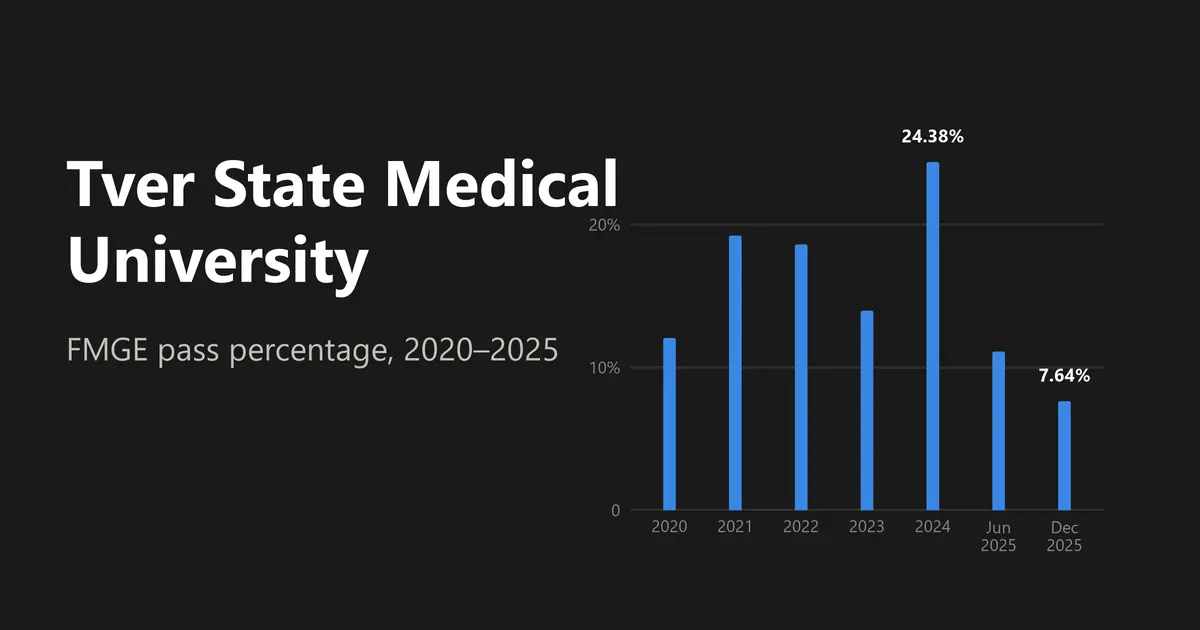
Choosing Tver State Medical University should not come down to tuition fees, rankings or campus photographs. For an Indian MBBS aspirant, two things decide whether the degree is usable at home: whether the course meets the NMC's conditions, and how the university's graduates actually perform in FMGE. According to the National Board of Examinations in Medical Sciences, Tver State Medical University's FMGE pass percentage has ranged from 7.64% to 24.38% between 2020 and 2025.This guide sets out the year-by-year FMGE record, the university's status against each NMC requirement, where NExT stands in 2026, and whether a Russian MBBS degree is valid in India. If you are still comparing universities, start with our guide to MBBS in Russia. Check if you qualify for the 2026 Tver intake Quick Facts of Tver State Medical UniversityFactorsInformationUniversity NameTver State Medical UniversityCountryRussiaCityTverPublic/PrivateFederal state medical universityCourse nameGeneral medicine programme (equivalent to MBBS)Course duration(5+1) years, including internshipCourse mediumEnglish for Indian studentsLicensing pathway in IndiaQualify for FMGE or upcoming NExTFMGE Pass Percentage in 202424.38%FMGE Pass Percentage in 2025In the June session, 11.11%, and in the December session, 7.64%Is Tver State Medical University NMC Approved?Previously, the Medical Council of India (MCI) issued a list of colleges and universities approved by the board. But now, the National Medical Commission of India (NMC) doesn't publish any list; rather, it announced guidelines for foreign medical graduates under the NMC Foreign Medical Graduate Licentiate (FMGL) Regulations, 2021. Our guide to the new NMC guidelines for MBBS abroad explains the regulations in full, and our list of NMC-compliant medical colleges abroad covers the other destinations.Here is Tver State Medical University measured against each requirement.FactorsDetailed Guidelines of the NMCStatus of Tver State Medical UniversityMinimum Course DurationThe minimum duration must be 54 months in a single universityConducts the MD program (equivalent to MBBS) for 6 years

September 21, 2026
Health and Travel Insurance for MBBS Students Abroad
MBBS AbroadHealth and Travel Insurance for MBBS Students Abroad

Imagine pursuing MBBS abroad far from home and suddenly requiring hospital treatment, emergency evacuation or urgent medical help. Who would cover the cost? An unexpected medical emergency can turn into a financial and logistical challenge within hours. That is why health and travel insurance for MBBS students abroad is an important part of planning, rather than an optional travel add-on. Choosing the right insurance policy can help cover medical expenses and provide access to emergency support.This guide covers everything MBBS students need to understand about health and travel insurance abroad.Talk to our CounsellorWhy MBBS Students Abroad Need Health and Travel InsurancePursuing an MBBS abroad is not a one-, two-, or four-year commitment. It takes around six years or more to complete and is one of the most demanding programmes for Indian students. During this journey, students may face illness, accidents, hospitalisation, travel delays, lost baggage or other emergencies. Appropriate health and travel insurance for MBBS students abroad can help cover eligible costs while they are away from home.Travel and health insurance policies do not offer the same protection. Insurance requirements can vary by country, visa category, and medical university. Students planning to study MBBS in Russia, or in other destinations such as Kazakhstan, Kyrgyzstan and other Central Asian countries, must check the requirements, policy exclusions, and claim procedures before purchasing cover.Is Insurance Mandatory for a Student Visa?Whether insurance is mandatory for a student visa depends on the destination country and the type of visa. Some countries may ask for approved health insurance before or after enrolment. Others may provide access to a national or university-linked healthcare system. For a UK Student visa, applicants have to pay the Immigration Health Surcharge as part of their visa application. This provides access to NHS healthcare, although some services may still involve charges. For

September 17, 2026
Education Loan for MBBS Abroad 2026: Bank-by-Bank Comparison
MBBS AbroadEducation Loan for MBBS Abroad 2026: Bank-by-Bank Comparison

Education loan for MBBS abroad interest rate currently ranges from about 8.65% to 14.50% per annum (p.a.). Public sector banks sit at the lower end with floating rates of roughly 8.65% to 11.25% p.a., while private banks and NBFCs price higher. Since a foreign medical degree costs INR 20 lakh to INR 40 lakh end to end, the loan is usually what decides whether the admission actually happens.A 6-year MBBS in Russia works out to roughly INR 25 lakh, and Georgia closer to INR 35 lakh once tuition, hostel and living costs are added. Very few families fund that from savings. An education loan covers tuition plus living expenses abroad and spreads repayment over a tenure of up to 15 years. You can see a country-wise breakdown in our guide to MBBS abroad fees.This guide breaks down a bank-by-bank comparison, collateral-free limits, required documents, moratorium terms and tax benefits, so you can pick the right medical education loan for studying abroad.Book Free Counselling SessionCan I Get an Education Loan for MBBS Abroad in 2026?Yes. Lenders actively fund MBBS abroad, provided you meet four conditions:Your university is recognised by the NMC or WHO and appears on the lender's approved list. Check our NMC-approved medical colleges abroad list before you shortlist.You hold a provisional or confirmed admission offer letter.Your co-applicant has a stable, documented income.Your co-applicant's CIBIL score is roughly 700 or above.The rate you are offered varies by lender and profile. Public sector banks quote floating rates of about 8.65% to 11.25% p.a. Private banks and Non-Banking Financial Companies (NBFCs) quote 10.25% to 14.50% p.a.Collateral is where lenders differ most. Most public sector banks lend up to INR 7.5 lakh unsecured and ask for tangible security above that. NBFCs and a few private lenders stretch the collateral-free limit to INR 40

September 17, 2026
MBBS in Uzbekistan Without NEET: The Honest Answer (2026)
MBBS AbroadMBBS in Uzbekistan Without NEET: The Honest Answer (2026)

no, you cannot do MBBS in Uzbekistan without NEET not if you are an Indian citizen or OCI who wants to come back and practise medicine in India. The National Medical Commission (NMC) requires you to qualify NEET-UG before you take admission to any primary medical qualification abroad. A university in Tashkent or Samarkand may happily accept your application without a NEET score, but that admission letter does not make your future degree usable in India.That gap, between what an Uzbek university will accept and what Indian regulations will recognise, is where students lose six years and ₹20–30 lakh. This guide explains where the line sits, what the NMC's April 2026 Uzbekistan advisory actually said, and the checks to run before you pay a single rupee.Book Your Free Counselling SessionIs NEET Required for MBBS in Uzbekistan?Yes. For Indian nationals and Overseas Citizens of India, qualifying NEET is a regulatory requirement under the NMC framework, and Uzbekistan is no exception.The NMC's guidance is clear: an Indian citizen or OCI who wants to obtain a primary medical qualification from a foreign institution must qualify NEET. The NEET result then forms the basis of the eligibility certificate, provided the other criteria are also met.The confusion arises because students collapse two separate questions into one:Will an Uzbek university admit me without a NEET score? Possibly — that is the university's own decision, made under its own rules.Will Indian regulations let me use that degree to register and practise here? That is the NMC's decision, and it requires NEET.Two different authorities answer those questions, and only the second one determines whether your degree is worth anything in India. So when an advertisement promises MBBS in Uzbekistan without NEET, at best it is describing a university's admission policy. It is not describing your eligibility under Indian

September 9, 2026
Is MBBS Abroad Worth It in 2026? Honest ROI Breakdown
MBBS AbroadIs MBBS Abroad Worth It in 2026? Honest ROI Breakdown

Every year, thousands of Indian students go to pursue MBBS abroad due to rising competition and limited government medical seats in the country. Choosing a foreign country to pursue medicine is a viable option these days. However, many students have a common question: Is MBBS abroad worth it? The honest answer is: Yes, an MBBS abroad is worth it in 2026 because of its quality education, affordability, and modern infrastructure. Additionally, the return on investment is much higher than that of Indian private medical colleges. An overseas medical degree offers a bright career with a high return and better career prospects. However, students must plan carefully due to rising tuition fees, stricter legal requirements, and longer degree durations. In this blog, you will learn why MBBS abroad is worth it in 2026. You will also get the honest Return on Investment breakdown.Talk to an MBBS Abroad ExpertIs MBBS abroad worth it in 2026?Pursuing MBBS abroad is worth it if you do not secure a seat in the Indian government colleges and want an affordable alternative. Hence, choosing an overseas university with a tight budget is a better option to consider. However, based on the location and university guidelines, the tuition fee for the MBBS programme may vary slightly. In Central Asian countries such as Uzbekistan, Kyrgyzstan, and Kazakhstan, students pay lower tuition fees than in many European countries, like the UK, the USA, or Poland.But one thing to keep in mind while choosing a medical college is that an MBBS degree must comply with NMC guidelines so you can practice medicine in India after graduation. Aside from affordability and NMC compliance, studying medicine abroad is better due to better employment opportunities, world-class education, and research opportunities. NMC guidelines to study medicine abroadIndian students must verify if the MBBS curriculum complies with the NMC

September 9, 2026
FMGE Pass Rate of Vietnam MBBS Graduates
MBBS AbroadFMGE Pass Rate of Vietnam MBBS Graduates

Vietnam has become a serious option for Indian students who want an English-taught medical degree at a lower cost than a private seat in India. But cost is only half the decision. If you intend to come back and practise in India, the question that actually matters is what happens after graduation and that means the Foreign Medical Graduate Examination. Before committing six years and several lakhs to MBBS in Vietnam, you need to understand what the FMGE pass rate for Vietnam graduates really tells you, and what it cannot tell you.This guide gives you the honest position: what the official data shows, what it does not, and how to get a number that actually applies to the university you are considering. Check Free eligibility What is the FMGE?The FMGE is a mandatory examination required to be undertaken by all Indian citizens or Overseas Citizen of India (OCI) cardholders who have pursued their medical education abroad and plan to practise medicine in India after an MBBS abroad by obtaining a provisional or permanent registration.PurposeThe FMGE is designed for overseas residents of India or overseas citizens of India who obtained their medical degrees from foreign medical institutes. It assesses their knowledge and skills to ensure they meet the standards required to practise medicine in India.EligibilityFor Indian students who have completed their medical education abroad.StructureThe exam consists of multiple-choice questions (MCQs) and is conducted twice a year, in June and December. The qualifying score is 150 out of 300 marks.OutcomesPassing the FMGE is a requirement for foreign medical graduates to obtain a licence to practise in India and to enrol in a postgraduate course. The FMGE is due to be replaced by the NExT exam, so students should confirm which screening pathway applies to their own graduating batch.AI Section — Breaking It DownFMGE

September 9, 2026
MBBS Abroad Fees 2026 - Country-Wise Comparison Table
MBBS AbroadMBBS Abroad Fees 2026 - Country-Wise Comparison Table

In recent years, studying medicine abroad has gained popularity among Indian students. One of the primary reasons for pursuing medicine abroad is the high cost of private medical colleges in India. MBBS abroad fees are far lower than what Indian private medical colleges charge. Where an Indian private college can charge ₹10 lakh to over ₹25 lakh a year, an MBBS seat in a popular budget destination costs roughly ₹3 lakh to ₹8 lakh a year. Living expenses do add to that figure, but for most families the total still lands well below the cost of a private seat in India.This blog breaks the numbers down country by country — tuition, hostel and mess charges — so you can shortlist a destination that actually fits your family’s budget. Read on to see where the cheapest MBBS seats are in 2026 and which universities offer them.Get Free MBBS Abroad CounsellingMBBS Abroad Fees 2026: Country-Wise ComparisonApart from tuition fees, the budget to study MBBS includes accommodation charges, mess charges, visa-related expenses, medical insurance, and other miscellaneous expenses. When you plan your budget to study MBBS abroad, tuition fees contribute a significant portion of the overall expenses. However, the MBBS fees vary depending on the chosen destination and university. The table below shows the MBBS fees abroad country wise:CountryMBBS tuition fee per year (local currency)MBBS tuition fee per year (in INR)Hostel fees (per year)Mess charges (per year)Russia300,000 RUB₹3,39,00018,000 RUB90,750 RUBGeorgia4,500 USD₹4,25,1151,800 USD1,200 USDUzbekistan3,000 USD₹2,83,410500 USD1,200 USDKyrgyzstan4,000 USD₹3,77,880500 USD1,200 USDKazakhstan4,000 USD₹3,77,880700 USD1,200 USDVietnam4,000 USD₹3,77,8801,000 USD1,000 USDEgypt7,000 USD₹6,61,2901,000 USD1,200 USDBelarus4,500 USD₹4,25,115600 USD1,200 USDArmenia3,500 USD₹3,30,645800 USD1,200 USDPhilippines4,500 USD₹4,25,1152,000 USD1,200 USDBangladesh6,800 USD₹6,42,3961,200 USD800 USDChina4,500 USD₹4,25,115800 USD1,200 USDMalaysia8,000 USD₹7,55,7601,500 USD1,200 USDNepal12,000 USD₹11,33,6401,200 USD900 USD*Note: Fees are converted at 1 USD = ₹94.47 and 1 RUB = ₹1.13 (rates as of September 2026). The rupee value shifts with currency movements,

September 9, 2026
Is MBBS in Malaysia Recognised in India? Fees, Duration, and FMGE Reality
MBBS AbroadIs MBBS in Malaysia Recognised in India? Fees, Duration, and FMGE Reality

Of the various pros and cons you’ve considered between MBBS in Malaysia and others like the Philippines or Russia, there’s one question likely weighing heavily: Is MBBS in Malaysia recognised in India? The honest answer isn't a simple yes or no. It depends on which university you select, the specific nature of the course curriculum, and more importantly, whether you, a prospective student, know what "recognition," for the National Medical Commission (NMC), actually refers to.Let's dig into the true picture of Malaysia recognition, fees, course duration, and the reality faced by those who’ve trained in Malaysia and appear for the FMGE.Is MBBS in Malaysia Recognised in India? The Direct AnswerTo answer directly: Yes, an MBBS degree awarded by a Malaysian medical university is acceptable in India if the university abides by the Foreign Medical Graduate Licentiate (FMGL) Regulations, 2021 of the National Medical Commission.To ensure your degree is valid for practising in India, your chosen university must satisfy these essential criteria:The minimum duration of the basic medical degree course should be not less than 54 months, i.e., 4.5 years.The medical degree program shall provide for an additional compulsory rotating clinical internship period of 12 months at the attached teaching hospital.The entire curriculum shall be conducted in the English language exclusively.The degree should qualify candidates to be registered to practice medicine in Malaysia (Malaysia Medical Council).Upon selecting the institution, ensure that it is listed in the World Directory of Medical Schools (WDOMS) and meets all NMC compliance requirements for practising medicine in India.Planning MBBS in Malaysia? Check Your Eligibility FirstMBBS in Malaysia DurationThe standard MBBS in Malaysia duration is 5 years, divided into 10 semesters, followed by a mandatory internship. It is similar to the Indian MBBS but structured somewhat differently. In India, a 1-year internship applies everywhere equally. In Malaysia,

September 7, 2026
How many Government MBBS Seats in India? State-Wise 2026 Details
MBBS AbroadHow many Government MBBS Seats in India? State-Wise 2026 Details

As per the National Medical Commission (NMC)’s official MBBS seat matrix, the total MBBS seats in India for the 2026 medical enrolment are 1,36,939. For every medical aspirant in India, the clearance of the National Eligibility cum Entrance Test (NEET-UG) is a golden gateway for a medical career. However, the story is that instead of scoring well, students face the challenge of securing government MBBS seats in India. India has more than 400 government medical colleges, and every medical aspirant dreams of securing a government college seat. But why? The answer is high patient flow, low course fees, and experienced faculty members. Here, we have shared all the information on government MBBS seats in India. Different sections will include the number of government seats, the top states with higher government seats, reservation, and so on. Check Government MBBS Seats How Many Government MBBS Seats in 2026 in India? As per NMC, 63,296 seats are available in government medical colleges among the total MBBS seats in 2026. It also indicates 61,185 renewed seats from the previous year and 2,111 additional newly approved government seats. Central Universities, JIPMER, AIIMS, and ESIC institutions are included in government medical seats. The total MBBS seats in India for the academic session 2026-27 have increased by 9911 compared to the total seats of 2025. This shows the commitment of the Ministry of Health and Family Welfare in India to increase the number of medical seats in India. All medical aspirants can find an increase in government seats with newly developed medical colleges and increased intakes in the existing institutions. Government vs Private MBBS Seats in India If you make a comparison, you can find 441 government medical colleges and 382 private and deemed universities in India. Check the following key differences between government vs private

September 3, 2026
FMGE Pass Percentage of Perm State Medical University Graduates
MBBS AbroadFMGE Pass Percentage of Perm State Medical University Graduates

The Perm State Medical University FMGE pass percentage was 27.70% in the December 2025 session, when 131 of 473 Indian graduates cleared the exam. Across both 2025 sessions combined, PSMU's rate was 24.33%. That places the university above the 23.94% all-country FMGE average but below Russia's 30.94% national average. PSMU's best recorded result is 31.25%, reached in both 2022 and 2024.The FMGE is the compulsory licensing examination that Indian citizens and OCI holders with a foreign medical degree must clear before they can register and practise as doctors in India. This page tracks PSMU's year-wise FMGE results, compares them against other Russian medical universities and the national average, explains what actually drives the numbers, and sets out what they mean if you are considering MBBS at Perm State Medical University.Key figures at a glanceLatest reported pass percentage: 27.70% (December 2025) - 131 of 473 candidates passedBest performance year: 31.25% (2024)Weakest performance year: 25.84% (2023).Candidates in latest session: 473 candidates (2025)Russia national average: 30.94% (December,2025)Qualifying score: 150 out of 300 marks (50% aggregate) Comparing Russian universities on FMGE performance? What Is the Perm State Medical University FMGE Pass Percentage?The Perm State Medical University FMGE pass percentage has changed in recent FMGE sessions. According to the National Board of Examinations in Medical Sciences (NBEMS) university-wise performance data, the following table showcases how PSMU performed in recent years.FMGE YearAppearedPassedPass%20221605031.25%202365817025.84%202494429531.25%2025 (June session)3537019.83%2025 (December session)47313127.70%A notable change is present in the historical performance trend of PSMU’s FMGE performance. From 2023 to 2024, there is a strong recovery from 25.84% to 31.25% in FMGE pass percentage. Additionally, there is also an increase in the December 2025 session compared to the June session.AI Section — Breaking It DownPSMU FMGE Results Year by YearThe national FMGE pass rate is different every year. Comparison of the PSMU FMGE pass

September 2, 2026
Education VibesEducation Scholar

Get Expert Guidance to Study

MBBS Abroad