Table of Contents
MBBS in Russia 2026: Overview of the Programme
Scroll HereWhy Indian Students Should Choose Russia for MBBS
Scroll HereRussia’s Academic Legacy in Medicine
Scroll HereStable Bilateral Relations With India
Scroll HereMBBS Recognition & Approval of Russia
Scroll HereEligibility Criteria for Indian Students
Scroll HereAdmission Process to Study Medicine in Russia
Scroll HereMBBS Programme in Russia: A Detailed Presentation
Scroll HereMBBS Course Duration in Russian Universities
Scroll HereSyllabus & Curriculum in Russian Universities
Scroll HereImportant Practical Advice for Indian Medical Aspirants
Scroll HerePursuing an MBBS in Russia vs Other Countries
Scroll HereWhat Does Student Life in Russia Look Like?
Scroll HereHostel & Mess Facilities at the Universities
Scroll HereAffordable Facilities from Education Vibes in Omsk
Scroll HereFacilities at the Partner Institution: Omsk State Medical University
Scroll HereFMGE Passing Percentage in Russia - University-Wise Table
Scroll HereTop Performers
Scroll HereMid-Performers
Scroll HereLow Performers
Scroll HereThe Real Cost of MBBS in Russia for Indian Students
Scroll HereBudget Bands: Russian Universities
Scroll HereBreakdown of Non-Tuition Costs
Scroll HereCareer Opportunities & ROI After MBBS in Russia
Scroll HereIndian FMGE/NExT
Scroll HereRussian Licensing
Scroll HereGlobal Pathways
Scroll HereHow to Boost ROI?
Scroll HereNEET Requirement for Russia’s MBBS
Scroll HereScholarships and Education Loans for MBBS in Russia
Scroll HereScholarships
Scroll HereEducation Loans
Scroll HereDisadvantages & Practical Challenges of Studying in Russia for Indian Students
Scroll HereDual-Medium and Instruction Shift Trap
Scroll HereClinical Language Barrier in Hospital Wards
Scroll HereSudden Shock for the Oral Examination Assessment
Scroll HereExtreme Climate and Seasonal Stress
Scroll HereSelf-study Load and FMGE/NExT Alignment
Scroll HerePractical Requirements for Post-Graduation
Scroll HereMisrepresentation by the Consulting Agencies
Scroll HereRigid Bureaucracy and Administrative Delays
Scroll HereFrequently Asked Questions
Scroll HereDisclaimer: This video explains the MBBS in Russia process based on the 2026 admission cycle for basic understanding. The latest MBBS in Russia 2026 admission details, updated fees, eligibility criteria, and guidelines are fully explained in the article below.
MBBS in Russia 2026: Overview of the Programme
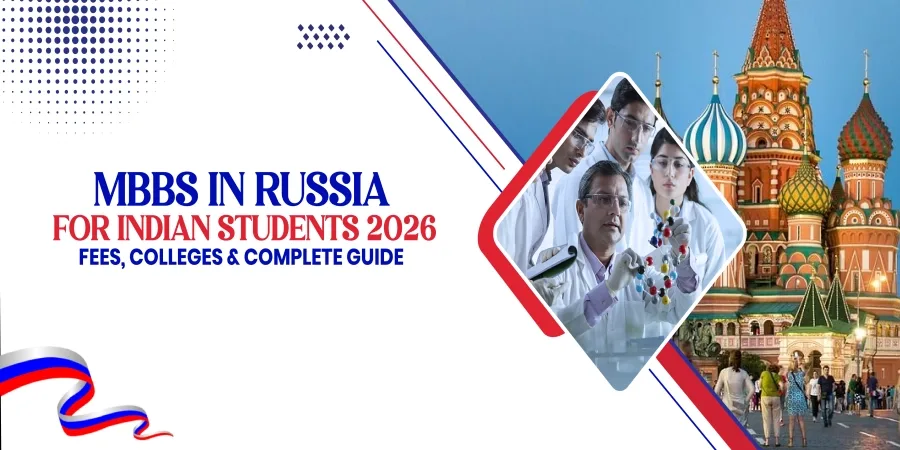
Pursuing MBBS in Russia for Indian students is a 6-year process, comprising 5 years of academic coursework combined with practical experience, followed by a mandatory 1-year clinical rotation at affiliated teaching hospitals. The MBBS tuition fees at Russian universities and institutions start from ₹3.30 lakh per year and vary depending on the university, going up to around ₹5 lakh per year at some institutions. The MBBS programmes in Russia are called “General Medicine”, and students who complete the programme receive an MD (physician/general practitioner) degree after graduation.
According to the reports and statistics from the Indian Ministry of External Affairs, over 30,000 Indian students study MBBS in Russia. We considered each MBBS in Russia review and found that they all highlight a few major reasons for Indian students choosing Russian medicine: a rich academic legacy, an NMC-compliant education model in most institutions, and a stable study environment (despite media coverage of certain events). Russia features more than 50 NMC-compliant medical universities and institutions, holding recognition and accreditation from both national and international medical bodies, including Russian ministries, the WHO, the WFME, and NMC.
This guide focuses on how the 6-year journey actually plays out year by year — syllabus pattern, FMGE outcomes, real costs, and student life. For university-wise fees, seat availability, and the current admission timeline, refer to our main MBBS in Russia page.
Why Indian Students Should Choose Russia for MBBS
Indian students choose to pursue their MBBS in Russia because it offers an academic experience filled with insightful clinical knowledge, and a student-friendly environment at affordable tuition rates. Two major factors regarding Russian universities offer a truly international and rewarding MBBS abroad experience to Indian students:
Russia’s Academic Legacy in Medicine
Russia is known for its pioneering scientific discoveries and research-orientated, highly structured, systemic approach to healthcare. Ivan Pavlov, the first Russian Nobel Laureate and Nikolai Pirogov (father of Russian surgery) are some examples of Russia’s contributions in medical science. Nikolai Semashko developed the world’s first centralised and fully state-funded healthcare system. This legacy continues to expand with the establishment of several state and federal universities in Russia, including First Moscow State Medical University and Pirogov Russian National Research Medical University.
Stable Bilateral Relations With India
India and Russia share mutually beneficial and cooperative bilateral relations. Relations between both countries are officially known as a “Special and Privileged Strategic Partnership”. India imports energy and military hardware from Russia while increasingly establishing trade agreements, despite a shaken geopolitical climate across the Russian Federation. These positive relations provide Indian students with administrative support (urgent emergency support), a largely friendly atmosphere and higher chances of landing a scholarship.
MBBS Recognition & Approval of Russia
MBBS degrees from recognised Russian universities are widely recognised and accepted both in India and abroad for further opportunities, such as postgraduate studies or medical practice, subject to the local regulatory requirements of a country.
- Ministry of Education of the Russian Federation
- Ministry of Health of the Russian Federation
- World Directory of Medical Schools (WDOMS)
- World Health Organization (WHO)
- World Federation for Medical Education (WFME)
- Foundation for Advancement of International Medical Education and Research (FAIMER)
- National Medical Commission (NMC)
- Educational Commission for Foreign Medical Graduates (ECFMG)
Eligibility Criteria for Indian Students
MBBS in Russia eligibility for Indian students comprises NMC requirements, university entry requirements, and other legal requirements to smoothly process their applications. Indian MBBS candidates must be at least 17 years of age, score a minimum of 50% in their 12th with PCB (physics, chemistry and biology as compulsory subjects) or 40% if they’re from SC/ST/OBC, and must have a valid NEET-UG qualification to practise medicine in India after graduation. Some universities might require applicants to clear the internal assessment test.
The complete document checklist and university-wise entry requirements are maintained on our main MBBS in Russia admission page.
Admission Process to Study Medicine in Russia
The Russia MBBS admission process is streamlined for all international applicants. It begins with clearing the entry requirements/eligibility for the chosen institution’s English-taught medical programmes. Students wondering how to apply for a medical programme at Russian universities begin by attending a brief consultation process with one of our experienced counsellors, who discuss eligibility criteria, current qualifications, academic and professional objectives, budget, and other relevant information to help them decide how to proceed.
- A brief consultation with the counsellor
- Shortlisting a university and its course
- Verification of the specific requirements
- Organising the documentation in a folder
- Applying for the chosen programme online
- Receiving the official admission/offer letter
- Clearing any other specific requirements
- An official invitation letter from the university
- Making necessary arrangements before flying
- Reaching the university on time for finalisation
MBBS Programme in Russia: A Detailed Presentation
MBBS in Russia for Indian students is a 6-year medical programme that comprises both theoretical and practical learning experiences, preparing students for their clinical careers. Through a series of rigorous academic phases and a clinical internship, medical students develop medical knowledge and clinical skills to become successful doctors.
Russian educational institutions emphasise a combination of both theoretical and practical knowledge. The MBBS programme in Russia is originally called “MD” (Doctor of Medicine), awarding them a primary medical qualification. The programme is globally recognised and accredited by the Ministry of Science and Higher Education of the Russian Federation.
MBBS Course Duration in Russian Universities
The MBBS in Russia duration is 5+1, which includes 5 years of academic and clinical training, followed by a 1-year mandatory clinical internship at affiliated hospitals. The duration of the Russian “General Medicine" programme aligns with the standard global medical academic standards while offering a minimal range of both tuition fees and living expenses. The course can be extended to a year if enrolling in a “preparatory course”. As the name implies, the course prepares students for their 6-year medical journey by providing dedicated Russian language training, helping them understand the Russian cultural nuances, and familiarising them with on-campus opportunities to advance their new journey.
Students often ask about the MBBS in Russia course details, often requesting the complete breakdown of the curriculum and getting a raw and complete understanding of studies. Here is a complete list of subjects covered in the medical curriculum offered in most Russian universities, starting with the breakdown of their MBBS syllabus at several universities:
1-2
Pre-Clinical Years
Focuses on teaching the fundamentals of the human body and its functioning, including anatomy, biology, and molecules
3-4
Para-Clinical Years
Focuses on patient disease, interaction, diagnosis, and hospital-based rotations at the university-affiliated teaching hospitals.
5-6
Clinical Years
Focuses on practical on-ground training with clinical rotations across various departments, cross-working in shifts every few weeks.
Syllabus & Curriculum in Russian Universities
Hours of classes and months go by, and each year feels like something different for students. We want Indian MBBS aspirants to know how each year feels while absorbing the knowledge of their medical curriculum. We will also quote from the students who have experienced studying at Russian universities, sharing their respective journeys and opinions.
Year 1: Language Shock, Latin, and Survival Adaptation
The initial year of MBBS in a Russian medical institution for a majority of the Indian students is defined by an adaptive phase, where they adjust to their new environment and adapt to it all for a focused and productive academic year. While the medical curriculum introduces foundational pre-clinical subjects (Medical Biology, General and Bio-organic Chemistry, Medical Physics, and Human Anatomy), the overwhelming majority found linguistics and the environment very different from what they had experienced in their regular daily lives in India.
Freshly enrolled students attend compulsory Russian language classes for 4 to 6 hours every week, learning conversational Cyrillic alongside medical terminology used in their daily classes. Students simultaneously learn more about Medical Latin, enabling them to develop a dual-language foundation necessary for anatomical nomenclature. Outside the classrooms, they adapt to the climatic conditions; temperatures drop below -20°C in towns like Kazan, Kursk, or Tomsk, adding to a demanding academic workload.
“The first December in Kazan hits me twice: once when the thermometer drops to -22°C and second when you realise your Latin and Russian vocabularies are colliding in anatomy class. You are learning how to say ‘femur’ in Latin and ‘Где болит’ [where does it hurt?] in Russian on the same day.”
- Dev, Kazan State Medical University (2025 Batch)
Year 2: The Anatomy Load and Oral “Kollokvium" Culture
Year 2 represents the heaviest theoretical load in the 6-year medical degrees. Students dive deep into Human Anatomy, Histology, Embryology, Cytology, Physiology, and Biochemistry. While Western or South Asian medical institutions rely heavily on multiple-choice questions, Russian academic evaluation is built upon oral examinations (‘Kollokviums and Zachety’).
Students stand before department professors in cadaver labs or bone rooms, holding anatomical specimens and explaining structures in real time. Passing these oral tests is mandatory to earn the ‘Zachet’ (credit) required to sit for the end-of-year semester exams.
“Whether it’s India or any Gulf country, students prepare for the MCQs. Here, you stand at a metal table holding a formalin specimen in your hand during the second year’s anatomy class. A Russian professor asks you to trace every nerve branch of the brachial plexus out loud in front of the class. There is nowhere you can hide; you either know it or you repeat the module."
- Meera, Sechenov First Moscow State Medical University (2024 Batch)
Year 3: Hospital Postings and Russian Language
The third year presents a critical bridge between basic sciences and clinical medicine, focused on the Propaedeutics of Internal Medicine and General Surgery, along with Pathology, Microbiology, and Pharmacology. This is the year students transition into actual municipal hospitals and outpatient clinics (Polikliniki). While lectures are in English, clinical interactions require you to learn the Russian language; there is no way to escape it. Taking a patient’s medical history (Anamnesis) requires understanding colloquial Russian descriptions of symptoms, such as chest pressure, burning sensations, or localised pain, without relying on translators.
“Year 3 is where ‘English medium’ feels like a facade, but it is a reality in hospital wards that your command in English does not hold much value with the local Russian population coming to you for a clinical diagnosis and treatment. Especially when you walk into a ward with your stethoscope, elderly Russian patients will not speak English. You have to take the complete history in Russian, document it, and present it back to your attending doctor. It is terrifying at first, but frankly speaking, it is where you finally start feeling like a doctor."
- Rohan, Bashkir State Medical University (2023 Batch)
Year 4 & 5: The “Cycle System” and Dual Studies
Years 4 and 5 of the MBBS in Russia for Indian students break down the traditional semester course structure with the introduction of the Russian “Cycle System” (Tsiklovaya Sistema). Instead of attending four different subjects every week, students undergo intensive 2-3 week blocks exclusively for a single clinical discipline, such as Obstetrics & Gynecology, Pediatrics, Neurology, Ophthalmology, or Traumatology.
At the end of each cycle, students clear an oral examination based on exam “tickets”. Students draw a paper ticket containing 3-4 clinical cases or theoretical questions, receive 20-30 minutes to prepare notes, and present their diagnostic and treatment plan directly to a professor. During this period, international students also deal with a dual-study reality: mastering Russian clinical oral defences while independently practising for global licensing examinations (FMGE/NExT in India, the USMLE in the USA, and more).
“The cycle system changed everything for me… I was focusing purely on one speciality, like Neurology or OB-GYN, for three weeks straight, ending with an oral ticket defence before a panel of professors. The real stress in 4th and 5th years is the dual-study factor: by day, you present complex clinical cases in Russian, and by night, you are solving MCQs in your notebook and on tablets for FMGE, or whatever other licensing examination you aim for.”
- Ananya, Kursk State Medical University (2025 Batch)
Year 6: Internship Reality and the “Gosy” State Exam
The final year to study medicine in Russia requires participating in a rotating sub-internship integrated into the 6-year curriculum to meet international regulatory standards. Students spend full days inside a hospital, assisting seniors in surgical procedures, managing emergency room admissions, taking night calls, and managing patient charts under the supervision of a senior physician and residents (Ordinatura).
The end of the MBBS in Russia presents an opportunity for students to claim their medical degrees, leading them towards the State Final Attestation (Gosudarstvennaya Itogovaya Attestatsiya), also referred to as the “Gosy” exam. This multi-step licensing process includes an extensive theoretical test, an OSCE-style practical exam to evaluate your skills at simulation centres, and a comprehensive oral defence/presentation before a state board commission.
“I feel the final 6th year changed me a lot, helping me to grow as a medical professional. Between hospital duties, assisting in emergency surgeries, and preparing for the three-stage Gosy exams, you realise how important those early years’ oral exam pressure is to build your confidence. As a result, standing before an entire panel of the state board, presenting a full case study feels natural because you have been doing that since your first year."
- Priya, Pavlov First Saint Petersburg State Medical University (2024 Batch)
Important Practical Advice for Indian Medical Aspirants
One of the most practical pieces of advice for an MBBS in Russia for Indian students is to ensure that the programme you enrol in aligns with the NMC’s guidelines to be eligible for medical practice back in the home country. There is more practical advice Indian medical aspirants must consider when planning their MBBS in Russia to be fully aware and prepared.
Checking the NMC Compliance
For those Indian students who plan to practise medicine in India, ensure that your chosen foreign medical institution is complying with all the NMC guidelines outlined as FMGL Regulations 2021 in the “Gazette of India”. Loosely, it prescribes that your medical education must be completed for at least 54 months in English at a single institution, participating in a mandatory 12-month internship, and receiving a primary medical qualification that entitles graduates to register and practise within the host country.
NEET-UG Validity & Eligibility Certificate
Qualifying the NEET-UG (National Eligibility cum Entrance Test - Undergraduate) is mandatory for all Indian students who want to study MBBS abroad. The NEET scorecard remains valid for up to 3 years from the date of result declaration for foreign admissions. Apply for the NMC Eligibility Certificate (EC) through its official portal before securing admission. This is important if you want to practise medicine in India.
Verifying Accreditation & Recognition
Verify if your chosen foreign medical institution is listed in the World Directory of Medical Schools (WDOMS), originally founded by the WHO and currently jointly managed and operated by the WFME and the FAIMER. Additionally, the institution should be accredited by regional ministries and national-level accreditation systems. By maintaining its compliance with international licensing exams, such as the USMLE, PLAB, or AMC, graduates can pursue global licensing pathways.
Being Aware of Linguistic Adaptability
While the official medium of instruction in Russia is English, learning conversational Russian to an A2/B1 level is important by Year 3 of the curriculum. Interacting with the local Russian population during hospital ward rounds (Polikliniki) and taking patient histories (Anamnesis) requires direct communication in the local language. Additionally, prepare for Russian medical pedagogy, which evaluates students through oral module defences (Kollokviums) and case-study tickets (Bilety), demonstrating your verbal articulation of concepts and practical application rather than MCQ testing.
Financial Planning & Living Conditions
Pay tuition, hostel fees, and other university-related mandatory charges directly to the university’s official bank account rather than through third-party recruitment agents to avoid hidden markups or fraudulent transactions. Remember that cost differences between federal cities (Moscow and Saint Petersburg) and regional cities (Kazan and Ufa) exist, with monthly living expenses typically 40-50% lower than major cities. It is advisable to carry winter gear and maintain continuous health insurance coverage recognised by local municipal clinics.
For budget-conscious, NEET-qualified students, yes. The full 6-year cost averages around ₹35 lakh, compared with ₹60 lakh–1.5 crore for management-quota seats in Indian private colleges, and Russia has 50+ NMC-compliant medical universities. The trade-offs: clinical years need conversational Russian, exams are oral (Kollokviums and ticket-based vivas), and FMGE pass rates vary widely by university — so choosing the right university matters more than choosing the country.
As per the NBEMS FMGE Performance Report (December 2025), the strongest performers were Kazan State Medical University (26.36%), Moscow State University of Medicine (25.97%), Kursk State (25.52%), Kuban State (25.37%), and St Petersburg State and Nizhny Novgorod (25% each). Altai State recorded just 12.29%, and Astrakhan, Dagestan, Kabardino-Balkarian and North Ossetian reported 0% — always check the latest report before choosing a university.
Some Russian universities will admit Indian students without a NEET scorecard. However, without a valid NEET-UG qualification you cannot obtain the NMC Eligibility Certificate, sit the FMGE/NExT, or register to practise medicine in India — the NMC made NEET-UG mandatory in 2020 for all Indians pursuing MBBS abroad. So treat NEET as compulsory if you plan to return to India.
Plan for roughly ₹35 lakh over 6 years. Tuition runs ₹2.7–5 lakh per year, and non-tuition costs (visa renewals, medical insurance, flights, food, winter gear, FMGE coaching, and the CRMI phase in India) add about ₹10.5–13 lakh in budget cities like Kursk or Ufa, ₹14–17.5 lakh in mid-range cities like Kazan, and ₹18.5–24 lakh in Moscow or Saint Petersburg.
Pursuing an MBBS in Russia vs Other Countries
To give you a detailed overview of how pursuing an MBBS in Russia compares with other countries, we have prepared a table featuring popular choices (excluding popular Western destinations like the US or the UK) that most Indian students prefer. It highlights key details of each country, including course duration, fees, bilateral relations, and climate.
| Factor | Russia | Georgia | Uzbekistan | China |
| Duration | 6 Years | 6 Years | 6 Years | 6 Years |
| Medium of Instruction | Fully English-taught | 100% English-Medium | English-taught | English and bilingual |
| IELTS/TOEFL Required | Not generally | Not generally | Not generally | Might need for elite institutions |
| Avg. Annual Tuition Fee | ₹3.30-₹5 lakh | ₹3.5-₹8 lakh | ₹2.7-₹4.5 lakh | ₹5.6-₹9.9 lakh |
| Avg. Annual Cost of Living | ₹1.45 lakh | ₹4.39 lakh | ₹5.79 lakh | ₹8.61 lakh |
| Entrance Test | Generally not required, but some universities can conduct online interviews | Generally not required, but some universities can conduct online interviews or in-house tests | No entrance test required | No in-house entrance tests, but some universities conduct CSCA exam |
| NMC Compliance | Yes | Yes | Yes | Uncertain |
| Relations With India | Exceptionally strong, strategic and historically supporting ties | Stable, warm, and steadily growing diplomatic ties | Friendly & strategic ties that are expanding | Complex and sensitive diplomatic relations |
| Climate | Highly continental to subarctic (extremely chilly winters and warm-to-hot summers) | Mild subtropical (moderately chilly winters and warm, cosy summers) | Continental and dry (cold winters with near-freezing temperatures, hot and dry summers) | Varies by region (cold northern areas and warm/humid central and south areas) |
Note: Values and other specifications can vary depending on the specific medical institution. Cost of living will also vary depending on a student’s lifestyle habits and other factors.
Exploring these alternatives in detail? Read our dedicated guides to MBBS in Georgia and MBBS in Uzbekistan before finalising your destination.
What Does Student Life in Russia Look Like?
Student life in Russia for foreign medical aspirants provides the right balance between rigorous academic demands and rich cultural engagement with other students. International students from Asian and African countries, including Indian students, form close-knit communities on the university's campuses. Daily life revolves around intensive morning lectures, laboratory practice, and mandatory Russian language classes. Beyond the classroom, life involves adapting to a dramatically changing seasonal climate, dealing with the public transportation system, and participating in a variety of extracurricular activities, including sports tournaments, talent shows, and festival celebrations (Diwali and Holi are organised by Indian student associations). This wholesome academic experience instils the importance of discipline and cross-cultural exposure, building a sense of independence and self-esteem.
Hostel & Mess Facilities at the Universities
Russian medical institutions provide international students with government-subsidised and regulated accommodations (obshchezhitiye). Rooms are generally furnished with beds, study desks, wardrobes, and central heating systems designed to provide a warm indoor environment during sub-zero climates. These facilities are shared among two to four students and operate with strict security measures. The safety and security of students are maintained and regulated with the use of advanced technology, such as a CCTV surveillance system and biometric or ID-card entry systems, with 24/7 availability of security desks and wardens. Each floor of the hostels (or block) typically offers shared bathrooms, laundry facilities, study lounges, and communal kitchens.
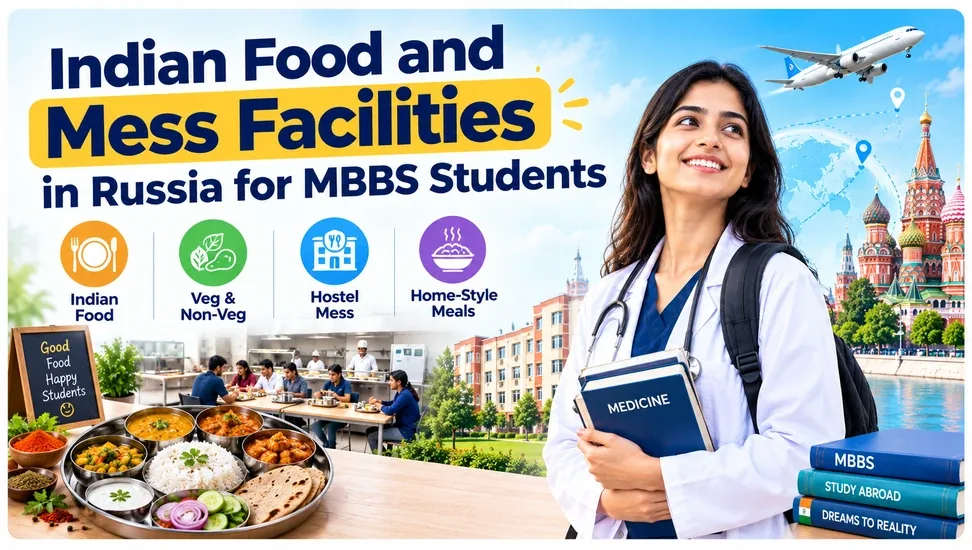
Dining facilities depend on a university's infrastructure. Universities with a large Indian community frequently operate an Indian mess or subsidised university canteen (stolovaya) which serves both vegetarian and non-vegetarian food customised for Indian students. Where centralised mess facilities are not available, students utilise communal kitchens equipped with electric stoves to prepare their own food. Students can find essential spices and ingredients that are easily accessible through local grocery chains (Magnit, Pyaterochka) or the on-campus Indian students' association. Hostels practise strict regulations, such as night curfews (mostly at 11 PM) and rules for guest sign-in. Hostel fees are budget-friendly, having an average cost between ₹10,000 and ₹50,000 per year.
Affordable Facilities from Education Vibes in Omsk
At Education Vibes, we provide hygienic mess facilities with homemade Indian food, including a variety of vegetarian and non-vegetarian meals, in our own hostels. One hostel is located in Russia, and another is in Georgia. In both the hostels and mess facilities, professional chefs, cooks, and helpers are available to offer high-quality culinary services, using home-grown spices in each meal to enhance its flavour and giving the students a homely feeling. In both our hostels and mess facilities, emergency help is available, and we maintain strict security protocols by regulating entrance and exit with entry cards.
As a precautionary measure, like most Russian universities’ housing units and academic buildings, we have an emergency alert system with buttons that connect directly to local police stations or the Russian National Guard (Rosgvardiya). These emergency security personnel (National Guard of the Russian Federation) are an independent internal military and law enforcement force that reports directly to President Vladimir Putin. If you press the button, the personnel will come within 3 minutes. Additionally, we have separate hostel accommodation for both boys and girls, with access to toiletry amenities.
| Team Availability | Yes, 24/7 dedicated support |
| Indian homemade food | Available (veg and non-veg) |
| Clean and sanitised facilities | Maintained by our caretaker |
| Organised distribution | Available through our helper |
Facilities at the Partner Institution: Omsk State Medical University
Education Vibes is officially partnered with Omsk State Medical University, providing students with access to on-campus accommodation and mess facilities for a comfortable and familiar living environment. One of the primary concerns for many Indian students is food. Thankfully, Omsk University hostels offer Indian food, so Indian students do not have to miss the taste of homemade food.
Most hostels at Omsk provide a mess or canteen that serves meals throughout the day, including breakfast, lunch and dinner. The food is hygienic and nutritious, available in both vegetarian and non-vegetarian varieties. Mostly Indian spices and seasonings are often used to replicate authentic Indian flavours, giving students a homely culinary experience. Typical Indian food options include the following:
- Dal & Curries: Dal, sabzi and other preparations
- Breads: Chapati and other flatbreads
- Rice: Steamed rice and biryani
- Sweets: Gulab Jamun and Rasgulla
Additional information: For students who prefer self-cooking, shared kitchens are available. Indian students can buy groceries from local markets. These kitchens have all the essential items for a seamless cooking experience, including stoves, utensils, and refrigerators. Our representatives remain available to provide any needed assistance.
FMGE Passing Percentage in Russia - University-Wise Table
According to the NBEMS FMGE Performance Report for December 2025, Embassy of India, Moscow release, published in July 2026, the 2025 FMGE results for Russian universities show contrasting performance for Indian Foreign Medical Graduates (FMGs). Leading universities such as Kazan Federal, Moscow, St Petersburg, Kursk, and Kuban consistently achieved FMGE passing rates of 25-26%, aligning closely with the overall Russian average. These universities are known for their clinical excellence, practical experience, structured education, English-medium programmes, and a medical curriculum that better matches FMGE requirements, explaining why they have higher passing rates than other universities.
On the other hand, the report also contains universities like Volgograd, Orenburg, Belgorod, and Smolensk with a passing rate of 22-24%, showing an average preparation by graduates. This indicates that while Russian medical education provides a broad base, only select universities deliver the right approach needed for FMGE success. Astrakhan, Dagestan, Kabardino-Balkarian, and North Ossetian have 0% FMGE passing rates for 2025. This shows that there are issues with clinical training, weak support systems for Indian medical students, and possibly lower entry standards for international students. One of the key reasons why some universities have a low FMGE rate even when they’re among the leading universities is the misalignment of their curriculum with Indian MBBS standards.
| NBEMS FMGE Performance Report – December 2025 | |||
| Name of the Russian University | Appeared Students | Passed Students | Passing Rate (in %) |
| Kazan State Medical University | 228 | 73 | 32.02% |
| Altai State Medical University | 133 | 33 | 24.81% |
| Volgograd State Medical University | 239 | 40 | 16.74% |
| Moscow State University of Medicine | 32 | 6 | 18.75% |
| St Petersburg State Medical University | 6 | 2 | 33.33% |
| Orenburg State Medical University | 309 | 140 | 45.31% |
| Kursk State Medical University | 264 | 66 | 25.00% |
| Bashkir State Medical University | 168 | 42 | 25.00% |
| Belgorod State University | 43 | 2 | 4.65% |
| Saratov State Medical University | 28 | 5 | 17.86% |
| Smolensk State Medical University | 430 | 186 | 43.26% |
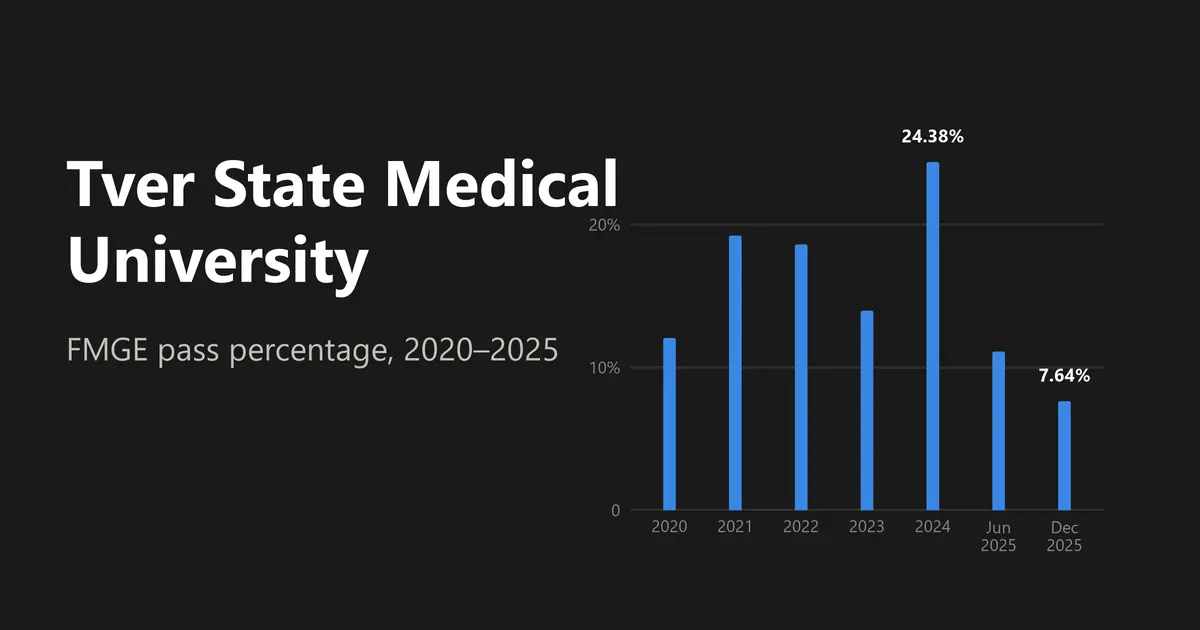
| Tver State Medical University | 157 | 12 | 7.64% |
| Ryazan State Medical University | 20 | 3 | 15.00% |
| Rostov State Medical University | 106 | 36 | 33.96% |
| Kuban State Medical University | 57 | 23 | 40.35% |
| Novosibirsk State Medical University | – | – | Not listed |
| Perm State Medical University | 473 | 131 | 27.70% |
| Ural State Medical University | – | – | Not listed |
| Nizhny Novgorod State Medical University | 120 | 45 | 37.50% |
| Samara State Medical University | 2 | 0 | 0.00% |
Source: National Board of Examinations in Medical Sciences: FMGE Performance Reports
Top Performers
Universities such as Kazan Federal, First Moscow, St Petersburg, Kursk State, Kuban State, and Nizhny Novgorod consistently achieved high FMGE passing rates, hovering around 25-26%. These institutions are widely recognised for structured teaching, English-medium programmes, and stronger clinical exposure.
Mid-Performers
Volgograd State, Orenburg State, Belgorod State, Smolensk State, and Saratov State had FMGE pass rates around 22-24%. While their graduates are adequately prepared for the FMGE, the curriculum does not seem to align with the requirements of the Indian national-level medical licensing examination.
Low Performers
Altai State Medical University stands out with an FMGE passing rate of just 12.29%. Additionally, institutions like Astrakhan, Dagestan, Kabardino-Balkarian, and North Ossetian reported 0% FMGE passing rates. This raises the question of whether they are truly suitable for aspiring physicians planning to study medicine in Russia.
Several factors contribute to these variations in FMGE outcomes among these Russian universities, including curriculum alignment with the FMGE, hands-on clinical experience in hospitals, and student intake quality (since observation shows that students with stronger NEET scores often have higher FMGE success rates). In conclusion, choosing the right medical institution to study MBBS in Russia will make all the difference for Indian students. Look at a university’s curriculum (matching Indian medical standards), historical passing rates (at least above 25%), and a robust support system (mentorship, dedicated FMGE classes, and other academic resources).
The Real Cost of MBBS in Russia for Indian Students
While tuition remains the single most important concern for Indian students and their parents, other expenses associated with pursuing your education account for over 35-50% of the total budget for an MBBS in Russia. Expenses such as legal documentation, annual medical insurance charges, return trips to India, winter clothing, online licensing preparation, and the post-graduate internship in India add to the overall cost of 6-year tuition.
Prefer watching first? Our team explains the complete MBBS in Russia cost structure for the 2026 cycle — tuition, hostel, and the hidden charges most agents skip — in this short video:
Budget Bands: Russian Universities
The table below shows estimated non-tuition costs for six years in different Russian cities. It comprises costs of visa extension, medical insurance, translation & notarisation, apostille, flights, winter clothes, food (mess or dining out), FMGE coaching, and other charges.
| Budget Band | Cities | Living Standards | Estimated 6-Year Non-tuition cost (INR) |
| Budgeted | Kursk, Ryazan, Ufa, Mari El, Astrakhan | Self-cooking, standard flight charges, basic prep subscriptions, and budget clothing | ₹10.50 lakh - ₹13 lakh |
| Mid-Range | Kazan, Volgograd, Voronezh, Krasnodar | Partial mess/dining-out facilities, 2 flights per year, premium licensing exam prep platform, standard CRMI cost | ₹14 lakh - ₹17.5 lakh |
| Premium | Moscow, Saint Petersburg | Daily dining/cafes, flexible flight bookings, comprehensive dedicated FMGE coaching, high regional living costs | ₹18.5 lakh - ₹24 lakh |
Note: The values are estimates of different categories of expenses that Indian students spend while living in Russian cities in the budget band. Values are subject to change depending on a student’s circumstances, spending habits, inflation rate, and other factors.
Breakdown of Non-Tuition Costs
Several charges add to the overall cost of the 6-year journey of medical education and clinical training in Russia. The budget for each expense category shows an estimated cost for the entire 6-year period, based on the frequency and annual cost range. The actual cost will vary depending on the specifications of what one chooses to spend their money on in each category for a particular period, including but not limited to, the specific location, and so on.
| Category | Frequency | Annual Cost Range (INR) | Estimated 6-Year Non-Tuition Cost (INR) |
| Visa & Annual Extensions | Entry visa upon arrival + 5 annual extensions with state migration services | ₹2,000 - ₹3,500 per year | ₹12,000 - ₹20,000 |
| Medical Insurance & Biometrics | Mandatory annual health insurance policy, HIV testing, fingerprinting, and medical checks | ₹8,000 - ₹15,000 per year | ₹48,000 - ₹90,000 |
| Translation, Notarisation & Apostille | Year 1 document translation into Russian, local police registration | One-time charges | ₹35,000 - ₹60,000 |
| Airfare (2 Return Flights Per Year) | 12 round-trip tickets (during summer & winter breaks) between India and Russia | ₹40,000 - ₹60,000 (per return flight) | ₹4,80,000 - ₹7,20,000 |
| Winter Apparel & Gear | Heavy sub-zero outerwear, thermal layers, snow boots, and winter accessories (new after every 2 years) | ₹15,000 - ₹25,000 | ₹45,000 - ₹75,000 |
| Food & Living (Outside Mess) | Daily groceries, personal care products, kitchen supplies, local transport, and mobile SIM plans | ₹5,000 - ₹14,000 per month | ₹3,60,000 - ₹10,08,000 |
| FMGE Coaching | Subscriptions to Indian medical prep platforms (Marrow, Prepladder, DAMS) from Year 3 to Year 6 | ₹15,000 - ₹30,000 per year | ₹60,000 - ₹1,20,000 |
| Indian Internship (CRMI) | NExT Step 2 state medical council registration, NOC fees, and 12-month living costs in India | Year 7 post-graduation phase | ₹50,000 - ₹1,50,000 |
Note: The data represented is compiled through different sources, with values showing an average range for Indian students based on the majority of historical figures. Cost can vary depending on the specification, such as location, airline, lifestyle habits, and other factors.
Career Opportunities & ROI After MBBS in Russia
On average, the MBBS in Russia total cost is ₹35 lakh for a duration of 6 years, including tuition fees, the university's hostel accommodation, and basic living expenses. Compared to what private medical colleges in India charge (with management quota admissions ranging between ₹60 lakh and ₹1.5 crore), the lower initial capital investment has a better chance of high-yielding capital recovery. Foreign medical graduates generally get a higher return within 2.5 to 4 years of full-time clinical practice after getting their valid medical licence. Here are some common career pathways students can choose from after graduating from a Russian medical institution:
Indian FMGE/NExT
Graduates returning to India must clear the Foreign Medical Graduate Examination (FMGE). After qualifying for the FMGE, students undergo a 12-month Compulsory Rotating Medical Internship (CRMI). Upon earning full state or national registration as a practitioner within the NMC, physicians can work in either public or private healthcare networks as Junior Residents and Medical Officers.
Russian Licensing
Graduates who pass the Russian state final attestation (Gosy) and the primary accreditation examinations can earn legal practitioner status in Russia. Practitioners in Russia can practise as a General Practitioner (Участковый терапевт) or enrol in a specialised clinical residency program (Ordinatura), getting an entry point into the European/Eurasian healthcare system.
Global Pathways
A primary medical qualification listed in the World Directory of Medical Schools (WDOMS) enables graduates to qualify for the international licensing examinations. The initial low range of tuition fees lowers the overall debt, creating financial leverage for students to apply for the United States Medical Licensing Examination (USMLE), the UK Medical Licensing Assessment (UKMLA/PLAB), or the Australian Medical Council (AMC) examination.
How to Boost ROI?
Students can increase their return on investment and career trajectory by preparing for the national licensing examinations during the 4th and 6th years of the academic programme. Passing licensing examinations on the first attempt removes the post-graduate administrative burden, allowing immediate entry into a salaried position or clinical roles.
| Region | Role/Experience Level | Avg. Annual Starting Salary | Mid-Career/Consultant Annual Salary | Primary Source & Date |
| India | Junior Resident/Medical Officer | ₹7,20,000 - ₹10,20,000 ($8,600 - $12,200) | ₹18,00,000 - ₹36,00,000+ ($21,500 - $43,000+) | DigiNerve & Medical Global Academy Pay Guide (Jan 2026) |
| Russia | General Practitioner/Resident | ₽600,000 - ₽1,000,000 ($6,600 - $11,000) | ₽1,400,000 - ₽2,200,000 ($15,400 - $24,200) | Federal State Statistics Service & Eduwisor Data (Feb 2026) |
| United Kingdom (Third Country) | Foundation Doctor (FY1/FY2) | £41,200 - £55,000 ($53,000 - $71,000) | £93,600 – £150,000+ ($120,000 – $195,000+) | NHS Employers Pay Circular & iatroX NHS Pay Calculator (Apr 2026) |
| United States (Third Country) | PGY-1 Resident/Attending Physician | $68,000 - $75,000 | $250,000 - $420,000+ | Medscape Resident Salary & Debt Report (July 2025/2026) |
Note: The table presents a likely outcome for graduates based on the mentioned sources in the last column and other authentic sources of information. Actual outcomes and salary will always vary depending on the exact location, experience level, and other relevant factors.
NEET Requirement for Russia’s MBBS
Several students have asked whether it is possible to study MBBS in Russia without NEET, as there is confusion regarding the mandatory requirements. The confusion is understandable because NEET eligibility for medical practice in India is not the same as a Russian university’s admission requirements. Let us put it into perspective:
The National Medical Commission (NMC) in India has made NEET-UG qualification mandatory for all Indian students who plan to study MBBS abroad, as announced in a public notification released by the NMC in 2020. It clearly states that those who have a valid NEET-UG qualification will be eligible for a medical licensing examination back in India after completing their foreign medical education and makes the scorecard valid for up to 3 years only (from the date of the results). It does not mention any cut-off score but simply mentions “qualification” as the only mandatory requirement for being eligible to get a valid registration within the NMC and practise in their home country.
Does it mean that all Russian universities require NEET as per the NMC requirements?
The straight answer to this question is no; not all Russian universities demand Indian MBBS aspirants submit a valid NEET qualification. Some universities in Russia explicitly mention on their official website that the NEET scorecard is one of the documents required for admission to their English-taught medical programme. However, it does not mean that all Russian universities require Indian students to submit their NEET-UG scorecards for admission.
Not sure where your NEET score stands? Estimate your all-India standing with our free NEET Rank Predictor and explore the options your score unlocks with the NEET College Predictor.
Scholarships and Education Loans for MBBS in Russia
Many Indian students are not able to afford even the basic cost required for admission (1st-year tuition fee as a deposit). Such students can apply for a scholarship or an educational loan. Both options are available for students, depending on their eligibility for the specific financial aid scheme/programme and its provider.
Scholarships
A scholarship in Russia for MBBS can be availed only through the university. If a Russian university has made it available for international students to apply for a scholarship, they can. Depending on the specific scholarship, it can provide financial assistance to pay tuition fees, living expenses, travel allowances, or academic materials, or cover a combination of these expenses. Although the availability of scholarships in Russian universities is so scarce that it’s nearly impossible to find a suitable scholarship, there are some examples, including non-government scholarships:
Government Scholarships
- Russian Government Scholarship
- Open Doors: Russian Scholarship Project
- Rossotrudnichestvo Scholarship Program
University-specific Scholarships
All public universities in Russia offer scholarships for aspiring foreign medical candidates based on seat quota allocation, regulated by the government. No university offers medicine-specific scholarships to foreign candidates, regardless of their nationality.
Other Scholarships
Ambedkar Overseas Vidya Nidhi Scholarship (for Andhra Pradesh students)
Education Loans
Students with a lower financial background and low academic performance can apply for an education loan. There are two categories of education loans to study MBBS in Russia, including secured and unsecured loans. While secured loans require applicants to submit collateral/security coverage for their loan amount, unsecured loans can be availed of without much collateral and security deposits but come with their own strict terms and conditions.
For secured loans, students usually need to submit these mandatory documents: Original title deeds of the property, encumbrance certificate (EC), and property tax receipts. For unsecured loans, students will submit two separate categories of documents, one belonging to them and the other belonging to their co-applicant (the guarantor). Here are the documents generally accepted by several financial institutions for unsecured loans:
| Documents from Students | Documents from Co-Applicants |
| Valid Passport University Offer Letter University Fee Structure 10th and 12th Mark Sheets NEET Scorecard Passport-sized Photographs | Aadhaar Card PAN Card Proof of Income Bank Account Statements (last 6 months) Proof of Residence |
Due to an increasing need for educational loans with lower collateral, numerous financial institutions have modified their loaning systems and introduced new educational loan schemes and programmes for Indian students. Here are some major financial institutions in India offering loans for overseas medical education:
| Public Banks | Private Banks & NBFCs |
| State Bank of India (Global Ed-Vantage Scheme) Bank of Baroda (Baroda Scholar Scheme) Punjab National Bank (PNB Udaan) Union Bank of India Canara Bank | HDFC Credila ICICI Bank Axis Bank Avanse Financial Services Auxilo Finserve IDFC First Bank |
So what do these educational loans cover for students?
Depending on the particular financial institution and loan scheme/programme, along with the eligibility criteria, educational loans cover entire tuition fees (for a year or the entire duration of studies), hostel and accommodation charges, airfare and transportation expenses, exam and library fees, health and travel insurance (if applicable), costs of books, uniforms, and certain essential equipment, including a laptop or personal computer. Additionally, these can also provide coverage on study tours and project work during the course of study.
Disadvantages & Practical Challenges of Studying in Russia for Indian Students
Both the MBBS in Russia pros and cons exist for Indian students. These polar differences can influence an Indian student’s decision to study medicine in Russia. To make you aware, here are eight challenges that most Indian students face in Russia (and how to solve them):
Dual-Medium and Instruction Shift Trap
Some educational consultancies advertise programmes as “English-medium”, but certain Russian universities switch instruction to Russian for clinical subjects after the 3rd year; not all universities offer complimentary Russian language training alongside the main classes. Under the NMC’s FMGL Regulations 2021, any foreign medical degree not taught in 100% English for the entire 54-month duration will be considered invalid in India for registration.
How to mitigate it: Request an official university letter confirming 100% English-medium instruction across all your academic coursework before paying the admission fee.
Clinical Language Barrier in Hospital Wards
While classroom lectures are conducted in English at certain universities, hospital ward rounds, outpatient clinic (Poliklinika) duties, and recording patient history (Anamnesis) require fluent conversational Russian. Elderly patients, especially in regional Russian cities, speak no English, leaving unprepared students unable to engage in practical clinical training and performing poorly in their final-year mandatory 12-month clinical internship in hospitals.
How to mitigate it: Remember that Russian language modules are important for your clinical training and clinical internship. Prioritise the language modules from Year 1 to reach at least a B1 level of conversational proficiency in Russian before entering hospitals for clinical rotations (often starting in Year 3).
Sudden Shock for the Oral Examination Assessment
The Russian medical education system relies heavily on oral viva-voce assessments (Kollokviums) and case-defence tickets (Bilety) rather than multiple-choice written exams. Students must verbally explain complex anatomical, pathological, and pharmacological concepts directly to the senior professors. A student who is familiar or habitual with standardised written tests finds it an academic shock.
How to mitigate it: Form weekly peer study circles to practise explaining clinical reasoning and cases with anatomical structures out loud in an oral exam format.
Extreme Climate and Seasonal Stress
Temperatures in regional educational hubs frequently drop between -15C and -25C from November through March. Prolonged sub-zero temperatures, heavy snowfall, and limited winter daylight hours can cause physical strain, respiratory problems, and related effects, bringing challenges for students arriving from tropical regions (such as India).
How to mitigate it: Prepare for the Russian winter well before; keep enough money to buy clothes and boots from local Russian shops. Purchase high-grade winter gear and maintain consistent indoor activity. Maintain your vitamin D intake during winter months with supplements or a little window of sunshine when it arrives.
Self-study Load and FMGE/NExT Alignment
Historically, as seen in the NBEMS FMGE reports, the FMGE result Russia university wise shows an average of a 30-35% passing rate for all foreign medical graduates (FMGs). Because Russian universities teach according to their national curriculum rather than India’s medical standards on a strict basis, students must manage two tasks at once: participating in universities’ oral exams while independently studying Indian MCQ formats.
How to mitigate it: Subscribe to an Indian medical licensing preparation platform or application by 3rd year to align your daily self-study sessions with the FMGE syllabus. After the NExT implementation across India, switch to NExT preparation.
Practical Requirements for Post-Graduation
Completing clinical residency (Ordinatura) in Russia requires native-level Russian language and passing state licensing exams (Gosy). Additionally, Russian PG specialisations are not automatically recognised as equivalent to MD/MS degrees by the NMC in India, limiting the career opportunities for Indian graduates unless they pass the additional equivalent tests or international exams.
How to mitigate it: Treat the Russian medical programmes as a basic primary qualification, and plan early to sit for the FMGE/NExT, USMLE, or PLAB/UKMLA pathways.
Misrepresentation by the Consulting Agencies
The consultancy market for overseas medical education is undoubtedly prone to unethical practices by third-party agents. These agents can misrepresent themselves as the partners of a Russian university, increase tuition fees, lie about the hostel quality, hide any administrative charges, or provide inaccurate information regarding the university.
How to mitigate it: Verify details of the university directly from the university’s official website. Transfer any university-related payments directly to the university’s official bank account, or contact them directly with the mentioned email address or phone number.
Rigid Bureaucracy and Administrative Delays
Russian administrative protocols regarding annual visa renewals, mandatory medical checks, biometrics, police registrations, and official degree apostilles are strictly implemented. Missing deadlines or delays on your end can result in fines, administrative-related complications, or even visa cancellation.
How to mitigate it: Maintain digital and physical copies of all official documents and track expiration dates to be ready for the renewal processes at least 45 days before the expiry.
Frequently Asked Questions
What is the official title of the medical degree awarded in Russia?
Russian state universities award graduates the MD/physician degree after their (usually called) “General Medicine” programme (Doctor of Medicine degree, also called the "Specialist" degree by some universities). It is recognised globally by international medical bodies, including the USMLE and India’s NMC.
What is the total duration of the MBBS course in Russia?
The Russian MBBS course, generally referred to as a “General Medicine” degree, spans 6 academic years (72 months), which exceeds the NMC requirements for a 54-month minimum duration plus a mandatory 12-month clinical internship. The total duration of the medical programme in Russia is 6 years, comprising 5 years of academic and clinical training and ending with a 12-month mandatory internship.
Is clinical internship part of the 6-year course structure in Russia?
Yes, a clinical internship is part of the 6-year medical programme in Russia, working as an integrated, hospital-based rotational sub-internship. The internship is conducted at university-affiliated hospitals where students directly interact with the local Russian patients, diagnosing and treating them clinically.
How much does MBBS cost in Russia for Indian students?
Low cost MBBS in Russia makes it affordable for Indian students to pursue their medical education and earn degrees, with an average of ₹35 lakhs for a complete 6-year duration.
What is the minimum score required for MBBS in Russia?
Indian students can pursue MBBS in Russia without NEET; however, they must have a valid NEET-UG qualification with no minimum score requirements if they want to practise medicine back in India, as per an official public notification released by the NMC in 2020.
Is Russia MBBS accepted in India?
Subject to NMC compliance, it is legally recognised as equivalent to India’s MBBS degree. If an Indian medical student earns their medical degree from an NMC-compliant university, their degree will be accepted in India, allowing them to sit for the medical licensing examination and register for medical practice.
Are medical programmes at Russian universities taught fully in English?
Accredited international tracks at major federal and state universities deliver all their theoretical lectures, practical laboratory sessions, and clinical examinations in English. Students need to interact with Russian patients in their local language, so all of them must learn basic Russian. Most students complete a mandatory basic Russian language module during their early semesters to interact directly with the local patients during clinical rotations.
What is the format of assessments and exams in Russia?
Medical assessments in Russian universities are conducted orally (oral viva-voce exams), using physical slips of paper called “tickets” (Bilety for the plural). A professor prepares a pool of tickets, which students pick randomly. They are given 20-40 minutes to sit down, look at the prompts on their tickets, and prepare their presentation. Rather than MCQ tests, students present diagnostic procedures, anatomical specimen identifications, and treatment plans verbally before a panel of professors.
Does the NMC have any approved list of Russian universities?
No, the National Medical Commission (NMC) does not publish an “approved list” of foreign medical institutions; it has laid down certain parameters and guidelines that must be met when pursuing your MBBS abroad. Evaluation of a medical institution is done individually for each medical candidate through the NMC Eligibility Certificate (EC) process, based on the institution’s listing in the WDOMS and strict adherence to the FMGL Regulations 2021.
Are postgraduate students from Russia eligible to apply for medical registration in India?
Clinical residency degrees (Ordinatura) completed in Russia are not automatically recognised in India for medical registration. The Indian NMC recognises a primary medical qualification (MD degree from a Russian university) but does not see it as an equivalent to India’s MD/MS qualifications. If an Indian graduate completed their postgraduate studies in Russia, they can either practise medicine in Russia only or acquire an equivalent Indian postgraduate qualification or qualify for the Diplomate of National Board (DNB) examination.