MBBS Abroad

Georgia Weather Guide: Best Time to Visit for Students & Travelers in 2026

Education Vibes
Education Vibes · Content WriterUpdated at - March 25, 20266 Min Read3,323 views
Georgia Weather Guide: Best Time to Visit for Students & Travelers in 2026

Table of Contents

When planning to visit or MBBS in Georgia, understanding the weather is essential. Nestled between Eastern Europe and Western Asia, Georgia boasts a remarkably diverse climate thanks to its varied geography—from the towering Caucasus Mountains to the coastal shores of the Black Sea. Whether you're heading to the vibrant capital Tbilisi or the seaside city of Batumi, the weather can vary significantly depending on the region and season.

The education system, expenses, culture, environment, climate, adaptability, food, etc., are the innovative factors that are considered when choosing a suitable country to opt for an MBBS abroad. Georgia ranks among the top 5 most considered MBBS Abroad destinations for Indian and international students. Today, let us address all your questions about Georgia's climate. Georgia possesses a high literacy rate that facilitates Indian students with enhanced theoretical knowledge and practical training with highly advanced simulation practices. The universities of Georgia are globally accredited and allow Indian students to gain globally recognised MBBS education and acceptable MBBS degrees at a feasible fee structure.

This guide explores Georgia’s weather patterns throughout the year, helping travellers and students make informed decisions.

Overview of Georgia’s Climate

Georgia experiences a mix of humid subtropical and continental climates, making it one of the most climatically diverse countries in the region.

  • Western Georgia (Batumi, Kutaisi): Humid, mild winters, heavy rainfall
  • Eastern Georgia (Tbilisi): Drier, more continental climate with hot summers and cold winters
  • Mountain regions: Alpine climate with heavy snowfall

This variation means you can experience warm beaches, lush forests, and snow-covered peaks—all within a few hours of travel.

Decoding the Different Seasons and Climate of Georgia

Georgia is located on the coast of the Black Sea, at the convergence of West Asia and Eastern Europe, which are separated by the Caucasus naturally. Like India, Georgia also consists of four major 4 seasons that are renowned and structured to make the climate of Georgia.

  • Summers
  • Winters
  • Spring
  • Autumn

Summer Season: The season of hot, warm, dry, and clear clouds, the most fascinating for cultivation, starts in June. The Tbilisi weather in June is the starting month of the summer season, which enables students to get more sunlight and heat in the environment. The maximum temperature during the summer season while studying MBBS in Georgia for Indian students can range up to 35 degrees Celsius, ranging from June to August. The climate of Georgia during the summer seasons can provide ease and comfort to Indian students, which suits them and enhances adaptability.

Winter Season: This is the cool, calm, and dim-light season that can add valuable experiences to your MBBS Abroad journey. The Georgia Tbilisi weather in December is the start of the cold winter climate in Georgia that can end in February. The maximum temperature in cold weather in Georgia can be a maximum of 8 degrees Celsius. Sometimes, during the winter season, it can begin to snow in Georgia due to the sudden decrease in temperature.

Spring Season: The Spring season is renowned for new beginnings. The Tbilisi weather in March is the start of the spring season, which comprises normal temperatures. The medical aspirants are allowed to equal temperature range of around 26 degrees Celsius, which can also be experienced during the autumn season. The duration of this normal temperature can last up to May.

Autumn Season: The Autumn season is the season of celebrations/festivals and a transitional season between summer and winter. The Autumn season starts in September and ends in November. The temperature of autumn is similar to that of the spring season. The students can gain a standard temperature that enhances their adaptability.

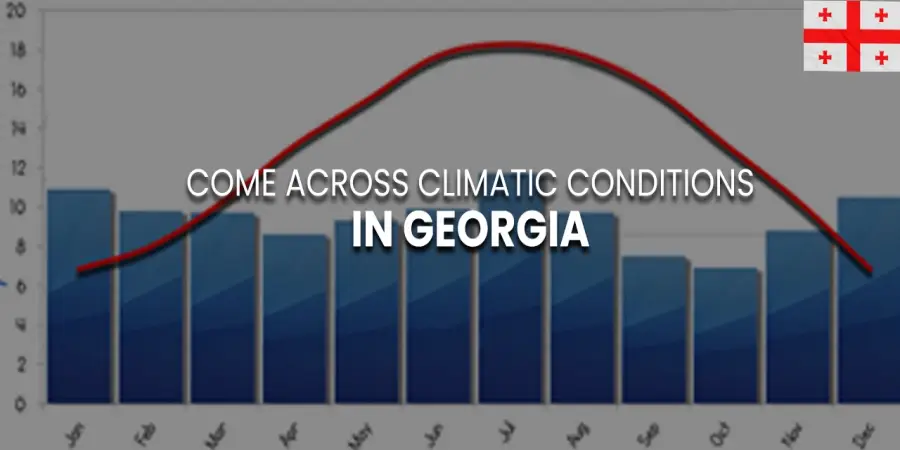
A Quick Glance at the Weather of Georgia

Month

Season

Temperature

Georgia weather in January

Winter

2°C - 8°C

Georgia weather in February

Winter

2°C - 8°C

Georgia weather in March

Spring

18°C - 26°C

Georgia weather in April

Spring

18°C - 26°C

Georgia weather in May

Spring

18°C - 26°C

Georgia weather in June

Summer

26°C - 35°C

Georgia weather in July

Summer

26°C - 35°C

Georgia weather in August

Summer

26°C - 35°C

Georgia weather in September

Autumn

18°C - 26°C

Georgia weather in October

Autumn

18°C - 26°C

Georgia weather in November

Autumn

18°C - 26°C

Georgia weather in December

Winter

2°C - 8°C

How does Georgia's climate impact Indian students' adaptability?

Let me inform all the Indian students travelling to Georgia to accomplish their dreams that the climate of Georgia is likely similar to that of India. It possesses 4 weather conditions that facilitate variability for better adaptation. Summer, Winter, Spring, and Autumn are the major seasons available in the country that enhance the adaptability of Indian students. The climate of Georgia is very fascinating compared to other destinations like Russia, Egypt, etc.

It is easier for Indian students to travel to Georgia due to its adaptable climatic conditions. It allows medical aspirants to adjust between the normal temperature range according to the different temperatures available in Georgia. The temperature in Tbilisi, Georgia, allows medical aspirants to get comfort and ease with the weather conditions.

Guide for Indian Students Travelling to Georgia

Pursuing an MBBS in Georgia for Indian students can be a successful approach that can help medical aspirants attain better knowledge and accomplishments.

The medical aspirants are advised to carry these given things.

  • One should carry heavy clothes, being prepared for the winter climatic conditions in Georgia.
  • They should carry important belongings such as valid documents, a passport, a visa, etc.
  • They must carry the medicine that suits their health.
  • The students should focus on the forex exchange before leaving to pursue MBBS in Georgia.

Conclusion

If we talk about the climate conditions in Georgia, it is subtropical. The average temperature is around 20-24° Celsius in Summer and 2-4° Celsius in winter, which is much more conducive for Indian students compared to other destinations. Georgia has multiple weather conditions that enable aspirants to attain better adaptability and a living environment. The medical aspirants are allowed to gain better facilities and knowledge. The climatic conditions in Georgia enable Indian students to continue their education with complete concentration and enhancement. The students should consult a reliable education consultancy like Education Vibes to gain better insights into any informational data required to enhance their MBBS Abroad experience and make their journey effortless.
Tags:georgia climatetemperature in georgiageorgia weather in maygeorgia weather in aprilclimate in georgiageorgia weather in junegeorgia weather in novembergeorgia weather in julygeorgia weather year roundclimate of georgiageorgia weather in februarygeorgia country climatewhat is the climate in georgiawhat is the climate of georgiaaverage temperature georgiacoldest month in georgiageorgia country weatheraverage temperature in georgia

Our Newsletter

Stay updated with the latests news and exclusive content by and subscribing to our newsletter for education vibes.

Related Blogs

See All
How many Government MBBS Seats in India? State-Wise 2026 Details
MBBS AbroadHow many Government MBBS Seats in India? State-Wise 2026 Details

As per the National Medical Commission (NMC)’s official MBBS seat matrix, the total MBBS seats in India for the 2026 medical enrolment are 1,36,939. For every medical aspirant in India, the clearance of the National Eligibility cum Entrance Test (NEET-UG) is a golden gateway for a medical career. However, the story is that instead of scoring well, students face the challenge of securing government MBBS seats in India. India has more than 400 government medical colleges, and every medical aspirant dreams of securing a government college seat. But why? The answer is high patient flow, low course fees, and experienced faculty members. Here, we have shared all the information on government MBBS seats in India. Different sections will include the number of government seats, the top states with higher government seats, reservation, and so on. Check Government MBBS Seats How Many Government MBBS Seats in 2026 in India? As per NMC, 63,296 seats are available in government medical colleges among the total MBBS seats in 2026. It also indicates 61,185 renewed seats from the previous year and 2,111 additional newly approved government seats. Central Universities, JIPMER, AIIMS, and ESIC institutions are included in government medical seats. The total MBBS seats in India for the academic session 2026-27 have increased by 9911 compared to the total seats of 2025. This shows the commitment of the Ministry of Health and Family Welfare in India to increase the number of medical seats in India. All medical aspirants can find an increase in government seats with newly developed medical colleges and increased intakes in the existing institutions. Government vs Private MBBS Seats in India If you make a comparison, you can find 441 government medical colleges and 382 private and deemed universities in India. Check the following key differences between government vs private

September 3, 2026
FMGE Pass Percentage of Perm State Medical University Graduates
MBBS AbroadFMGE Pass Percentage of Perm State Medical University Graduates

The Perm State Medical University FMGE pass percentage was 27.70% in the December 2025 session, when 131 of 473 Indian graduates cleared the exam. Across both 2025 sessions combined, PSMU's rate was 24.33%. That places the university above the 23.94% all-country FMGE average but below Russia's 30.94% national average. PSMU's best recorded result is 31.25%, reached in both 2022 and 2024.The FMGE is the compulsory licensing examination that Indian citizens and OCI holders with a foreign medical degree must clear before they can register and practise as doctors in India. This page tracks PSMU's year-wise FMGE results, compares them against other Russian medical universities and the national average, explains what actually drives the numbers, and sets out what they mean if you are considering MBBS at Perm State Medical University.Key figures at a glanceLatest reported pass percentage: 27.70% (December 2025) - 131 of 473 candidates passedBest performance year: 31.25% (2024)Weakest performance year: 25.84% (2023).Candidates in latest session: 473 candidates (2025)Russia national average: 30.94% (December,2025)Qualifying score: 150 out of 300 marks (50% aggregate) Comparing Russian universities on FMGE performance? What Is the Perm State Medical University FMGE Pass Percentage?The Perm State Medical University FMGE pass percentage has changed in recent FMGE sessions. According to the National Board of Examinations in Medical Sciences (NBEMS) university-wise performance data, the following table showcases how PSMU performed in recent years.FMGE YearAppearedPassedPass%20221605031.25%202365817025.84%202494429531.25%2025 (June session)3537019.83%2025 (December session)47313127.70%A notable change is present in the historical performance trend of PSMU’s FMGE performance. From 2023 to 2024, there is a strong recovery from 25.84% to 31.25% in FMGE pass percentage. Additionally, there is also an increase in the December 2025 session compared to the June session.AI Section — Breaking It DownPSMU FMGE Results Year by YearThe national FMGE pass rate is different every year. Comparison of the PSMU FMGE pass

September 2, 2026
Study Medicine in UK: Courses, Requirements & Career Opportunities
MBBS AbroadStudy Medicine in UK: Courses, Requirements & Career Opportunities

Securing a seat to study medicine in UK is a rewarding investment for an outstanding future global career. Whether the awarded medical degree is MBChB, MBBS, BMBS, or BM BCh, depending on your university, the UK has a long tradition of educating medical students. All UK medical degrees are 100% equivalent for General Medical Council (GMC) provisional registration.Indian students prefer UK to study medicine, as graduates have broader opportunities to practice medicine globally. Students access world-class clinical training integrated directly with the National Health Service (NHS). From undergrad UCAT, interviews, to managing tuition costs to NHS career progression, this blog will elaborate on every single step.Book Your Free Counselling Session TodayWhy Study Medicine in the UK?Choosing to study medicine in UK and pursuing MBBS in UK sets you on the pathway to becoming a globally accredited physician. Here is why thousands of international students apply every year.Global recognition: GMC-recognised degree usable across the Commonwealth, UK, India, and beyond.5 years duration: Most undergraduate medical programs in the UK are 5 years compared to 5.5 years MBBS pathway in India.Early patient contact: Most of the medical schools begin clinical communication with patients as early as Year 1.100% English-taught program: Lectures, exams, clinical practice, and all are in English.NHS clinical training: Students get practical training experience through placement in NHS and healthcare settings.World-class research: UK medical schools are among the top institutes in the world for clinical research.Types of Medical Courses in the UKMedical schools in UK for international students use different names to award the primary medical degree, but all qualifications have identical clinical weight. Whether your degree is MBBS, MBChB, BMBS, or BM BCh, you have to complete a core curriculum and clinical rotation in NHS hospitals to graduate as a certified doctor.Degree TitleFull Official Degree NameExample UK UniversitiesMBBSBachelor of Medicine,

September 2, 2026
Safest Countries for MBBS Abroad for Indian Students 2026
MBBS AbroadSafest Countries for MBBS Abroad for Indian Students 2026

There is no single safest country for MBBS abroad; however, all Indian students can study medicine in countries like Georgia and Kazakhstan, as these have lower crime rates, larger communities of Indian students, and an overall friendly environment for all international students. Safety encompasses physical security, political stability, social comfort, and reliable legal protection for all international medical aspirants. According to global benchmarks like the Institute for Economics and Peace (IEP) Global Peace Index and Numbeo Safety Rankings, understanding which country is safe for MBBS requires analysing both macro-level peace indicators and micro-level campus security. Pursuing an MBBS abroad has evolved in recent times, and more Indian medical aspirants are choosing to lay the foundation for their clinical future in foreign universities. With intense competition to find a seat in government colleges, while dealing with the soaring tuition fees at private colleges in India, Indian students are pursuing overseas medical education. It offers them access to international exposure, world-class medical infrastructure, cost-effective fee structures, and an advanced clinical experience. However, along with verifying eligibility and budget constraints, identifying the safest country for MBBS abroad is today’s biggest concern for any Indian student and their parents.AI Section — Breaking It DownParameters for Evaluating Student Safety in a CountryMany Indian students and their parents ponder over the question, “Is it safe to study MBBS abroad”? Evaluating certain parameters can help them to make a mindful decision. When evaluating and shortlisting options of foreign countries, students and parents must look beyond promotional materials and analyse independent metrics, such as global peace and political stability. Here are some of the major parameters to examine when determining which country is safe for MBBS: Global Peace and Crime IndicesWhat is the ranking of a country in global safety metrics? Does it have low rates of violent crime? Is

August 31, 2026
MBBS Abroad Without Donation / Management Quota - The Truth
MBBS AbroadMBBS Abroad Without Donation / Management Quota - The Truth

While private Indian medical colleges charge high capitation fees, studying MBBS abroad without donation is definitely a viable option for eligible aspirants. Students get chances based on their academic scores in senior secondary standard (12th class). Check the full MBBS abroad eligibility criteria for 2026 before you shortlist any university. But the most important factor is that the chosen university aligns its course structure with NMC guidelines in 2026. Foreign medical graduates have to meet all the requirements to receive medical registration in India.“Without donation” doesn't mean “no additional charges”. You need to pay extra costs for pursuing medicine from overseas countries. Here is the 2026 reality of MBBS abroad without donation, including the actual costs, NMC compliance requirements, and potential hidden traps students should check before taking admission. Confused About Donation-Free MBBS Options? Talk to Our CounsellorWhat Does MBBS Abroad Without Donation Mean? MBBS abroad without paying any donation fees or hidden charges means you get admission through the actual admission procedures. You pay the tuition fees, hostel fees, and other required fees mentioned in the brochure. In Indian private medical colleges, the tuition fees are extremely high due to donation fees. In foreign countries, students are shortlisted and pay according to the fixed fee structure.As the fee structure is mentioned in the brochure, transparency is maintained for all. All the payments are made through the university's bank account. No third party is involved during the payment.Does MBBS Abroad Have a Management Quota? In many overseas countries like Russia, Georgia, and Kazakhstan, there is no such “Management Quota”. In most cases, seats are reserved for international students, and the admission procedures are different from domestic candidates. In India, top private medical colleges reserve seats in the management quota. Usually, the overall course fees for those quota seats are extremely high. If you want to explore top private medical colleges

August 31, 2026
Top Medical Universities in Vietnam for Indian Students 2026 – Fees, Eligibility & NMC Guidelines
MBBS AbroadTop Medical Universities in Vietnam for Indian Students 2026 – Fees, Eligibility & NMC Guidelines

For Indian medical aspirants looking beyond the border, Vietnam has quietly become one of the most discussed options of the 2026 session. The top medical universities in Vietnam charge between USD 3,100 and USD 4,011 (₹2,79,000 – ₹3,60,990) a year, run a six-year English-medium course that meets the NMC’s minimum-duration rule, and train students in teaching hospitals from the early years. MBBS in Vietnam now hosts 400+ Indian students across 10+ recognised medical universities.As per the Indian Embassy advisory dated 5 June 2026, a few Vietnamese medical universities require Vietnamese language proficiency for patient interaction during clinical rotations. This guide covers the eight universities Indian students actually apply to, their 2026 fees in USD and rupees, the NMC conditions your degree must satisfy, and the drawbacks nobody puts in a brochure. Check if you qualify for MBBS in Vietnam 2026 Quick Overview: MBBS in VietnamParticularsDetailsCountryVietnamCourse duration6 years (5 years academic + 1 year compulsory internship)Major study citiesHanoi, Ho Chi Minh City, Thai Nguyen, Thai Binh, Can Tho, Hue, Da NangMedium of instructionEnglish for Indian and international studentsAnnual tuition feesUSD 3,100 – USD 4,011 (₹2,79,000 – ₹3,60,990)Total 6-year cost (all-in)₹27 lakh – ₹36 lakh approx.Eligibility50% in 10+2 with PCB (40% for SC/ST/OBC/PwD) + qualified NEET-UGMinimum age17 years as on 31 December of the admission yearIntakesSeptember (primary), February (secondary)Clinical trainingAt university-affiliated teaching hospitals under senior doctorsRecognitionWHO, NMC-compliant, MoET Vietnam, WDOMS, FAIMER, ECFMG (varies by university)Licence to practise in IndiaFMGE / NExT after graduationKey challengeVietnamese needed for patient interaction during internship at some universitiesAI Section — Breaking It DownTop 8 Medical Universities in Vietnam – Fees Comparison 2026 Sr. No.UniversityCityTypeFoundedTuition / Year (USD)Tuition / Year (INR)1Thai Nguyen Medical UniversityThai NguyenPublic1968$3,100₹2,79,0002Can Tho UniversityCan ThoPublic1966$3,155₹2,83,9503Thai Binh UniversityThai BinhPublic1968$3,195₹2,87,5504Hue UniversityHuePublic1957$3,268₹2,94,1205Phan Chau Trinh University (PCTU)Da NangPrivate2007$3,347₹3,01,2306Vietnam Military Medical UniversityHanoiPublic1948$3,419₹3,07,7107Hanoi Medical UniversityHanoiPublic1902$3,528₹3,17,5208Pham Ngoc Thach UniversityHo Chi Minh CityPublic1989$4,011₹3,60,990 Compare

August 29, 2026
MBBS in Vietnam vs MBBS in Philippines: Which Is Better for Indian Students?
MBBS AbroadMBBS in Vietnam vs MBBS in Philippines: Which Is Better for Indian Students?

Quick answer: Vietnam is the cheaper and simpler route roughly ₹35 lakh for six years, a direct 6-year MBBS and no entrance test beyond NEET. The Philippines costs about ₹37 lakh, adds a 1.5–2 year BS course and the NMAT entrance exam, but gives you a US-style curriculum, 100% English instruction and a far longer FMGE track record. Choose Vietnam if budget and simple admission matter most. Choose the Philippines if you want full English immersion and plan to attempt the USMLE. High fees at private Indian medical colleges and a small number of government seats push thousands of Indian students to study overseas every year. Among Asian destinations, two names come up again and again: MBBS Vietnam vs Philippines. Both are recognised by the WHO and offer programmes that can meet National Medical Commission (NMC) requirements, and both cost a fraction of an Indian private college seat. But the two also vary by syllabus, as the Philippines sells you an American-style BS-MD pathway. On the other hand, Vietnam offers a straight 6-year MBBS programme. This guide compares them on nine parameters so you can decide with numbers rather than a brochure. Choosing a country for studying medicine is the first decision that actually matters the university comes second. AI Section — Breaking It Down MBBS Vietnam vs Philippines: Comparison Chart Comparison CriteriaMBBS in VietnamMBBS in PhilippinesProgramme duration6 years, direct MBBS entry54-month MD + 1 year of internship (5.5-6 years; some add pre-med)Average tuition fee per year4000 USD4500 USDFMGE pass rateNRApprox 19%, as per NBEMS December 2025 data.Medium of InstructionEnglish for International students100% EnglishVisa requirementYesYes MBBS in Vietnam vs MBBS in the Philippines: Cost comparison~Cost is the primary factor to consider before choosing MBBS Vietnam vs Philippines. Hostel, mess, insurance and visa renewals add up to roughly ₹2 lakh a year in both countries, so you

August 27, 2026
MBBS in India 2026: Admission, Fees, Eligibility, NEET & Top Medical Colleges
MBBS AbroadMBBS in India 2026: Admission, Fees, Eligibility, NEET & Top Medical Colleges

An MBBS in India offers a 5.5-year programme, comprising 4.5 years of academics and a 1-year clinical internship. The MBBS is an undergraduate degree programme, governed by the National Medical Commission (NMC). Depending on seat availability, more than 1 lakh students pursue their MBBS across different types of medical colleges in India each year. Tuition fees vary across different types of colleges/institutions (government, private and deemed), with government colleges being the most affordable option for Indian students, costing about ₹1-2 lakh per year, on average. Pursuing an MBBS in India is a unique academic opportunity for medical aspirants, paving the way for a successful career as a doctor. To pursue this academic pathway and realise their final career goals, one needs to qualify for the NEET-UG (National Eligibility cum Entrance Test - Undergraduate). More than 20 lakh students register for the official medical entrance examination across the country, marking the first step towards their career goals. Among these NEET candidates, the available medical seats are distributed based on their All India Rank (AIR) and category rank, allocating each student to a particular medical college. As of August 2026, based on the NMC information desk, the total number of MBBS seats in India is 1,36,939 across approximately 823 medical colleges/institutions, excluding AIIMS, JIPMER, and other Institutions of National Importance (INIs). After the MCC and state counselling process, students can begin pursuing MBBS in India. Get MBBS Admission Guidance MBBS in India - Quick Facts For Indian students, studying MBBS in India offers a unique opportunity to complete a rigorous 5.5-year program of academic study and clinical experience that opens doors to becoming a successful medical professional. Course Name MBBS Full Form Bachelor of Medicine, Bachelor of Surgery Total Duration 5.5 Years Academic Duration 4.5 Years Internship Duration 1 Year Entrance Exam

August 26, 2026
Low NEET Score? MBBS Abroad vs BDS/BAMS/BHMS - What to Choose
MBBS AbroadLow NEET Score? MBBS Abroad vs BDS/BAMS/BHMS - What to Choose

A low NEET score can feel like the end of the road, especially when MBBS in India has been the plan all along. It isn't. Every year, thousands of students with modest scores go on to build solid healthcare careers, just through a different door. The most common low NEET score options are MBBS abroad, BDS, BAMS, and BHMS, and each one leads to a very different kind of career.Before you pick one, it helps to slow down and compare them properly: eligibility, cost, duration, and what your working life actually looks like after graduation. This guide walks you through each option so you can decide what to do after a low NEET score with a clear head rather than a panicked one.Talk to our CounsellorWhat Can You Do After a Low NEET Score?Start with the end goal. If you want to be a practising doctor of modern medicine, MBBS is the only route that gets you there, so your first job is to check whether your score qualifies you for an Indian seat or for a foreign medical university that accepts your NEET marks. If you are open to other branches of healthcare, BDS (dentistry), BAMS (Ayurveda), and BHMS (Homoeopathy) are all recognised degrees that let you practise as a licensed professional. Beyond these, nursing, physiotherapy, and pharmacy are respectable careers in their own right.One thing worth knowing: NEET UG is not just for MBBS and BDS. The National Testing Agency uses the same exam for BAMS, BSMS, and BHMS admissions too. So a low score doesn't close the healthcare field; it simply changes which seats are realistically within reach.Alternative Medical Courses: Quick ComparisonHere is a quick snapshot of where each course leads before we look at them in detail.CourseMain FocusSuitable ForMBBS AbroadModern medicineStudents set on becoming a doctorBDSDentistryOral

August 21, 2026
Best MBBS Abroad Consultants in Delhi 2026
MBBS AbroadBest MBBS Abroad Consultants in Delhi 2026

With over 23 lakh aspirants competing for a limited number of government medical seats in NEET-UG, pursuing an MBBS abroad has become a serious backup option for Indian students. Selecting an MBBS abroad consultant in Delhi — the central hub for international education agencies and foreign embassy support — therefore needs careful consideration. A trustworthy consultant acts as a career risk manager: they streamline the admissions process, safeguard students against costly errors, and help them connect with institutions listed in the World Directory of Medical Schools and recognised by the NMC.However, studying MBBS abroad involves far more than completing an application. Strict National Medical Commission rules, shifting licensing mandates such as NExT implementation, and varying country-specific English-language requirements mean that a single mistake can affect a student’s entire medical career. This is where consultancies provide professional assistance. Let’s go through this guide to the best MBBS abroad consultants in Delhi 2026 and everything you need to check before selecting an MBBS admission consultant.Get Free MBBS Abroad CounsellingWhy Do You Need MBBS Abroad Consultants in Delhi?An expert MBBS abroad consultancy in Delhi helps students understand strict NMC guidelines, select globally recognised medical universities, manage documentation, and organise safe travel. They connect Indian medical aspirants with medical colleges overseas. Here are the most common reasons to work with the right consultant in Delhi:Direct Access to Foreign University Representatives and EmbassiesConsultants who help students study MBBS abroad from Delhi have tie-ups with globally recognised medical universities and explain admission deadlines, eligibility criteria, invitation letters, and visa processes. Students should still verify every important claim directly with the university or the relevant authority.Navigating NMC & WHO GuidelinesIndian students who complete an MBBS degree abroad must meet NMC requirements before they can practise in India. Check the university, course duration, medium of instruction, clinical training,

August 21, 2026
Education VibesEducation Scholar

Get Expert Guidance to Study

MBBS Abroad