Table of Contents
Why Did Kyrgyzstan Conduct This Accreditation Review?
Scroll HereCurrent Medical Education Landscape in Kyrgyzstan
Scroll HereAccreditation Results: Winners and Losers
Scroll HereUniversities Receiving Full 6-Year Accreditation
Scroll HereUniversities Granted 1-Year Conditional Accreditation
Scroll Here13 Medical Universities Failed Accreditation
Scroll HereImpact on Existing Students
Scroll HereImpact on New MBBS Admissions in 2026
Scroll HereHow Were Universities Evaluated?
Scroll HereFaculty Strength
Scroll HereClinical Training Facilities
Scroll HereInfrastructure
Scroll HereAcademic Curriculum
Scroll HereInstitutional Governance
Scroll HereOverall Checklist for Students Before Applying to MBBS in Kyrgyzstan
Scroll HereConclusion
Scroll HereMBBS in Kyrgyzstan has long been one of the most popular destinations for Indian and international students. Its affordable tuition fees, low living costs, English-medium medical programs, and globally recognised degrees attract thousands of students every year. However, a major development in 2026 has brought continued attention to the quality of medical education in Kyrgyzstan.
In June 2026, the Ministry of Health of the Kyrgyz Republic (MoH) announced the results of a nationwide accreditation review of medical universities, intending to upgrade and standardise medical studies. This evaluation was executed under the guidelines of the Presidential Decree issued on August 28, 2025, regarding the state monopoly on medical education.
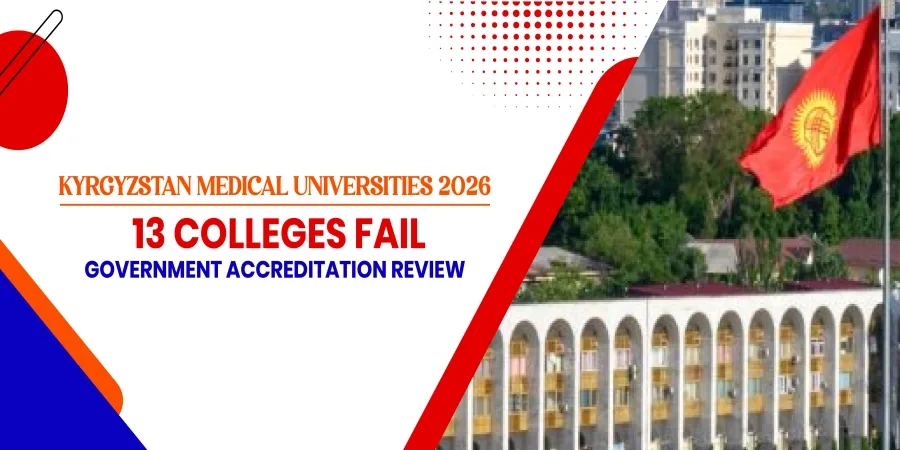
The outcome was significant: 13 medical institutions failed state accreditation, while only 4 universities received full six-year accreditation, and a few received partial accreditation status. Kyrgyzstan currently has 34 institutions training medical personnel, 12 of which are state-owned and 22 are private.
Why Did Kyrgyzstan Conduct This Accreditation Review?
The Kyrgyz Republic conducted these reviews to thoroughly examine its medical education system and align academic standards with global and European quality frameworks. To address these challenges, Kyrgyz authorities introduced stricter accreditation standards in 2026. Here are the key goals outlined behind the reform.
- Improve medical education standards nationwide
- Strengthen clinical and practical training
- Ensure the availability of qualified teaching faculty
- Enhance patient safety through better-trained doctors
- Increase recognition and credibility of Kyrgyz medical degrees
Current Medical Education Landscape in Kyrgyzstan
Kyrgyzstan has experienced a significant increase in international student enrollment over the past decade. More than 30,000 international students are studying in Kyrgyzstan, particularly from India, Pakistan, Bangladesh, Nepal, and several African countries. Although the medical education landscape in Kyrgyzstan is currently undergoing strict regulatory overhauls and restructuring. According to official data:
- 34 institutions currently offer medical education programs.
- 12 are public universities.
- 22 are private universities.
- 24 institutions participated in the accreditation review process.
- Seven universities did not participate in the accreditation process.
- Three major universities were exempt from the review due to their special legal status.
Accreditation Results: Winners and Losers
The accreditation results reveal the institution's status that met national quality standards, and those that failed to do so.
Universities Receiving Full 6-Year Accreditation
Only four medical universities in Kyrgyzstan get full 6-year accreditation. It is the highest accreditation, which means these universities' strong performance in areas such as faculty qualifications, clinical training facilities, infrastructure, and academic quality. Here are the universities mentioned.
- Osh State University (OshSU)
- International University of Kyrgyzstan (MUK)
- International Higher School of Medicine (IHSM)
- Asian International University (AIU)
Universities Granted 1-Year Conditional Accreditation
Seven universities granted 1 year of conditional accreditation. To qualify for a longer accreditation, these institutions are required to correct the noted deficiencies. The universities are:
- Kyrgyz National University
- Jalal-Abad State University
- Kyrgyz-Uzbek International University
- Issyk-Kul State University
- Jalal-Abad International University
- University of South Asia
- International European University
13 Medical Universities Failed Accreditation
The following universities are mentioned that failed the accreditation process:
- International Medical University “Avicenna”
- ADAM University
- Roel Metropolitan University
- Altamimi International University
- Ala-Too International University
- International Medical University
- Kyrgyz Medical and Dental Institute
- Salymbekov University
- Eurasian International University
- Bishkek International Medical Institute
- International University of Medicine and Science
- Central Asian International Medical University
- Osh International Medical University
Impact on Existing Students
When we talk about what will happen to existing students who are currently studying in institutions that failed the accreditation process. So, according to the official advisory conveyed by the Indian Embassy in Bishkek, Kyrgyzstan, if your university loses its accreditation, you can transfer to the Kyrgyz State Medical Academy or another approved school. You don't need to panic, but you should pay close attention and wait for official announcements.
If you are an Indian student already studying in Kyrgyzstan, please take the following steps immediately to protect your academic future:
- Verify Accreditation: Ask your university for official, written confirmation of their recognition and accreditation status.
- Secure Documents: Keep safe copies of all admission letters, fee receipts, and payment agreements.
- Stay Connected: Keep in regular touch with the Indian Embassy, university administrators, and official student support channels for the latest updates.
Impact on New MBBS Admissions in 2026
Medical applicants seeking MBBS admission in Kyrgyzstan in the 2026 academic year, this update is very crucial. Don't fall for slick marketing, cheap tuition, or agent hype when choosing a college. Always verify that an institution has authentic government recognition, official state accreditation, and fully complies with the National Medical Commission (NMC) regulations for Indian students. Before taking admission, students should check:
- Whether the university has passed Kyrgyzstan’s state accreditation review
- Whether it is listed in the World Directory of Medical Schools (WDOMS)
- Whether the medical degree is recognised in the country where it is awarded
- Whether the course duration meets NMC requirements
- Whether the program includes proper clinical training and internship
- Whether the medium of instruction is suitable for Indian students
- Whether the university has a track record of FMGE/NExT preparation support
How Were Universities Evaluated?
There are comprehensive assessment criteria which medical universities need to meet to get full accreditation. The assessment is designed to evaluate educational effectiveness and institutional quality. Below are the key attributes mentioned.
Faculty Strength
- Qualifications of professors & lecturers
- Teaching experience
- Academic achievements
- Faculty-to-student ratios
Clinical Training Facilities
- Teaching hospital affiliations
- Clinical exposure opportunities
- Patient interaction experience
- Internship and practical training systems
Infrastructure
- Medical laboratories
- Libraries and learning resources
- Simulation centers
- Classroom facilities
- Research infrastructure
Academic Curriculum
- Curriculum design
- Teaching methodology
- Student assessment systems
- Medical education standards
Institutional Governance
- Administrative effectiveness
- Quality assurance processes
- Strategic planning
- Educational management systems
Overall Checklist for Students Before Applying to MBBS in Kyrgyzstan
Before applying for MBBS in Kyrgyzstan, students must inspect the following checklist, which is quoted below. The checklist will ensure that the university is well-accredited, aligned with the NMC norms, and meets global standards of medical education.
- Latest accreditation status
- NMC eligibility requirements
- WHO/WDOMS listing
- Teaching hospital affiliations
- Clinical training opportunities
- Faculty qualifications
- Infrastructure and laboratory facilities
- Student reviews and feedback
- Internship opportunities
- Graduate licensing examination outcomes
- International recognition and partnerships
Conclusion
In June 2026, the Ministry of Health of the Kyrgyz Republic announced the results of a nationwide medical university accreditation, which was mandated in August 2025 by the Presidential Decree. This evaluation aims to raise global accreditation and medical education standards. The result was very shocking: 13 major universities in Kyrgyzstan failed the accreditation, and only 4 universities got full 6-year accreditation, including Osh State University, International University of Kyrgyzstan, International Higher School of Medicine, and Asian International University. Aspiring students seeking an MBBS in Kyrgyzstan must check its accreditation and compliance with NMC guidelines.