Table of Contents
What to Do After MBBS: Top Career Pathways in 2026
Scroll Here1. Pursue MD or MS After MBBS
Scroll Here2. Choose DNB After MBBS
Scroll Here3. Start Clinical Practice After MBBS
Scroll Here4. Apply for Government Medical Jobs
Scroll Here5. Build a Career in Medical Research
Scroll Here6. Move Into Public Health
Scroll Here7. Choose Medical Teaching and Academics
Scroll Here8. Explore Non-Clinical Healthcare Careers
Scroll HereSalary After MBBS in India: An Overview
Scroll HereConclusion
Scroll HereFrequently Asked Questions (FAQs)
Scroll HereWhat to do after MBBS in India?
Scroll HereIs MD/MS necessary after MBBS?
Scroll HereCan I get a government job after MBBS?
Scroll HereCan I work after MBBS without doing MD/MS?
Scroll HereWhat are the non-clinical career options after MBBS?
Scroll HereIndia produces approximately 90,000 to over 1,00,000 MBBS graduates each year. After graduating, many students are confused about what to do after MBBS. The good news is that you have plenty of career options to choose from. Some of the in-demand pathways include pursuing postgraduate clinical specialisations (MD/MS/DNB), entering government medical services, or exploring non-clinical fields like healthcare management.
India currently has a large and expanding medical education system. According to the NMC, its current database lists 847 medical colleges and 1,39,213 MBBS seats, showing the scale of the medical education ecosystem in the country. This guide explains the major career options after MBBS, the additional qualifications they may require and important factors to consider before choosing a path.
What to Do After MBBS: Top Career Pathways in 2026
1. Pursue MD or MS After MBBS
For graduates who want to become specialists, postgraduate medical education is one of the major pathways after MBBS. MD (Doctor of Medicine) generally covers non-surgical or medical specialities, while MS (Master of Surgery) covers surgical disciplines. Examples include:
- MD General Medicine
- MD Paediatrics
- MD Dermatology, Venereology & Leprosy
- MD Psychiatry
- MD Radiodiagnosis
- MD Anaesthesiology
- MS General Surgery
- MS Orthopaedics
- MS Ophthalmology
- MS ENT
NMC regulations specify that postgraduate medical education in broad specialities is generally 3 years after MBBS for degree programmes. For a detailed list of specialisations, read our guide on PG courses after MBBS.
Important: Admission requirements and examination arrangements can change with regulatory developments, so students should verify the latest information from the NMC.
2. Choose DNB After MBBS
Diplomate of National Board (DNB) is another postgraduate specialist training pathway. According to the National Board of Examinations in Medical Sciences (NBEMS), the Post-MBBS DNB Broad Speciality programme is 3 years.
DNB training is available across multiple medical and surgical specialities through NBEMS-accredited institutions. As of July 2026, the NBEMS accredited-seat database listed 6,503 non-sponsored DNB Broad Speciality seats and 239 sponsored seats, although seat numbers can change as accreditation and counselling cycles are updated.
3. Start Clinical Practice After MBBS
Not every MBBS graduate immediately wants to pursue another full-time degree. Some choose to work in clinical settings after completing the applicable internship and registration formalities. Possible workplaces include:
- Private hospitals
- Government hospitals
- Primary healthcare facilities
- Community healthcare settings
- Clinics
- Emergency and urgent-care services
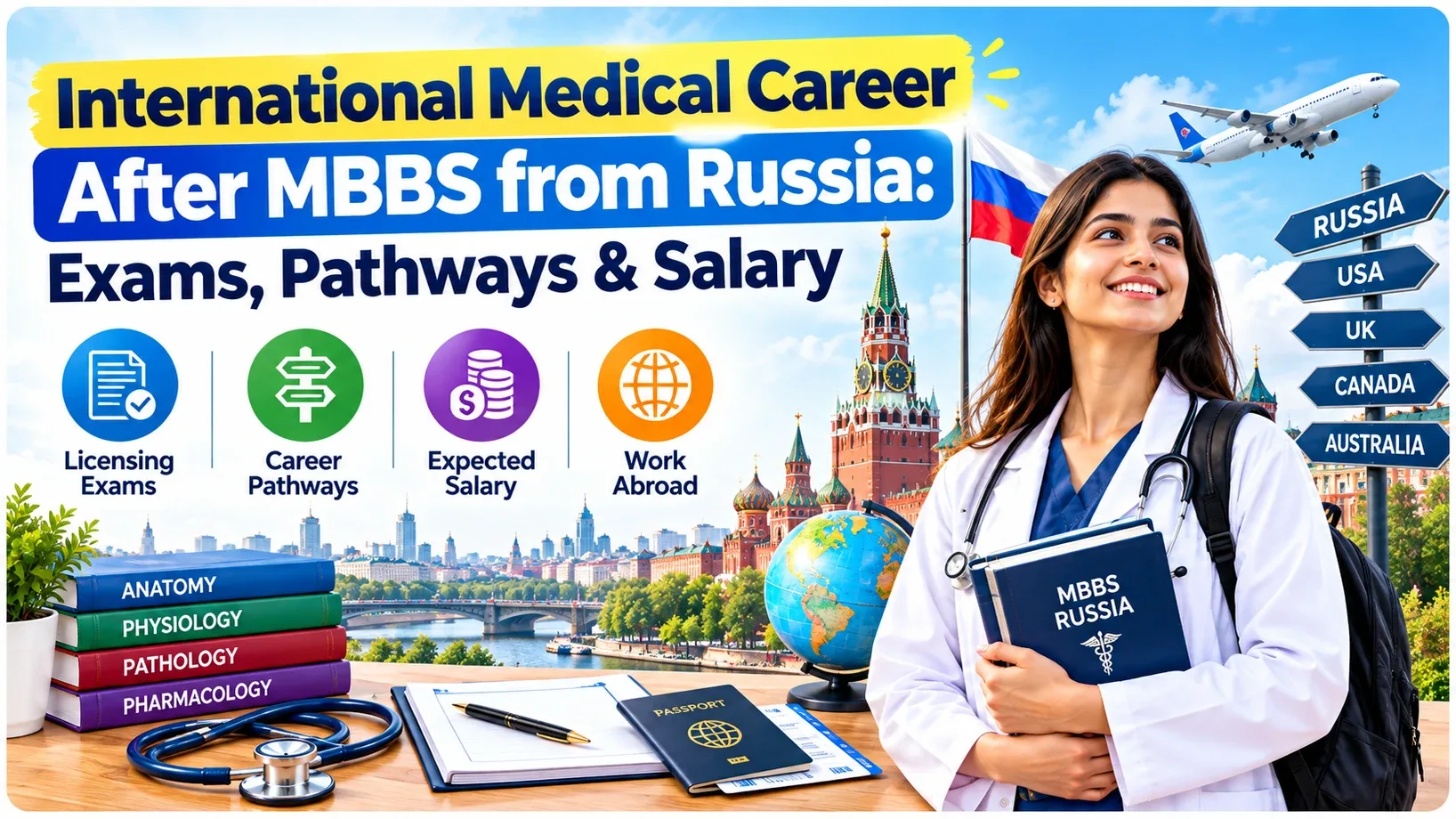
Graduates who studied abroad must first clear the required licensing exam. Learn more in our complete guide on the FMGE exam.
4. Apply for Government Medical Jobs
Government healthcare is another career route after MBBS. Depending on eligibility and recruitment requirements, doctors may find opportunities through state health departments, government hospitals, public health institutions and other government healthcare organisations. Government medical recruitment can involve:
- Written examinations
- Interviews
- Merit-based selection
- Registration requirements
- Experience requirements for particular posts
- Age and other eligibility criteria
5. Build a Career in Medical Research
If you enjoy scientific investigation more than routine clinical practice, medical research can be another option after MBBS. Potential areas include:
- Clinical research
- Biomedical research
- Epidemiology
- Clinical trials
- Public health research
- Medical data analysis
- Evidence-based medicine
- Pharmaceutical research
Research-oriented careers may require additional qualifications or technical skills in areas such as biostatistics, research methodology, scientific writing and data analysis.
6. Move Into Public Health
An MBBS graduate can consider further education such as a Master of Public Health (MPH) or other PG programmes. This route may be particularly relevant for graduates who are interested in healthcare planning, disease prevention and population-level interventions. Potential areas include:
- Epidemiology
- Health policy
- Community health
- Disease prevention
- Health programme management
- Maternal and child health
- Global health
7. Choose Medical Teaching and Academics
Medical education can be another long-term career pathway. Doctors interested in teaching can combine clinical practice with academic responsibilities. Potential areas include:
- Undergraduate medical teaching
- Postgraduate medical education
- Clinical training
- Medical research
- Curriculum development
- Academic administration
8. Explore Non-Clinical Healthcare Careers
An MBBS degree can also provide a foundation for careers beyond conventional clinical practice. Depending on additional qualifications and employer requirements, graduates can explore:
- Medical writing
- Medical communication
- Healthcare consulting
- Medical affairs
- Pharmacovigilance
- Clinical data management
- Healthcare administration
- Health-tech
- Medical content and education
- Healthcare research
These roles can be relevant for doctors who want to use their medical knowledge in healthcare organisations, pharmaceutical companies, research organisations or technology-driven healthcare businesses.
Salary After MBBS in India: An Overview
The MBBS doctor's salary in India can vary from ₹4 lakh to ₹7.5 lakh per year on average. The salary depends on several factors:
- Experience: Fresh graduates earn less than mid-career and senior doctors.
- Location: Doctors in urban areas generally earn more than those in rural areas.
- Specialisation: Doctors with specialised training or those working in private hospitals usually earn more.
| Experience Level | Approximate Monthly Salary |
|---|---|
| Fresh graduates | ₹25,000 – ₹50,000 |
| Mid-career doctors | ₹60,000 – ₹1,00,000 |
| Senior doctors | ₹80,000 – ₹1,50,000 |
Salaries for doctors working overseas vary by country, experience and speciality. For a country-wise breakdown, see our guide on average doctor salary after MBBS abroad.
Both are 3-year postgraduate specialist programmes.MD/MS is offered by NMC-approved medical colleges, wile DNB is conducted by NBEMS through accredited hositals. The better choice depends on your speciality,seat availability and preferred training environment.
A fresh MBBS graduate in India usually earns around₹25,000 to ₹50,000 per month, depending on the hospial, city and type of role.
Yes. Indian students who complete MBBS abroad must lear the screening/licensing exam prescribed by the MC (currently FMGE, to be replaced by NExT), complet the required internship and register with the medicl council before practising in India.
Conclusion
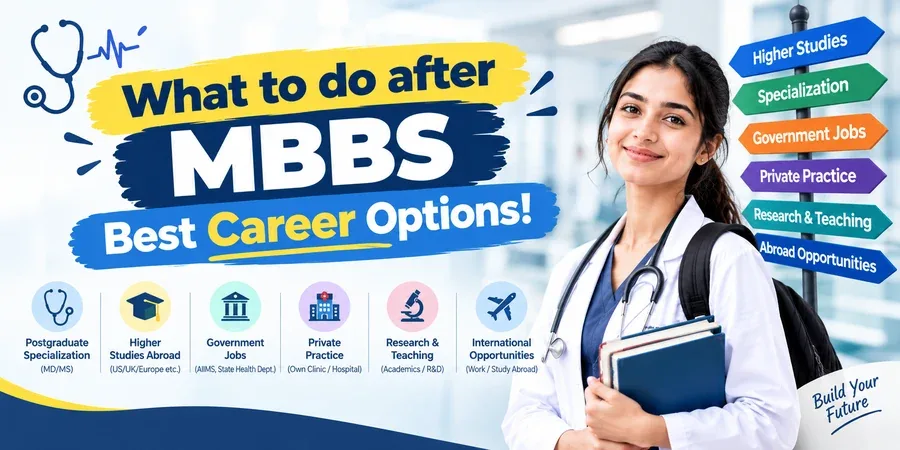
What to do after MBBS depends on your interests and long-term goals. Graduates can pursue MD/MS or DNB, start clinical practice, join government services, or move into research, public health, academics or non-clinical healthcare roles. Compare the options carefully, check the latest NMC and NBEMS guidelines and choose the path that fits your career plans.
Frequently Asked Questions (FAQs)
What to do after MBBS in India?
After MBBS, graduates can consider MD/MS, DNB, clinical practice, government medical jobs, research, public health, academics and non-clinical healthcare careers.
Is MD/MS necessary after MBBS?
No single career route applies to every graduate. MD/MS is relevant for those pursuing specialist training, while other graduates may choose clinical practice, government service, research, public health or other healthcare roles.
Can I get a government job after MBBS?
Yes, MBBS graduates may be eligible for various government medical positions, depending on the specific recruitment notification, registration, experience and other eligibility requirements.
Can I work after MBBS without doing MD/MS?
Yes, subject to completing the applicable internship and registration requirements. Graduates can explore appropriate clinical roles and other healthcare positions within the scope of their qualifications.
What are the non-clinical career options after MBBS?
Medical research, public health, medical writing, healthcare consulting, medical affairs, pharmacovigilance, healthcare administration and health-tech are among the areas graduates may explore, depending on additional requirements.