MBBS in Europe
Build an international medical career by studying MBBS in Europe, supported by our expert overseas education specialists.
Build an international medical career by studying MBBS in Europe, supported by our expert overseas education specialists.
MBBS in Europe is an excellent choice for Indian medical aspirants. To make a global career in medicine, Indian students are looking beyond borders to give their medical careers an international edge. One such top-notch choice is Europe, which provides a great quality of education and excellent clinical training exposure. Not only do the universities have an international ranking, but they also align with the traditional as well as practical methods of teaching.
The course duration of the MBBS Program in Europe ranges from 5 to 6 years, as per different countries. Most of the med-schools complies with the NMC Guidelines, making it the perfect spot for Indian medical aspirants planning to study MBBS in abroad. The degrees are recognised by WHO, UNICEF, FAIMER, and others. Students will get a great number of work opportunities in the clinical and research positions globally.




The European medical universities are renowned for their quality education and a student-centred approach. The academic institutes stand as some of the best in the world due to their focus on medical research and innovation. Here are the reasons why Indian students should consider Europe as one of their options.

Free Eligibility Check
The MBBS aspirants who are aiming for a medical degree in Europe should first understand the eligibility criteria. Though the criteria may vary depending on different countries in Europe, the mandatory requirements are mentioned below.

Many countries in Europe provide an MBBS program for international students from different parts of the world. Though the admission process can vary as per the university, the process that is usually followed is as follows.

We will give you a counselling session before you join any medical university in Europe. Our expert professionals will guide you throughout your new MBBS venture.

Your complete profile is then evaluated by our academic counsellors. After communicating with you regarding the budget and analysing your academic scores, we will suggest to you the best medical universities in Europe.

We will fill out your application form for your selected medical university. Our experts will make sure that there is no mistake while filling out the form so that you don’t miss a year.

After your profile gets shortlisted, the university usually sends you an admission letter. You need to acknowledge that through email.

We will legalise your documents at the Ministry of External Affairs (MEA) that is a requirement for visa processing.

From submitting your documents to getting your visa approved, we will handle everything. Our visa support team will guide you throughout the visa processing journey.

Before departing for your medical university in Europe, we ensure that you get a counselling session from our academic counsellors. They will explain to you how you complete 6 years in a European medical university will look like.

When you arrive at the airport, two or more members of our team will pick you up. You will be further explained about the university documentation, accommodation and food-related facilities.
Documentation is significant for admissions as it validates your qualifications and aligns with the legal compliance of the medical universities. The following documents are required before applying for MBBS in Europe.

Before applying for a medical university in Europe, you should navigate through the entry requirements, accreditation standards and financial considerations. This will give you a clear picture of how your future MBBS journey will be in European medical schools. Look at the range of things that you are required to consider if you aim to get a global medical degree.

Accreditation List of the University
Verifying the accreditation of the university is the most crucial step. Ensure that the Medical University of Europe aligns with the NMC Guidelines and is also listed under the World Directory of Medical Schools (WDOMS). Also, make sure that the degree of that medical university is accredited by the Medical Council of that particular country.
The National Medical Commission (NMC) Gazette is the official digital document published by the NMC that regulates and authorises rules for students who aim to study MBBS abroad. The MBBS aspirants should make sure that all the NMC requirements are met to successfully practise medicine in India.

The NMC Gazette is a legal publication by the Government of India. It acts as a binding lawbook for medical education that includes the curriculum duration, internship time-period, course language, and other details for foreign medical degrees to be recognised in India.
The duration of the MBBS Course should be a minimum of 54 months, along with 1 year of the internship period.
According to Schedule I of the NMC Gazette, there are some listed subjects. Your MBBS Course should have these subjects to work in India.
Your degree should be validated by the Health Ministry of that particular country. NMC checks whether you can legally practise medicine in India.
Apart from 54 months of academic course, your medical university should have a 1 year internship period. This will give you effective clinical exposure and enhance your patient-centred approach.
After you return to India, give the FMGE/NExT Examination for working in your home country and studying post graduation in medical studies. Ensure that you have also taken the NEET-UG Examination before pursuing your MBBS Course.
Education Vibes is the preferred choice of aspirants with over 5+ years of experience. We are partners with numerous WHO & NMC-listed medical universities all over the globe. Expert medical counselling and success stories of 1000+ Indian medical aspirants have retained us in the consultancy industry, along with the maintenance of ethics and transparency.
The financial aspect is necessary before applying for MBBS in Europe. Students can therefore analyse the tuition fees, currency fluctuations and the hidden university charges. Below is the brief information about the total fees and the living expenses that are usually incurred by Indian students in European countries.
| Item | Amount | Amount in INR |
|---|---|---|
| Annual Tuition Fee | €12,210 | ₹11 lakhs |
| Annual Hostel Fee | €2,585 | ₹2.5 lakhs |
| Annual Mess Fee | €620 | ₹60,500 |
| Medical Insurance | €689 | ₹67,000 |
| Visa Extension Fee | €340 | ₹33,600 |
Shown values are based on the current exchange rate as of January 2026.
Most of the medical colleges in Europe offer only one intake season that is in September. Only a few countries provide the spring intake for Indian students in the month of December. Indian students should aim for the main or the September intake to ensure their admission and not waste an academic year.

September/October (Fall Intake)
Primary Intake (Recommended)
Application Timeline
| March-June | Application Period |
|---|---|
| July – August | Application Processing |
| August – September | Visa & Pre-Departure |
| Late September – October | Classes Begin |

February/March (Spring Intake)
Alternative Intake
Application Timeline
| October-December | Application Period |
|---|---|
| January-February | Application Processing |
| February – March | Visa & Pre-Departure |
| Late February-March | Classes Begin |

Most of the medical colleges in Europe offer only one intake season that is in September. Only a few countries provide the spring intake for Indian students in the month of December. Indian students should aim for the main or the September intake to ensure their admission and not waste an academic year.
English is the primary language of most of the European countries, apart from their native language. The medical universities in Europe offer programs that are taught entirely in English for international students. Meanwhile, the local language is taught during the 6-year MBBS Course for smooth conversations with patients during the internship period.
The medical schools in Europe use the Problem-Based Learning (PBL) approach in their classrooms. Complex medical theories are taught by blending traditional lectures and small-group seminars. The NMC subjects listed in Schedule I are included in the 6-year course duration that teaches medical ethics and evidence-based research.
In Europe, emphasis is given more to practical training, as compared to academic learning. That is why in the initial years of the MBBS Program, students will be trained in simulation centres that have high-tech mannequins and cadavers. Students will get practical training in microbiology, pathology and pharmacology.
According to the FMGL Regulations 2021, Indian students should complete a 1-year internship period in their enrolled foreign medical university. In Europe, the students have rotations in departments like General Medicine, Surgery, Pediatrics and Gynaecology to understand the complete healthcare system.
Emphasis on Anatomy, Histology, Biology and Medical Chemistry.
Study Pathology, Pharmacology, Microbiology and clinical diagnostics.
Rotations in several departments of the hospital- Surgery, Internal Medicine, Patient Health Care and others.

Years 1-2

Years 3-4

Years 5-6
Whether you want to pursue an MBBS in India or an MBBS in Europe, that totally depends on your future goals and aspirations. It is significant for you to understand the different benefits both landscapes provide to the medical aspirants. Here are the differences that you can explore:
Education Vibes has given counselling to 1000+ students in a span of 5 years. Explore the stories of MBBS students studying in Europe and different parts of the world. We aim to connect the future medical professionals with the world’s renowned medical colleges.
I am lucky that I got connected with Education Vibes. They helped me choose the best University in Europe. Though I want to pursue MBBS in Russia, they helped me select one of the leading medical schools in the country. Thanks, EV!

Aarav Sharma
First Moscow State Medical University (Russia)My dream was totally shattered after getting a low NEET score. I couldn’t understand what to do. One of my friends recommended me Education Vibes. I called them up to study MBBS in Europe. I knew it was expensive, but they suggested Bogomolets, which is one of the top Universities in Ukraine. Now, I am a 1st year MBBS student here. Thanks, EV, thanks a lot.

Kabir Singh
Bogomolets National Medical University (Ukraine)It was my childhood dream to study MBBS in Europe. My father wanted me to become a global doctor. I got in touch with different study abroad consultants, but Education Vibes is one of them that helped me choose my dream medical school. Now, I am a 2nd-year MBBS student in Poland at Jagiellonian. Thanks a lot, EV!

Arjun Deshmukh
Jagiellonian University (Poland)You can select other destinations than Europe to pursue the 6-year MBBS Course.
The Indian MBBS students get great accommodation facilities in Europe. The university campus of European med-schools offers 24/7 security to ensure a comfortable and safe stay. Let us explore the different accommodation and food options in Europe.

Most of the hostel facilities are inside or outside the university premises. There is the option of single and double bedrooms that the students can select as per their convenience. Great amenities are available, including air-conditioned rooms, library access, high-speed WIFI and furnished rooms.

In many European countries, mess options are provided to the Indian students. Vegetarian and non-vegetarian foods are available, and the hygiene is well-maintained. Usually, the food is given three times a day. Students also have the option to eat food from outside the university campus at their own cost.

There are 24/7 security services, CCTV surveillance, and wardens, as well as supervisors in and around the European medical universities. Many med schools are completely against bullying of any kind and aim to create a student-friendly environment.

North and Eastern Europe have frequent snows. Temperatures fall from 10°C to 0°C, and even lower in some countries.

Southern Europe experiences hot, dry summers, with temperatures reaching 30°C. In contrast, the Central and Northern regions have pleasant summers from 20°C to 25°C.
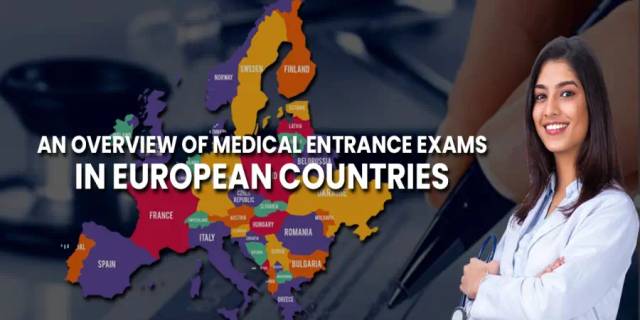
Get a complete glance of Europe, including religion, population rate, languages and other details. It has many countries like Germany, France, Georgia and many others. Check these details before applying for MBBS in Europe.
Many European countries offer scholarships to Indian medical students. These scholarships are provided by the government, the university and other external sources. The eligibility of these financial aids can differ, but unanimously aim to give financial support to the students from developing nations like India. Some of the scholarships are listed as follows.
Government Scholarships
Stipendium Hungaricum (Hungary), Russian Government Scholarship, Danish Government Scholarship
University Scholarships
MBBS Excellence Scholarship (University of Central Lancashire, UK), Amirana Scholarship (Heidelberg University, Germany), RCSI International Consilio Manuque Medicine Scholarship (Ireland), Charles University Merit-Based Scholarship (Czech Republic), Charles University Merit-Based Scholarship (Czech Republic)
Other External Scholarships
The Amirana Scholarship (Germany), St Mary’s School of Medicine (Malta), Progetto Salute Foundation (Italy)
Getting an MBBS seat in Europe is not just for academic excellence, but it is also a high-value investment. Indian students can avail two types of loans, namely secured and unsecured loans, to incur the cost of studying in this country. Secured loans mean that has a collateral and take less interest, whereas unsecured loans are given without any collateral and charge high interest rates. Look at the list of documents and the names of financial institutions in India that provide educational loans.
Admission letter
University fee structure
NEET scorecard
Valid Passport
Passport‑sized photographs
10th and 12th mark sheets
Aadhaar Card
PAN Card
Proof of income
Bank statements (last 6 months)
Proof of residence
State Bank of India
Bank of Baroda
Punjab National Bank
HDFC Bank
ICICI Bank
Axis Bank
HDFC Credila
Avanse
Auxilo
InCred
100% Tuition Fees
Laboratory Fees
Examination Cost
Hostel Cost
Monthly Meal Plans
Medical Equipments
Airfare Charges
Medical Insurance
Other External Costs
After completing MBBS in Europe, you have a plethora of options that can upscale your career. You will be able to work either in India or in Europe, in medical and non-medical fields. Look at the list of career opportunities available for you.


After clearing the FMGE/NExt Examination, you will be able to:


You can practise as a doctor in Europe and pursue specialisation (PG) under the following conditions, as mentioned below:

Education Vibes is one of the preferred choices for Indian students when it comes to medical counselling. It has more than 5+ years of experience in academic counselling and has a team of expert professionals. We ensure that your dream of studying MBBS abroad is fulfilled, providing a 360-degree support system from filling form to on-arrival guidance.
Education Vibes has partnerships with more than 25+ medical universities in Europe, present in Hungary, Georgia, Poland and other countries. All of these med schools are aligned with the NMC, WDOMS, WHO and other international associations, for you to practise in any part of the globe.
We provide complete end-to-end support in your MBBS journey. We give you counselling followed by filling form, making a Statement of Purpose (SOPs), and guiding you on the complex Schengen visa processing system. We also submit your documents to the Ministry of External Affairs (MEA) to get the documents legalised.
From the time you arrive in the destination, we give you complete on-arrival support. Our team members will pick you up from the airport, arrange the hostel and mess facility for you and explain to you all the travel sources.
We provide you with complete, transparent details regarding the cost structure, including living charges, fees of the university and additional details. This leads students to make a financial plan before studying MBBS in Europe.
Yes, the European countries are safe for Indian students. The medical universities have 24*7 surveillance, security committees, and zero tolerance for bullying and any other form of misconduct.
The average annual salary of a clinical practitioner in Europe is $50,000 to over $200,000. This may vary as per different countries.
Yes, the MBBS Europe degrees are valid in India. The European med-schools align with the NMC Guidelines with 54 months course duration, English medium programs and 1 year of internship period.
The cost of studying MBBS in Europe is from $3,000 to $8000 per year. The hostel fees can be around $210 to $270 in a month.
Yes, the medium of instruction is the English language in most of the European medical universities. But the Indian students should be acquainted with the local foreign language to interact with patients.
The MBBS Degree in Europe is called Bachelor of Medicine and Bachelor of Surgery. It is abbreviated as BM, BS, MB BS, MB ChB, MB BCh and many others.
Yes, NEET is required for studying MBBS in Europe. This allows students to practise in India and different parts of the world.
The duration of the MBBS Course in Europe is 6 years, including 5 years of academic degree and 1 year of internship period.
Yes, you can work in part-time jobs to gain extra income to incur personal expenses while pursuing an MBBS in any European country.
The European countries where MBBS is affordable are Georgia, Romania, Poland, Belarus, Serbia, Bosnia and many others. You will have a greater ROI as you will be able to work in private and government hospitals in all the countries under the European Union.
Stay updated with the latest news and exclusive content by subscribing to our newsletter