QS
QS
691

University of
Plymouth
Country :
UK
Founded :
1992
Address :
Main City Campus and the North Campus, Plymouth, Devon, United Kingdom
Could your degree lead to the future you’re dreaming of? The possibilities are endless at the University of Plymouth.
Based on England's beautiful southwest coast, the University of Plymouth was established in 1992 and enables students to shape their futures, using the experience that originated in the town back in 1862. With excellent connections to industry and courses that prepare you for employment, the university continues to achieve impressive results for graduate employability, with 95% in work or further study within 15 months of graduation. Degrees offered comprise a full programme of undergraduate and postgraduate qualifications in subject areas from Marine Science to Business, Health to Engineering.
Students will be supported by modern facilities, a dynamic campus environment and an academic setting which embraces creativity and practical learning, while being able to enjoy a balance of city and seaside living that the coastal setting provides. If you are considering where to study in UK, then the University of Plymouth has a great deal to offer.
Main City Campus and the North Campus, Plymouth, Devon, United Kingdom
The University of Plymouth ranks approximately #501-600 worldwide (THE), #691 worldwide (QS), and is among the UK’s top 70 universities, indicating excellent quality of teaching, research impact and student satisfaction. Let’s take a look at the global rankings in detail:
The University of Plymouth is highly regarded for its health professions, marine science, and engineering subjects. Undergraduate degrees in Nursing, Physiotherapy, Occupational Therapy, and Marine Biology are very popular with prospective students, as are the business programmes, particularly in Logistics and Supply Chain Management.







With the University of Plymouth, you’ll get a high ROI – more than 95% graduate employability in 15 months with a starter’s salary of £28-32k, and usually, within 3-5 years, you can get the investment back (e.g., employed by the NHS, Babcock, Deloitte).
The figures are estimated only based on graduates' results, salary survey, and hiring trends,s as available information and will vary depending upon actual working experience, designated position and work location.
University of Plymouth Scholarships for International Students are awarded based on entrance and merit, and several are available: International Undergraduate Welcome to Plymouth Scholarship (up to £6,000), International Postgraduate Welcome Scholarship (£4,000), GREAT Scholarships (a variety of £10,000 scholarships for eligible countries like India and Bangladesh).
It has an outstanding educational system in place for higher education, complete with world-class infrastructure and an excellent record of employment. So, take advantage and read about the highest-ranking universities with all their pros to help make the perfect decision.
Click on the highlighted map on the official website of the University of Plymouth to obtain directions to its location.
The University of Plymouth is at the forefront of sustainability across the world, being consistently in the top for the Times Higher Education (THE) Impact Rankings and was the world’s first university to achieve the Social Enterprise Mark.
The University of Plymouth has amazing graduate success, with over 95% of postgraduates in employment or full-time education 15 months after graduation. It consistently comes in the top 50 UK universities for graduate success, with its connections with businesses and an average starting salary between £28,000 and £32,000.
Yes. Most undergraduate degree programmes include either optional or compulsory years out, often referred to as sandwich years, allowing you to get a feel for the world of work and expand your professional network before graduation.
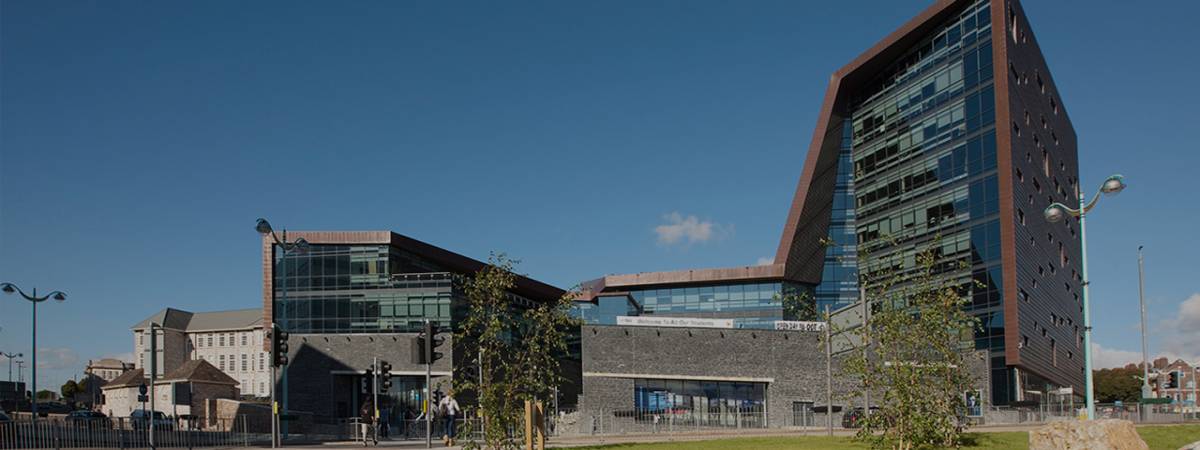
Life as a student at the University of Plymouth takes place on a modern, city-centre campus, conveniently located close to the seaside, the surrounding countryside of Dartmoor, and an easy walk from the ancient Barbican harbour. There are more than 120 student societies, a lively Students’ Union, and the entire campus is fully pedestrianised.
Yes, the University of Plymouth guarantees a place in student halls for all first-year undergraduates who make Plymouth their firm first choice, and also apply to the halls by the deadline of the guarantee in accordance with the terms and conditions set.
There are multiple scholarship types, entrance and merit-based awards for international students: International Undergraduate Welcome to Plymouth Scholarship (up to 6,000); International Postgraduate Welcome Scholarship (4,000); GREAT Scholarships (numerous scholarships worth 10,000 available for certain countries, including India and Bangladesh).
The minimum academic requirement to study for undergraduate programs is Class XII with a minimum of 60%. If they want to study a postgraduate program, a bachelor’s degree with 55% minimum will be expected. Additionally, students must secure 6.0 – 6.5 in IELTS (overall).
The cost of the University of Plymouth for students is largely low due to it being among the cheapest cities to live in Britain. However, fees for courses do differ.
The highest-ranked and most respected subjects at the University of Plymouth are internationally well-known for specialised science and health subject areas. The university's leading subjects in specific fields include Marine and Ocean Engineering (ranked #51-75) and Oceanography (ranked #76-100) according to the ARWU Global Ranking of Academic Subjects.
The University of Plymouth is centrally located in the coastal city of Plymouth, Devon, in the southwest of England. The main campus address is Drake Circus, Plymouth PL4 8AA, United Kingdom.
Stay updated with the latest news and exclusive content by subscribing to our newsletter