QS
QS World
2
Stanford
University
Country :
USA
Founded :
1885
Address :
450 Serra Mall, Stanford, California 94305, USA
Study at Stanford University and gain a world-class education at the heart of global innovation, entrepreneurship, and cutting-edge research.
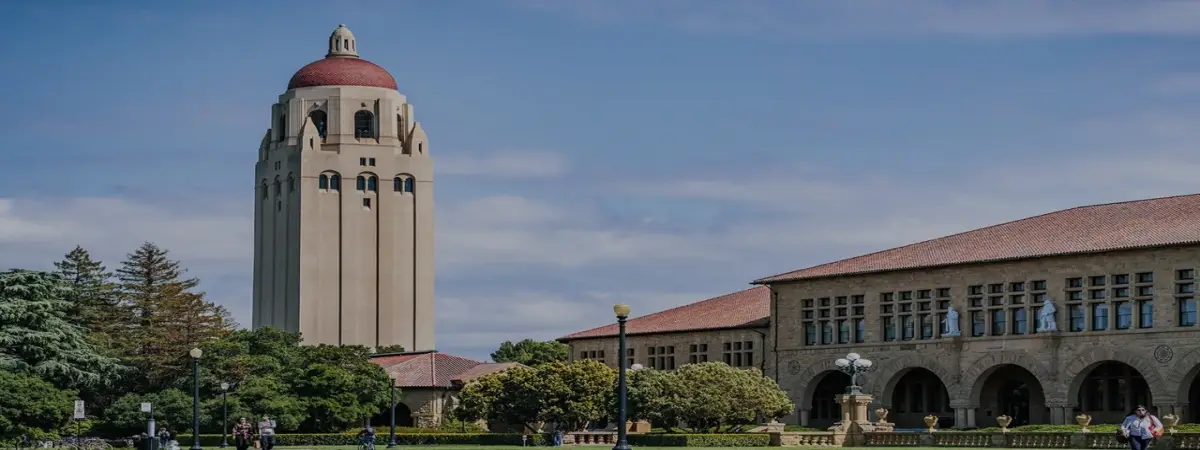
Located in the centre of Silicon Valley, Stanford University has become one of the world's most influential universities by combining academic excellence with innovation and interdisciplinary research. Since its establishment in 1885, Stanford has played a significant role in shaping modern technology; many globally recognised companies, including Google, NVIDIA, Instagram, Yahoo!, LinkedIn, Cisco, and Hewlett-Packard, were founded or led by Stanford alumni, demonstrating the university's remarkable impact on global industries.
Today, Stanford educates more than 17,000 students, including learners from 90+ countries, across seven academic schools and offers 220+ undergraduate and graduate programmes. The university maintains an impressive 6:1 student-to-faculty ratio, allowing students to work closely with distinguished professors, researchers, and industry experts. According to the employment data, Stanford’s graduates enjoy exceptional career outcomes, with over 95% securing employment, entrepreneurship opportunities, or further education within months of graduation. Supported by an alumni network of more than 240,000 graduates, Stanford continues to produce global leaders across technology, healthcare, business, engineering, and academia.
450 Serra Mall, Stanford, California 94305, USA
Stanford University consistently ranks among the world's top universities for academic excellence, research output, and employer reputation, including QS World, Shanghai, U.S. News & World Report, and Times Higher Education. Below are the notable rankings for Stanford.
Stanford University offers more than 220 UG, PG, and professional programmes across its seven academic schools. It is globally recognised for excellence in Computer Science, Artificial Intelligence, Business Administration, Electrical Engineering, Data Science, Economics, Mechanical Engineering, and Law. Supported by Silicon Valley's innovation ecosystem, students combine academic learning with industry expertise throughout their studies. Below are the top courses at Stanford mentioned.







A Stanford University degree is recognised globally for its exceptional career outcomes and entrepreneurial impact. Graduate outcome reports indicate that over 95% of Stanford graduates are employed, enrolled in higher education, or building their own ventures within six months of graduation. Despite an average annual tuition fee of approximately $65,000, graduates benefit from one of the highest earning potentials among leading universities. The average early career salary ranges from approximately $120,000 to $140,000. Here is a dedicated table for ROI mentioned.
Salary figures are indicative estimates based on graduate outcomes, industry surveys, and available employment data. True pay may vary with experience, location, and designation.
Stanford University provides generous financial support to both domestic and international students through institutional grants, fellowships, and need-based financial aid. While undergraduate financial assistance is primarily need-based, graduate students may receive fellowships, assistantships, and department-specific funding depending on their programme.
Stanford University's 8,180-acre campus is one of the largest and most advanced university campuses in the United States. Students can easily navigate the university’s academic buildings, research laboratories, libraries, and innovation hubs with the official interactive campus map.
Its location in Silicon Valley, world-leading research, entrepreneurial culture, interdisciplinary education, and close collaboration with global technology companies make Stanford a unique destination for higher education
Yes. Stanford offers a wide range of university-managed housing options for undergraduate and graduate students, along with dining facilities, recreational centres, and student support services.
Yes. Stanford provides extensive undergraduate research opportunities across engineering, medicine, natural sciences, humanities, business, and social sciences.
Graduates are employed by organisations including Google, Apple, Microsoft, NVIDIA, Amazon, Meta, Tesla, McKinsey & Company, Goldman Sachs, OpenAI, and numerous start-ups.
Stanford accepts recognised English language proficiency tests such as TOEFL iBT, IELTS Academic, and other approved qualifications, depending on programme requirements.
Yes. Stanford actively supports entrepreneurship through innovation centres, incubators, mentorship programmes, and strong connections with Silicon Valley investors and start-ups.
Yes. Stanford provides need-based financial aid for eligible undergraduate students and several fellowships, assistantships, and scholarship programmes for graduate students.
Stanford has one of the lowest acceptance rates in the world, making admission highly competitive for both undergraduate and graduate applicants.
Stanford is especially known for Computer Science, Artificial Intelligence, Engineering, Business, Medicine, Entrepreneurship, and innovation-driven research.
Stanford is internationally recognised for its academic excellence, research leadership, entrepreneurial ecosystem, and close connections with Silicon Valley's technology industry.
Stay updated with the latest news and exclusive content by subscribing to our newsletter