QS
QS
851-900

University of
Hertfordshire
Country :
UK
Founded :
1992
Address :
de Havilland and College Lane, United Kingdom
Curious to see where big ambitions result in concrete careers? The University of Hertfordshire makes audacious ideas into tangible, successful careers.
A modern and future-oriented, career-focused university, the University of Hertfordshire can trace its roots back to 1952 when it opened as a technical college in Hatfield, 25 miles north of London. It was awarded university status in 1992 and is currently home to more than 30,000 students from around the globe. Famous for its industry-engaged education and with 96%+ graduate employability, the university engages with industry-leading organisations from around the world such as Airbus, Tesla and Ocado. Offering world-class facilities and research, students will enjoy a modern campus life which incorporates both academic life and professional opportunities.
Whether you are looking to enter into business, engineering, arts, or sciences, you will find programmes at Hertfordshire have been designed to impart the skills employers need and seek. If you are intending to study in UK, Hertfordshire is a fantastic, inspiring location to start your career journey.
de Havilland and College Lane, United Kingdom
The QS World University Rankings place the University of Hertfordshire at 851-900 globally, with the Times Higher Education Rankings between 601-800 globally. In national tables, it's established in the UK Top 50 in 48th place in the Guardian University Guide.
Among the University of Hertfordshire’s top programmes are: Business Management, Computer Science, Aerospace Engineering, Nursing, Animation, and Psychology, with an industry-focused curriculum to enhance the students’ ability to secure future employment.







At the University of Hertfordshire, the real Return on Investment comes through the actual outcomes – Over 90% are in work or training within 15 months, with graduate starting salaries of approximately £26,000 - £28,000, rising to £33,000+ after 5 years. Close relationships with employer partners (Airbus, Ocado) mean a payback of just 3-5 years.
The salary figures are estimated and not exact, based on where students go after graduation, surveys of industry reports and information. Actual pay varies depending on job location, title and level.
There are several funding opportunities available for international students at the University of Hertfordshire (UH), the primary of which is the Chancellor's International Scholarship that offers tuition fee reductions for undergraduate and postgraduate taught students ranging from £500 to £4,000.
UK has the maximum number of world-class universities providing globally recognised degrees with high ROI. You can choose from 130+ well-approved universities. Below is a list of top universities in the UK.
Discover your destination exactly with the Official University of Hertfordshire campus map - including real-time building searches and optimise your walk.
Yes, the University of Hertfordshire does provide on-campus accommodation. For first-year international students who apply on time, their room is guaranteed – these include: en-suite rooms, studios, townhouses, single rooms or shared rooms.
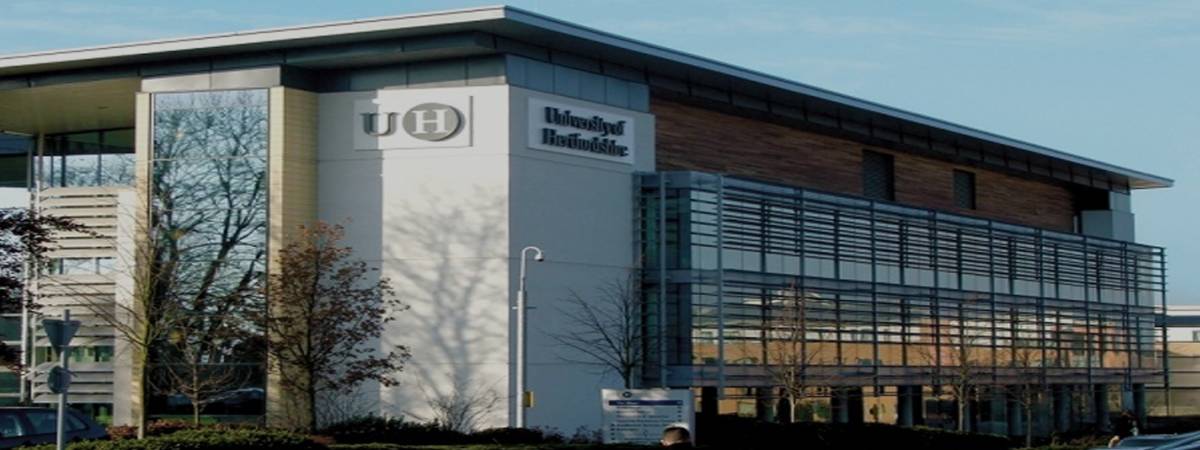
The University of Hertfordshire runs two main campuses in Hatfield, UK (College Lane and de Havilland), with an additional smaller specialist site at Bayfordbury which accommodates their astronomical observatory and field station.
Absolutely! UH is an extremely practical option if you are an international student, and it works well if you enjoy practical work. The university also has close industry links and is well located, only a short 25-minute train journey to central London and Hatfield.
Undergraduate application is made online via the UCAS portal. Postgraduate applications are made through the university’s applicant portal. If you have appointed an official education agent, it is up to you; all applications made directly by the student will be assessed to the same criteria.
International graduates can access strong post-study job prospects in the UK through the Graduate Route and Skilled Worker Route.
For international students arriving in India, the University of Hertfordshire organises compulsory International Orientation Programmes, airport meet-and-greet services, and pre-departure sessions held in India.
Yes, you can study and work part-time at the University of Hertfordshire. For all international full-time degree students with a Student Route visa, working up to 20 hours per week during term time and full-time during official university vacation time is legal.
Yes, the University of Hertfordshire has multiple merit and automatic Scholarships for international and Indian students. The scholarships offered include £500 to £4,000 for one academic year.
Not required. The test is exempted for students having secured 70% – 80% in the Class 12 English Exam. The university also exempts the test if you are a graduate of any recognised Indian university having conducted your studies with Medium of Instruction as English.
Typically, to be able to study for a Bachelor's at Hertfordshire, Indian students require a Class XII qualification, and to take on Master's courses require an appropriate Bachelor's degree. English language qualifications are compulsory for all programmes, with minimum grade requirements subject to the specific course tariff and subject.
Stay updated with the latest news and exclusive content by subscribing to our newsletter