QS
QS World Ranking
1401+

Cleveland State
University
Country :
USA
Founded :
1964
Address :
2121 Euclid Avenue, Cleveland, OH 44115-2214, USA
Build a successful future at Cleveland State University, where strong industry partnerships and a vibrant urban campus shape your future.
Cleveland State University is a public research university located in the city centre of Cleveland, Ohio. The university started its journey in 1964 when the Ohio state legislature created it by restructuring the buildings, faculty, and curriculum of the former Fenn College. Today, CSU is part of the University System of Ohio and offers more than 200 academic programs across eight colleges and schools. The major courses span diverse fields such as business, engineering, education, nursing, urban affairs, and law.
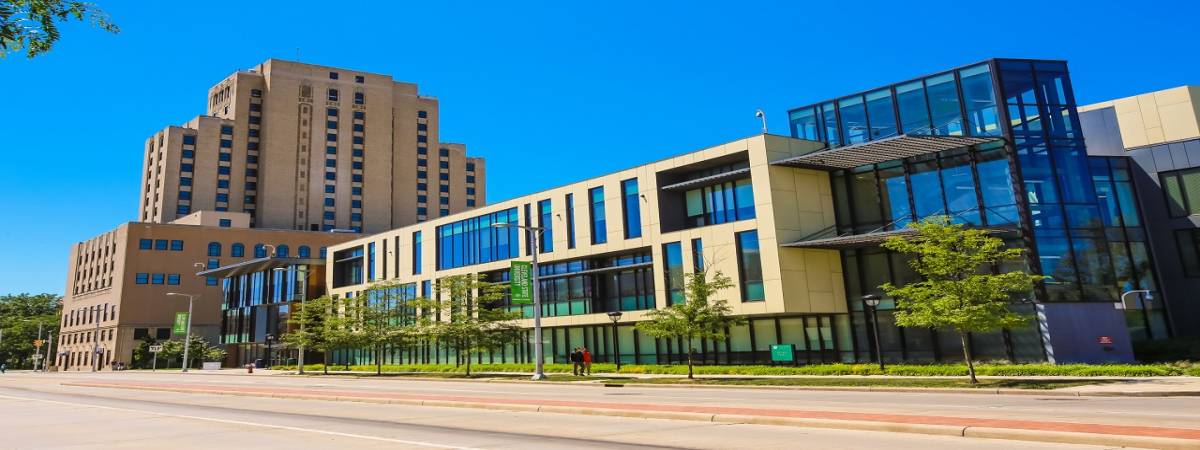
The university's "engaged learning" model blends thorough academic learning with active internships, applied research, and partnerships with local industry and healthcare institutions in the Cleveland area. This helps students build strong practical skills before graduation. CSU's urban campus spans more than 85 acres and 40-plus buildings in the heart of Cleveland, along Euclid Avenue between East 17th and East 30th Streets. The university maintains a 16:1 student-to-faculty ratio, which ensures personalised learning. It supports more than 14,000 students, including a growing international student population.
Foundation Year: 1964
2121 Euclid Avenue, Cleveland, OH 44115-2214, USA
Cleveland State University ranked highly among the top universities in the U.S.A. From QS World University Rankings to U.S News & World Report, all the prestigious global indicators position the university highly. Here is the list of rankings below:
Among a range of highly practical courses, Master of Business Administration, Bachelor of Liberal Studies, Biomedical Engineering, and Criminology are some of the most popular. More than 13 specialised elective programmes offer strong academic excellence. Here is a list of the top courses and their approximate annual fees.







Compared to similar universities around Cleveland, CSU students start their careers with high salary ranges. Its academic infrastructure is combined with strong industry connections. Students get into sectors like healthcare, finance, and technology. Specifically in the case of business and technological programmes, students recover their total academic expenditure through their high starting salaries.
Salary figures are indicative estimates based on graduate outcomes, industry surveys, and available employment data. True pay may vary with experience, location, and designation.
Cleveland State University offers numerous scholarship opportunities and financial aid. Find the list of specific scholarships for international students.
Find the exact location of Cleveland State University in the Campus Locator. Navigate through the university campus. You can also check out 3D images of academic buildings, libraries, and labs in real time.
Cleveland State maintains a student-to-faculty ratio of 16:1. It enhances the personalised learning experience.
The entire admission process includes six distinct steps: counselling, profile evaluation, application submission, getting an offer letter, visa processing, and pre-departure guidance.
Yes, CSU offers numerous merit-based scholarships, graduate financial assistance, and college-specific awards to help offset tuition costs.
MBA is among the most popular programmes at Cleveland State University. It offers 13+ specialisations and extensive industry ties to Cleveland-area employers.
Cleveland State University ranks 343 among National Universities and 187 among Top Public Schools in the 2026 US News rankings.
CSU offers more than 200 undergraduate, graduate, and certificate programs across eight colleges, spanning business, engineering, nursing, and more.
Of course. Comparatively lower tuition, an open-admissions policy, active internships, and dedicated international student services are some of the key USPs that make it ideal for global applicants.
CSU operates through eight prestigious colleges. Levin College of Public Affairs is one of the most renowned.
More than 14,000 students are enrolled at CSU. Among the total strength, 1,400 are international students coming from around the world.
CSU is located at 2121 Euclid Avenue in the city centre of Cleveland, Ohio. The campus spans 85 acres and over 40 buildings in the city centre.
Stay updated with the latest news and exclusive content by subscribing to our newsletter